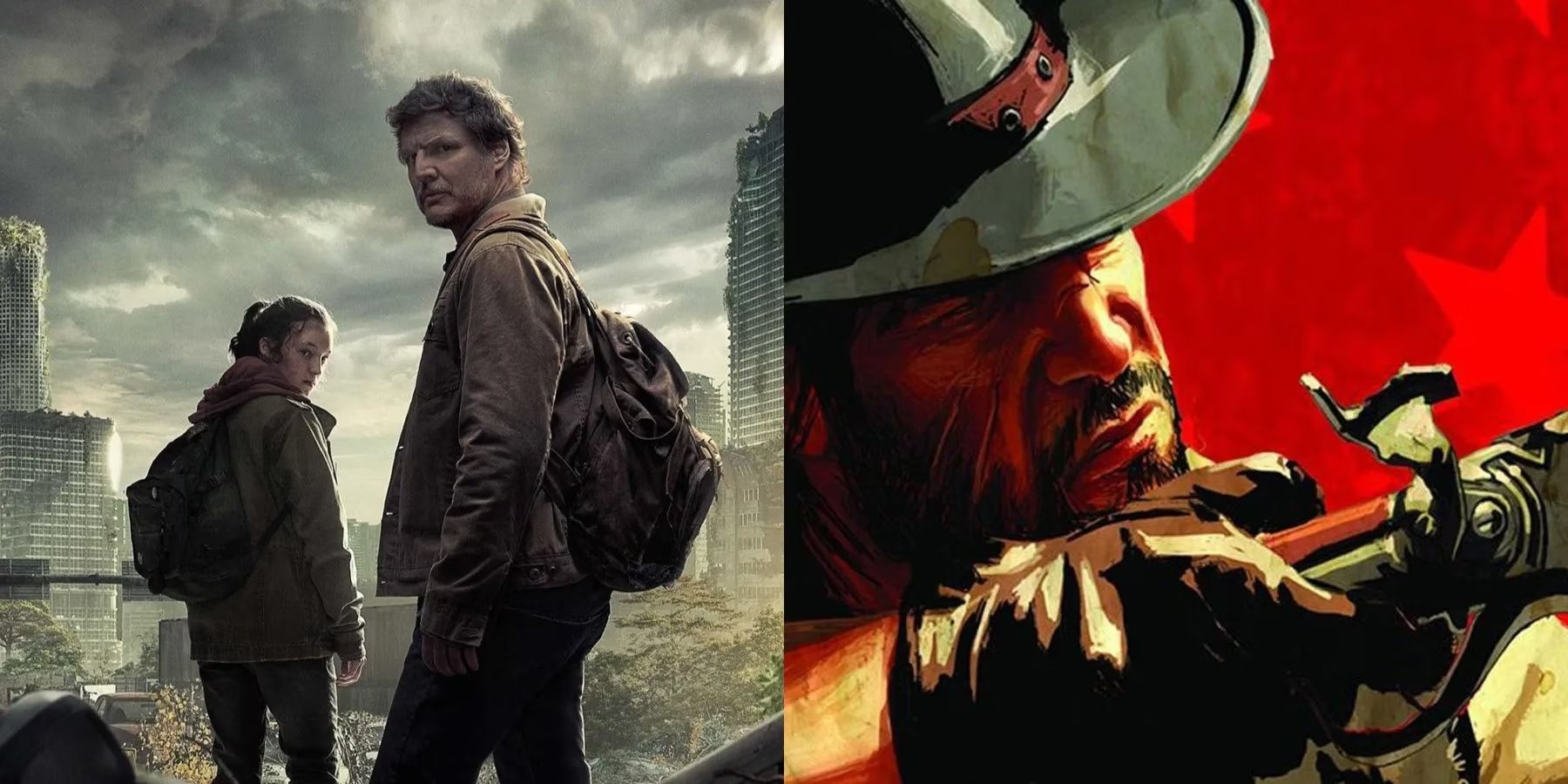
When I first played through The Last of Us back in 2013, I never imagined that a television adaptation could ever capture the same emotional depth. Years later, HBO proved me wrong in the most spectacular way. By 2026, we’ve now witnessed three seasons of masterful storytelling that not only honored the source material but expanded it in directions few thought possible. This achievement has fundamentally changed the conversation around video game adaptations, and as a lifelong gamer, it has me dreaming about the next frontier. I find myself returning again and again to one universe that seems almost built for this kind of translation: Red Dead Redemption.
The success of The Last of Us wasn’t accidental. It came from a careful balancing act. The show’s creators knew exactly which parts of the game’s narrative to preserve with reverence and which elements to reimagine. Joel and Ellie’s journey from Boston to Salt Lake City was lovingly recreated in its most iconic moments, yet the series also gave viewers entire episodes that hardly existed in the game. I remember watching the episode centered on Bill and Frank and feeling an overwhelming sense of gratitude. Here was a story that in the game lasted a handful of minutes, transformed into a sweeping, heartbreaking hour of television. It didn’t just serve the plot; it deepened the entire theme of survival and connection. That creative courage is something I now look for in any proposed adaptation, and Red Dead Redemption is overflowing with similar opportunities.
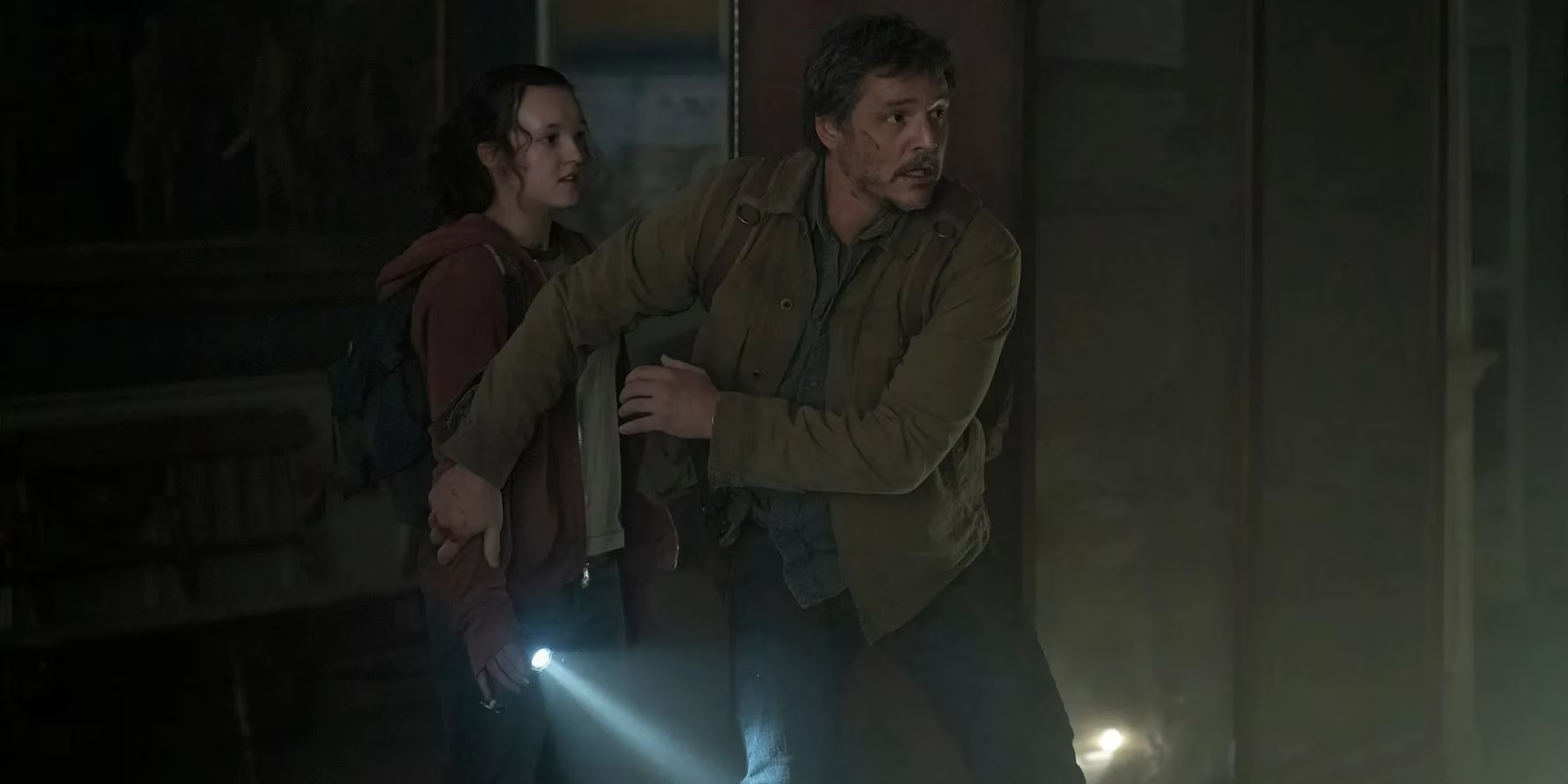
Casting also played an undeniable role in the show’s triumph. Pedro Pascal and Bella Ramsey didn’t simply mimic the digital characters; they inhabited them, finding new nuances in Joel’s guardedness and Ellie’s fierce vulnerability. Their chemistry was the beating heart of the series, and it reminded me how vital the right actors are when bringing beloved characters to life. For a Red Dead Redemption adaptation, this would be the single most critical decision. Arthur Morgan and John Marston aren’t just protagonists—they are embodiments of a dying era, filled with regret, loyalty, and violence. Finding actors who can convey that weight without saying a word would be essential, but if the The Last of Us has taught us anything, it’s that the industry is ready for that challenge.
What makes Red Dead Redemption so uniquely suited for a series goes beyond its cinematic cutscenes and gripping gunfights. The franchise, especially Red Dead Redemption 2, is a masterclass in environmental storytelling and character exploration that happens during gameplay. I can’t count how many hours I’ve spent simply riding through the Heartlands, listening to Dutch Van der Linde’s grand speeches or hearing Arthur mutter observations about the world and his own crumbling faith. Those quiet moments are where the real story lives. A television series wouldn’t need to invent drama; it could simply lift entire conversations from the camp, the long rides, and the side missions, and weave them into a serialized narrative. The game already gives us a cast of characters like Hosea, Sadie Adler, and Charles Smith, each with backstories that are hinted at but never fully explored. In the style of the The Last of Us treatment of Bill and Frank, entire episodes could be devoted to their pasts, giving viewers a richer understanding of the gang’s tragic trajectory.
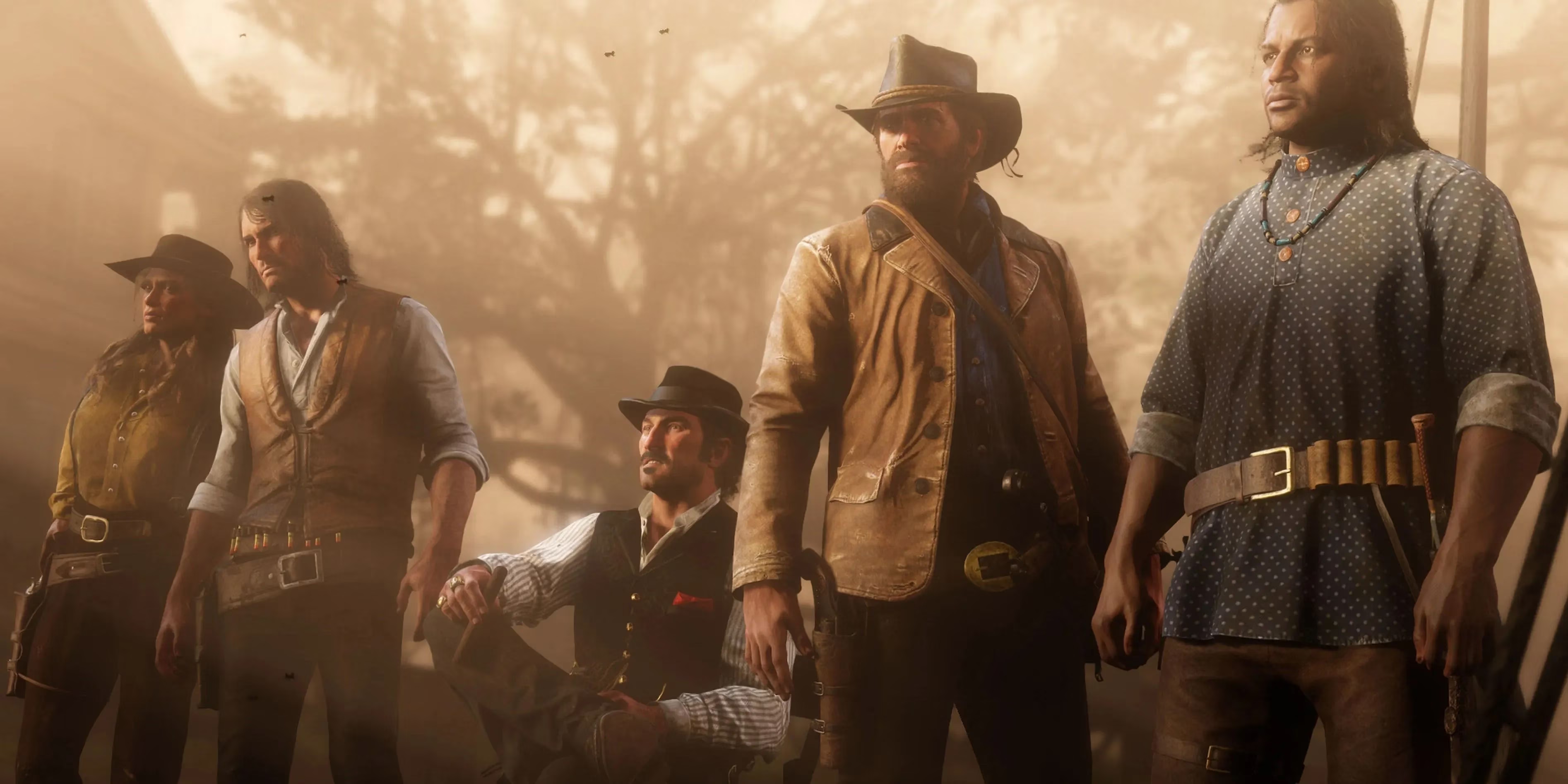
One of the great strengths of The Last of Us adaptation was its willingness to restructure time and perspective. It didn’t follow the game’s linear path rigidly; it inserted flashbacks, shifted viewpoints, and sometimes stayed with characters far longer than expected. A Red Dead Redemption show could do the same with devastating effect. Imagine a season that opens not with the Blackwater heist but with the peaceful days before the gang’s downfall, juxtaposing the warmth of the campfire with the cold necessity of survival later on. The narrative could jump between the original game’s epilogue with John trying to build a home and Arthur’s haunting memories of his own failures as a father figure. My mind races at the possibilities, and based on what we’ve seen from modern prestige television, audiences are hungry for exactly this kind of layered, morally complex storytelling.
There’s a skepticism I’ve often heard from fellow Red Dead fans, born from the fear that a show might flatten the interactive, open-world magic into a passive experience. I understand that fear. But the last few years have proven that a faithful yet inventive adaptation doesn’t diminish the game; it amplifies its impact and introduces its story to millions who might never pick up a controller. The key is maintaining the soul of the source material—the melancholy of a fading West, the brutal consequences of loyalty, the desperate search for redemption. If the writers behind such a project approach the source material with the same love and deep understanding that the The Last of Us team clearly had, there is little reason to doubt it could become an extraordinary series.
By 2026, the appetite for high-quality video game adaptations has grown beyond what anyone predicted. Studios are finally treating these properties with the respect they deserve, and I can hardly think of another world as rich and emotionally charged as that of Red Dead Redemption. It’s a franchise that already feels like a great American novel, waiting to be read aloud to a new audience. And after witnessing how perfectly a television show can honor and expand the legacy of a beloved game, I am more convinced than ever that Arthur Morgan and John Marston deserve their moment on the screen. Give us the quiet sunsets, the painful choices, and the unforgettable characters. We’re ready.
Comments