In the sprawling, dust-choked narrative of Red Dead Redemption 2, few refrains echo as persistently as Dutch van der Linde's invocation of a plan. It hangs in the camp air like the smoke from a crumbling cigarillo, a promise that becomes as intangible as the last warmth before a blizzard. At first, it seems like the leader of the Van der Linde gang possesses a master blueprint, a carefully orchestrated path toward freedom. But upon closer examination, the word itself becomes a kind of linguistic sleight-of-hand—a magician's incantation designed to distract the eye from the empty palm. Fans have long joked about Dutch's obsession with having a plan, but the numbers behind his fixation tell a story even more revealing than the memes suggest.
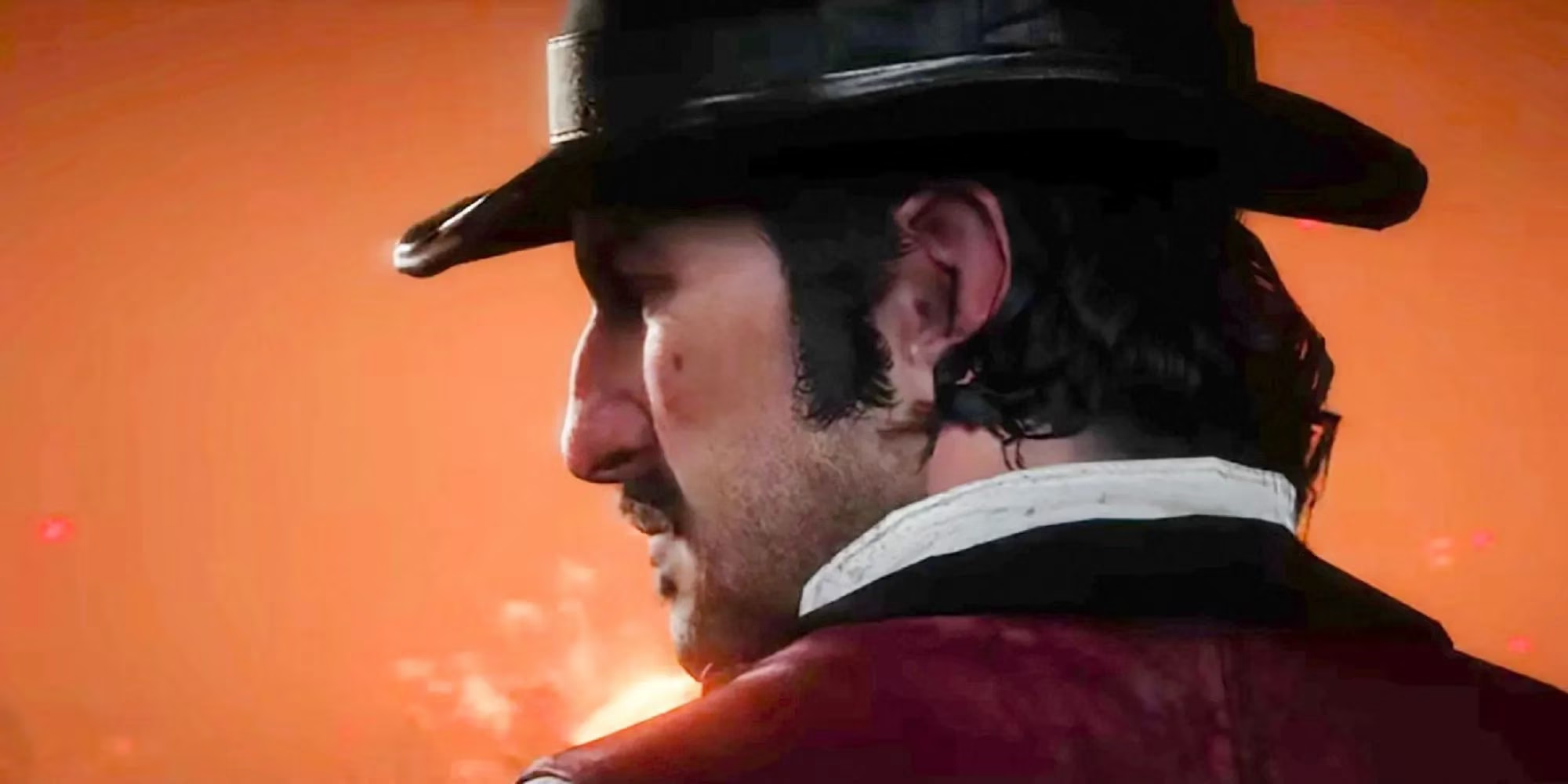
Across the narrative arc of the game, Dutch utters some form of the word plan—including variations like "planning" or "plans"—at least 28 times during the main story. These are not offhand murmurs but deliberate declarations, woven into the fabric of the gang's existence like a threadbare safety net. A careful dissection of the context reveals the strange choreography of his rhetoric. Exactly ten of these instances occur while Dutch is on horseback, a setting that elevates his oratory into a traveling sermon. He speaks of the plan as a rider might describe a distant landmark—always just over the next ridge, yet somehow never within reach. Another ten appearances happen during cutscenes, where the dramatic staging amplifies his words into theatre. Twice, he even discusses his scheme while paddling a boat, as if the rhythm of the oars could give his vague pronouncements a percussive authority.
It is through these moments that a curious truth emerges: Dutch's plan functions less like a strategic document and more like a communal pacifier. Think of it as a kind of acoustic mirage, a sound that promises an oasis but delivers only more desert. He uses the word as a structural filler, a verbal bridge between the gang's present squalor and a future that exists solely in the amber of his speeches. In at least 18 of those 28 conversations, Arthur Morgan is present, absorbing the promise like dry earth soaking up a fleeting rain. The plan is never fully unpacked—it remains a silhouette, a Rorschach test onto which each gang member can project their own hopes. This is the essence of its power. It isn't a set of instructions; it's a mood, a shared hallucination crafted from charisma and desperation.
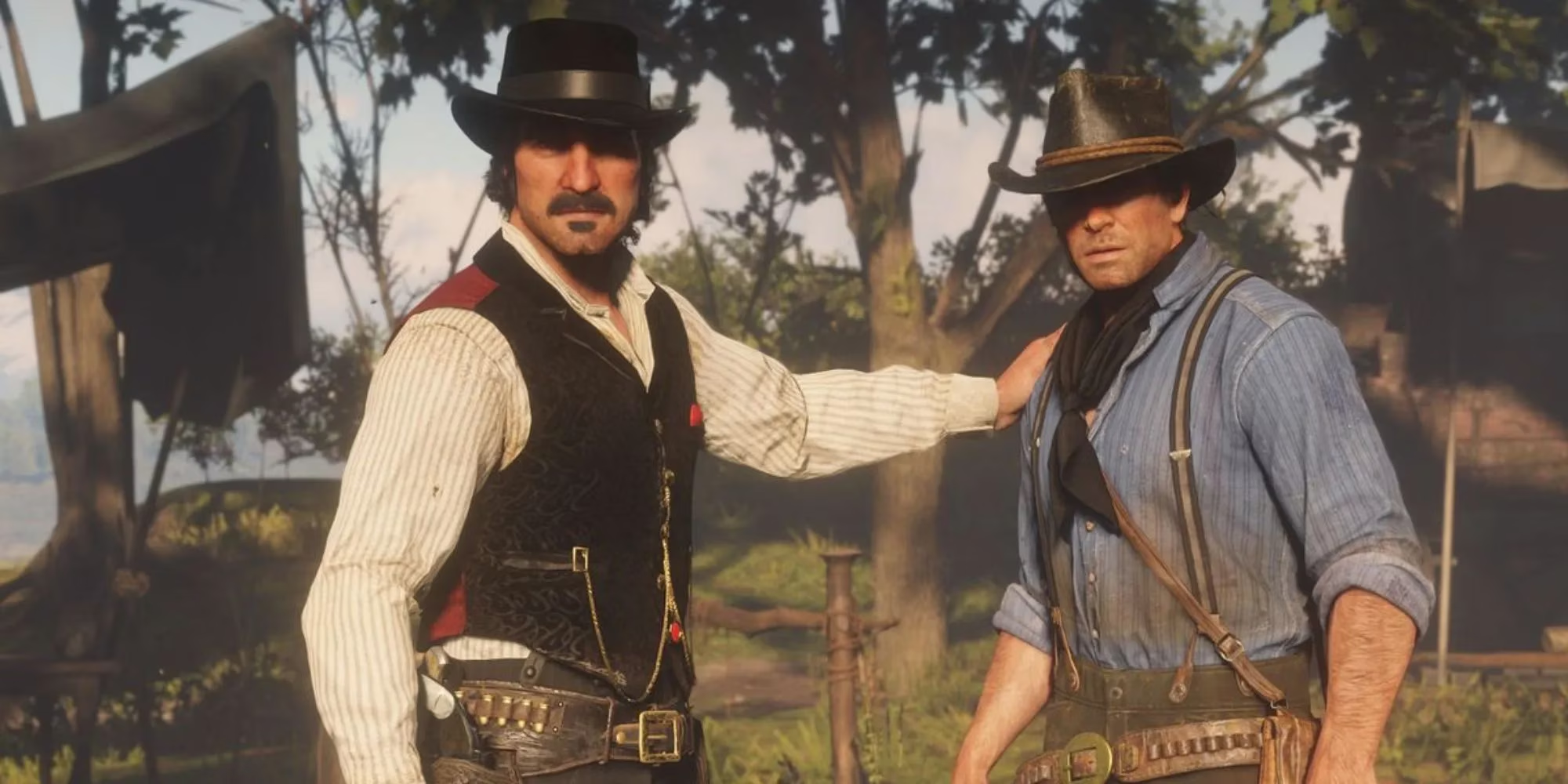
But a sharper lens reveals the real engine underneath the hood of Dutch's rhetoric. Strip away the mystique, and the grand plan collapses into a single, glaringly simple word: money. He may speak of a plan 28 times, but he mentions his need for money 37 times during the story—a frequency that betrays the true nature of the dream. The supposed master plan is merely a beautifully wrapped box containing nothing but a desperate chase for cash. Of those 37 utterances, a striking 25 come during cutscenes, where the theatre of persuasion is most potent. When he's not on the stage, he mentions it six times on horseback and five times in a boat, always with that same blend of urgency and charm. Arthur stands witness to 33 of these discussions, making him the primary audience for a pitch that grows steadily thinner as the gang's bonds fray.
This obsession with money acts as a slow-acting poison, a gravitational well that pulls every good intention toward destruction. One could compare it to a siren's call—not the romanticized version from myth, but a mechanical, industrial siren that drowns out all other sounds of reason. Dutch transforms the gang's need for resources into a justification for increasingly reckless heists, all under the shield of "sticking to the plan." The irony is unbearable: the very lifestyle required to gather money quickly—the shootouts, the betrayals, the constant flight—is precisely what drives the gang toward the cliff's edge. Dutch does actually acquire a large sum of cash near the end of his tumultuous journey, but by then the chest of gold feels less like a victory and more like a cruel punchline, arriving only to be abandoned in the cold mud of a collapsing world.
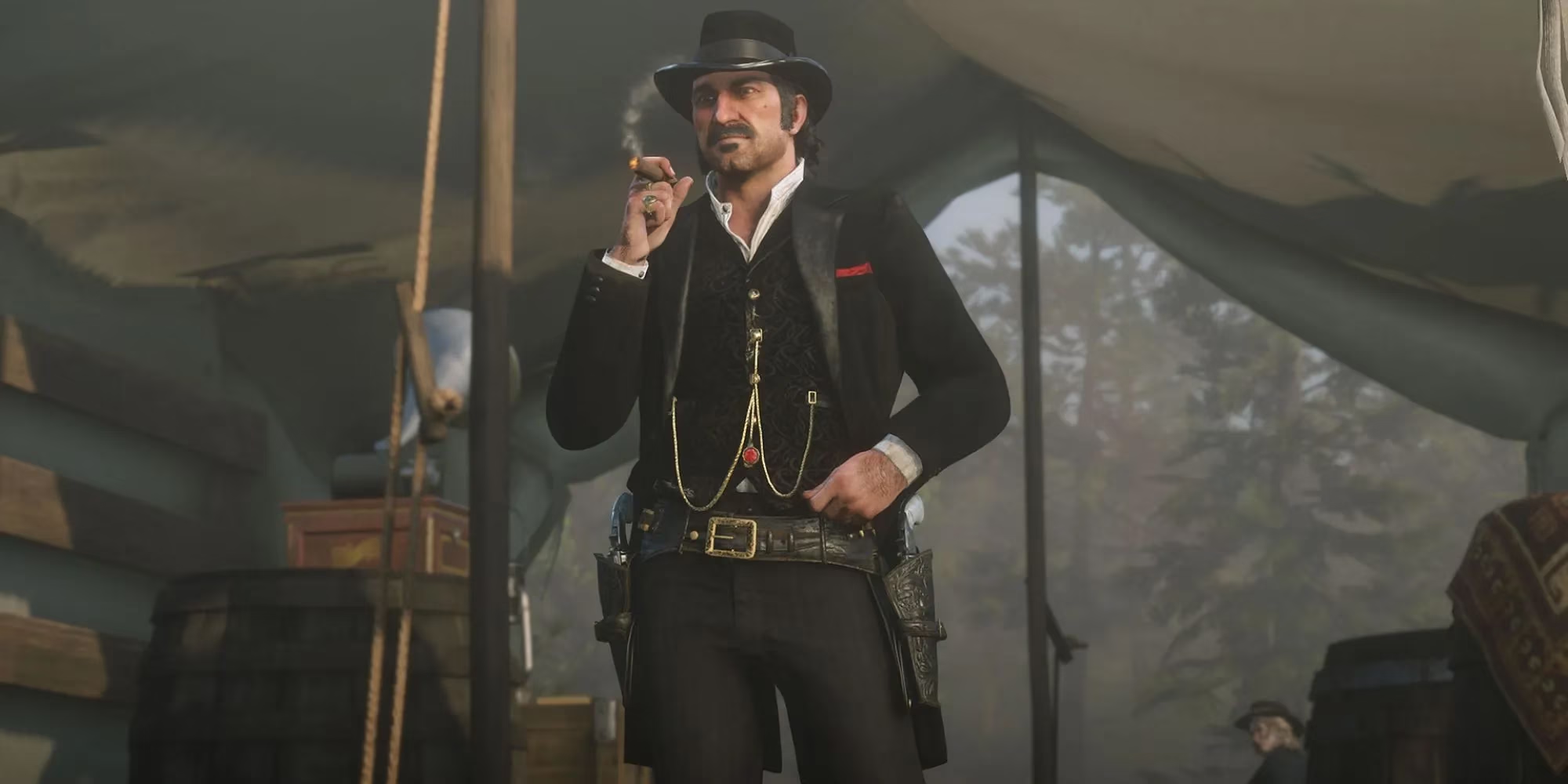
In the end, the true genius of Dutch van der Linde isn't his strategic mind but his ability to weaponize language itself. By turning the concept of a plan into an almost sacred talisman, he keeps his followers fixated on an undefined tomorrow while the very real, very tangible need for money corrodes their moral compass. The statistical breakdown—28 plans, 37 moneys—serves as a skeleton key to understanding the tragedy. He gave the gang a myth. And like all myths, it was beautiful, compelling, and hollow at the core, leaving nothing but echoes and empty hands when the sun finally set on the age of outlaws.
Comments