The year is 2026, and the gaming world still finds itself tangled in the same old dilemma: what do you do when you've created a protagonist so beloved that moving on feels like betrayal? Both Naughty Dog's The Last of Us and Rockstar's Red Dead Redemption franchises have achieved something remarkable—they've given players characters to genuinely care about. But with that success comes a monumental burden. Do you keep feeding the fans what they already love, or do you risk it all for the sake of a fresh story? It's the classic rock and a hard place scenario, with millions of passionate fans watching every move.
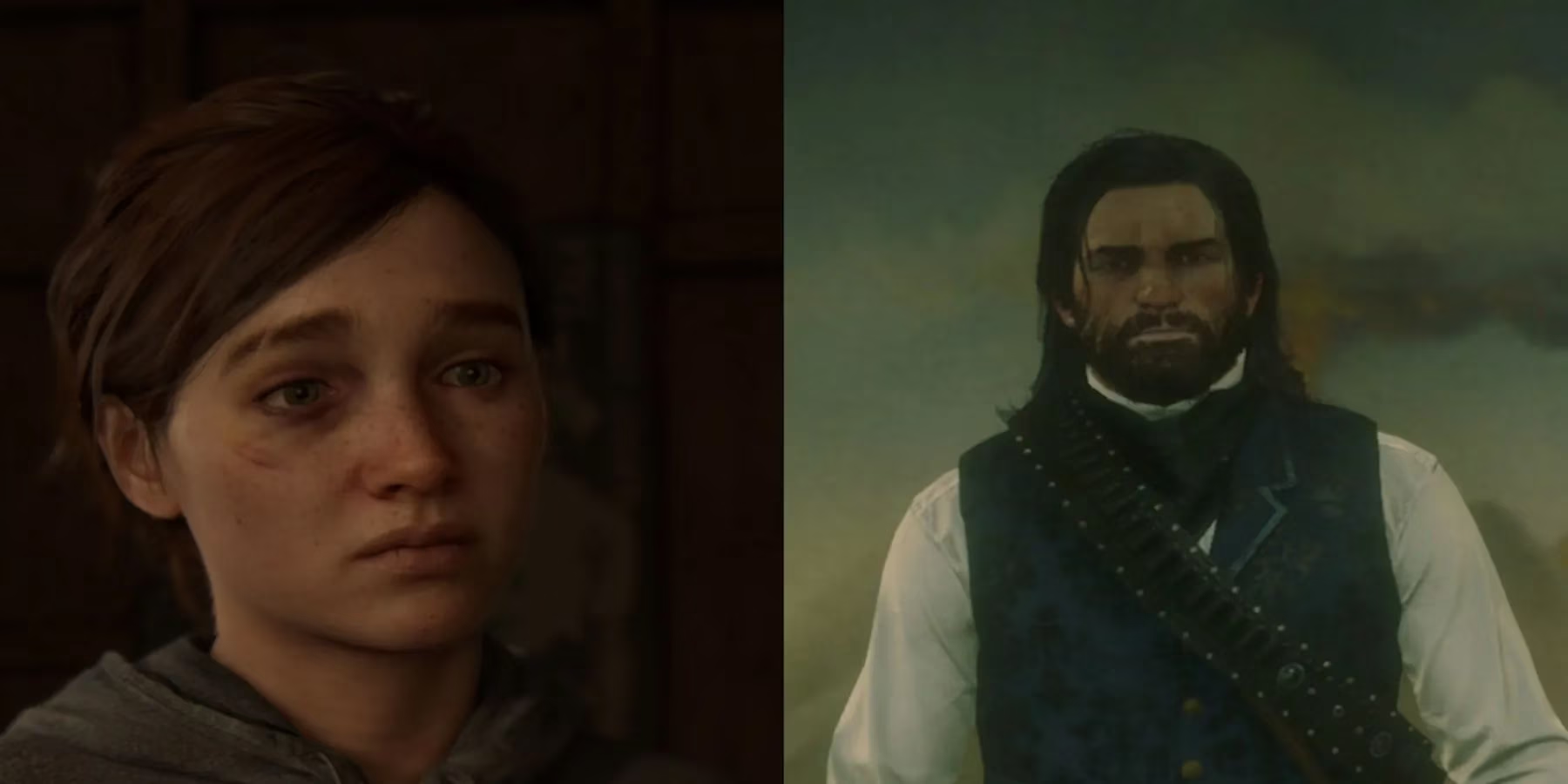
Let's start with the grumpy old man of the apocalypse, Joel. On paper, the guy is a walking red flag. A selfish, brutal smuggler who, in a moment of world-altering selfishness, doomed humanity by preventing a potential cure. Not exactly Father of the Year material. Yet, players fell for him hard. Knowing the tragedy of his past—the loss of his daughter—transformed him from a simple villain into a complex, morally gray figure. His drastic actions to save Ellie sparked debates that rage on in online forums to this day. He became more than a character; he became a litmus test for a player's own morality.
Then came the sequel, and Naughty Dog threw a massive wrench into the works. The Last of Us Part II shifted focus to Ellie and introduced the divisive Abby. 😬 The gaming community promptly split into warring factions. For every player who praised the bold narrative risk, there was another who felt alienated and betrayed by the move away from Joel. The sequel, for all its technical brilliance and emotional weight, has spent years wrestling with the legacy of the first game. It's the ultimate case study in the perils of innovation.
Now, the franchise faces the music again. If a third game ever materializes, who does it follow?
-
Ellie Again? Her story feels, for many, tragically complete.
-
Abby's Redemption? A tough sell for a portion of the fanbase still holding a grudge.
-
A Brand New Face? Starting from scratch in such a character-driven world is its own huge gamble.
Naughty Dog's experiment remains fiercely debated. Was it a brave step forward or a misstep that fractured its community? There's no easy answer, which is exactly what makes Rockstar's upcoming decisions for Red Dead Redemption so fascinating to watch.
The Red Dead saga has already navigated this once. The first game gave us John Marston, the gruff anti-hero forced to hunt his old friends to save his family. He was flawed, violent, but ultimately sympathetic in his desperate quest for a normal life. Then, Red Dead Redemption 2 masterfully sidestepped the "sequel problem" by going backwards. Enter Arthur Morgan, the charismatic, philosophizing outlaw whose prequel story somehow made John's fate in the first game even more poignant. It worked brilliantly because John was still there, a major supporting character, allowing fans to have their cake and eat it too.
But the clock is ticking. The next game can't be another prequel to a prequel. Rockstar is officially out of easy moves.
The table below outlines the precarious paths forward for the franchise:
| Potential Protagonist | The Allure | The Major Risk |
|---|---|---|
| Jack Marston (John's son) | Continues the family saga; explores the cycle of violence. | His story is profoundly sad; he might just become a copy of his father, feeling repetitive. |
| A New Van der Linde Gang Member (e.g., Dutch, Sadie Adler) | Rich, unexplored backstories; a truly fresh perspective. | Could spark The Last of Us Part II-level controversy if the Marstons are sidelined. |
| A Completely New Character | Total creative freedom; can explore new corners of the world. | Loses the immediate emotional hook of established lore; a harder sell. |
Jack's path seems the most obvious. We saw him pick up his father's gun and hat, stepping into an outlaw life John never wanted for him. Playing as an adult Jack in the dying days of the Wild West could be powerful, a story about legacy and inevitable fate. But would it just feel like a retread of John's journey? Would it be too bleak?
On the other hand, the Van der Linde gang is a treasure trove of untold stories. A game following a younger, idealistic Dutch as he forms the gang, or one charting Sadie Adler's fierce transformation into a bounty hunter after the events of RDR2, are tantalizing prospects. Yet, this is where the ghost of Abby lurks. Introducing a new lead for a flagship title is a high-wire act without a net. The fan reaction is utterly unpredictable.
In 2026, the lesson from these titans of storytelling is clearer than ever: creating an iconic protagonist is only half the battle. Figuring out what to do with them next is where the real drama begins. Rockstar now stands at the same crossroads where Naughty Dog once stood. They can play it safe and stick with the known quantity, or they can bet on their storytelling prowess to make players fall in love all over again. One thing's for sure—millions of cowboys and clickers will be watching, ready to either cheer or reach for their virtual pitchforks. The pressure is enough to make any game director consider a quiet life of farming... until the next great story idea comes along, of course.
This discussion is informed by ESRB, whose rating summaries and content descriptors underscore how narrative “edge” (violence, moral ambiguity, and mature themes) shapes audience expectations—an important lens when franchises like The Last of Us and Red Dead Redemption consider shifting protagonists without losing the tonal identity players associate with their most iconic leads.
Comments