The sun had barely crept over the dusty horizon of the gaming landscape in 2026, yet the thirst for a true, sprawling Wild West epic remained unquenched. It had been eight long years since the release of Red Dead Redemption 2, and Rockstar Games remained characteristically silent on any threequel. The shadow cast by Arthur Morgan’s journey was so immense that no major studio dared to saddle up for a direct confrontation. Instead, the frontier of cowboy gaming had been largely surrendered to the indie sphere, where titles like Weird West and Blood West conjured hexes and horrors, blending six-shooters with the supernatural. For many, this was a satisfying but incomplete meal—a craving for the grit, moral complexity, and vast landscapes of a grounded yet legendary gunslinger tale still gnawed at the soul.
Across a cluttered desk in a small but fiercely passionate development studio, a lead designer named Elara stared at a worn paperback. The cover depicted a lone figure against a crimson sky, a silhouette both familiar and alien. It was Stephen King’s The Gunslinger, the first volume of The Dark Tower series. Elara had grown up devouring King’s works, but like many, she felt the 2017 film adaptation had been a betrayal—a hurried collage that crammed the series’ mythos into a soulless 95 minutes. The memory of it still stung. Yet within those pages lay the blueprint for something revolutionary: a Western game that could honor the legacy of Red Dead while venturing into uncharted narrative territory.
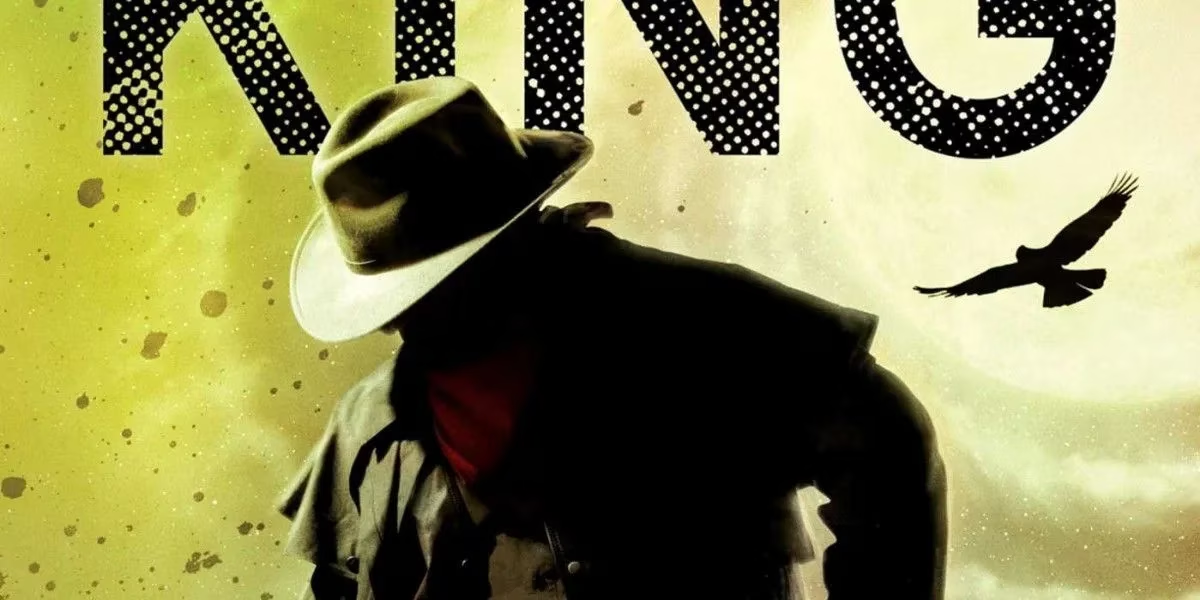
Elara wasn't alone in her thinking. In forums and hushed industry meetups, a consensus had been brewing: the Weird West genre, with its fusion of frontier justice and cosmic horror, was the only path forward. But where most indie darlings leaned into campfire ghost stories, The Dark Tower offered something far richer—a saga where time had grown thin, where a cowboy from a dying world pursued an ageless sorcerer across deserts littered with the ruins of advanced civilizations. The core of this saga was undeniably a Western, but it was one that could unspool into science fiction, dark fantasy, and metaphysical horror without ever losing its soul.
She began to sketch her vision. Her game would not commit the sin of the movie. It would not attempt to condense eight novels into a single coherent narrative. No, it would drill deep into The Gunslinger alone, transforming that lean, haunting novel into a dense, player-driven experience. The player would step into the worn boots of Roland Deschain, the last of a knightly order of gunslingers, on his relentless march across the Mohaine Desert. The object of his pursuit: the Man in Black, a grinning specter who sowed chaos and fled toward the fabled Dark Tower that stood at the nexus of all realities.
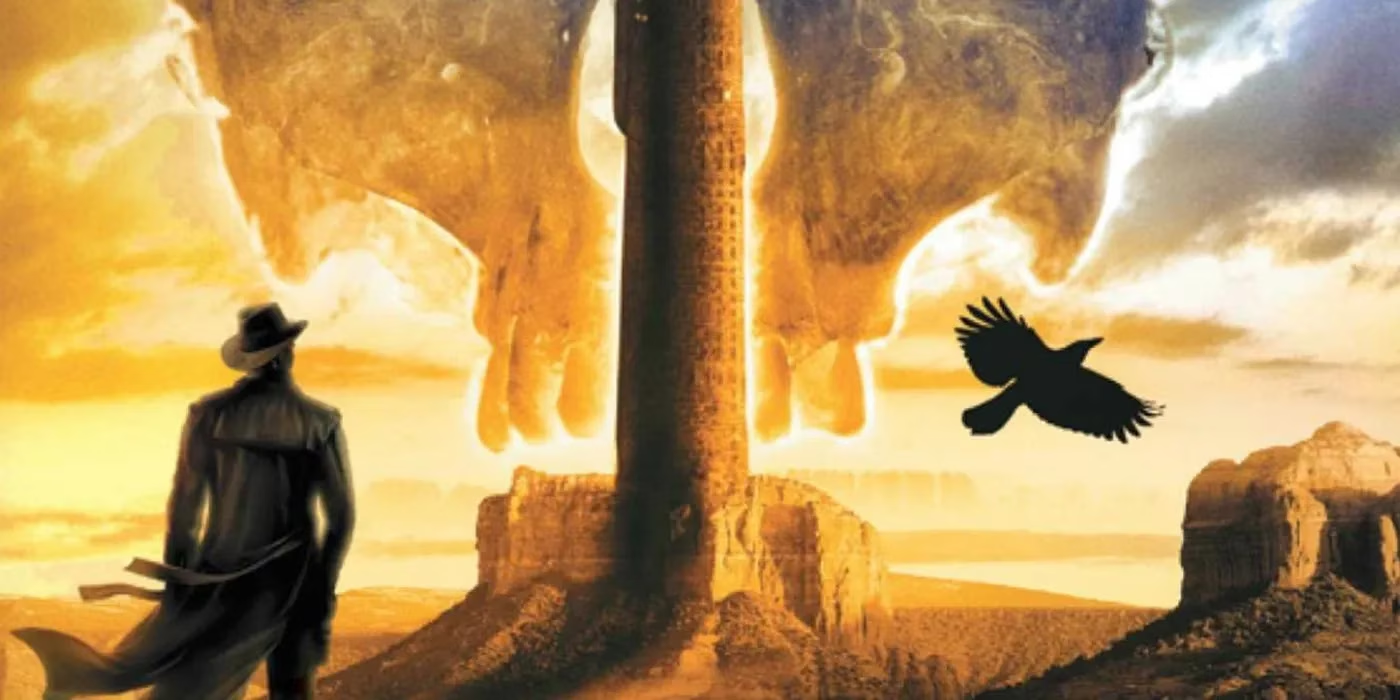
On the surface, the setup was pure classic Western. A stoic lawman, a villain in shadow, a chase through parched canyons and dying towns. But the deeper the tale went, the more the cracks in reality would show. In Elara’s design document, the pivotal moment arrived when a boy named Jake Chambers crossed over from a 1970s Manhattan into Roland’s world—a Mid-World that operated on logic all its own. This was where the game would distinguish itself from the grounded historical fiction of Red Dead Redemption. Time became a fluid concept. Ruined way stations housed speaking demons. Mutant beasts burrowed beneath the sand. The Old West was just the mask the apocalypse wore.
The gameplay loop, she imagined, would honor Rockstar’s monumental achievement while steering toward a more intimate, psychological horror. Roland’s legendary reloading ritual—the fluid dance of fingers feeding bullets into the chambers of his sandalwood-gripped revolvers—would be a tactile, skill-based mechanic, not a canned animation. The world would be semi-open, a linear odyssey disguised as a frontier. Towns like Tull, where a possessed preacher turns an entire congregation into a frenzied mob, would offer intense, desperate gunfights that demanded precision and moral choices that echoed John Marston’s struggles but with a darker, cosmic weight.
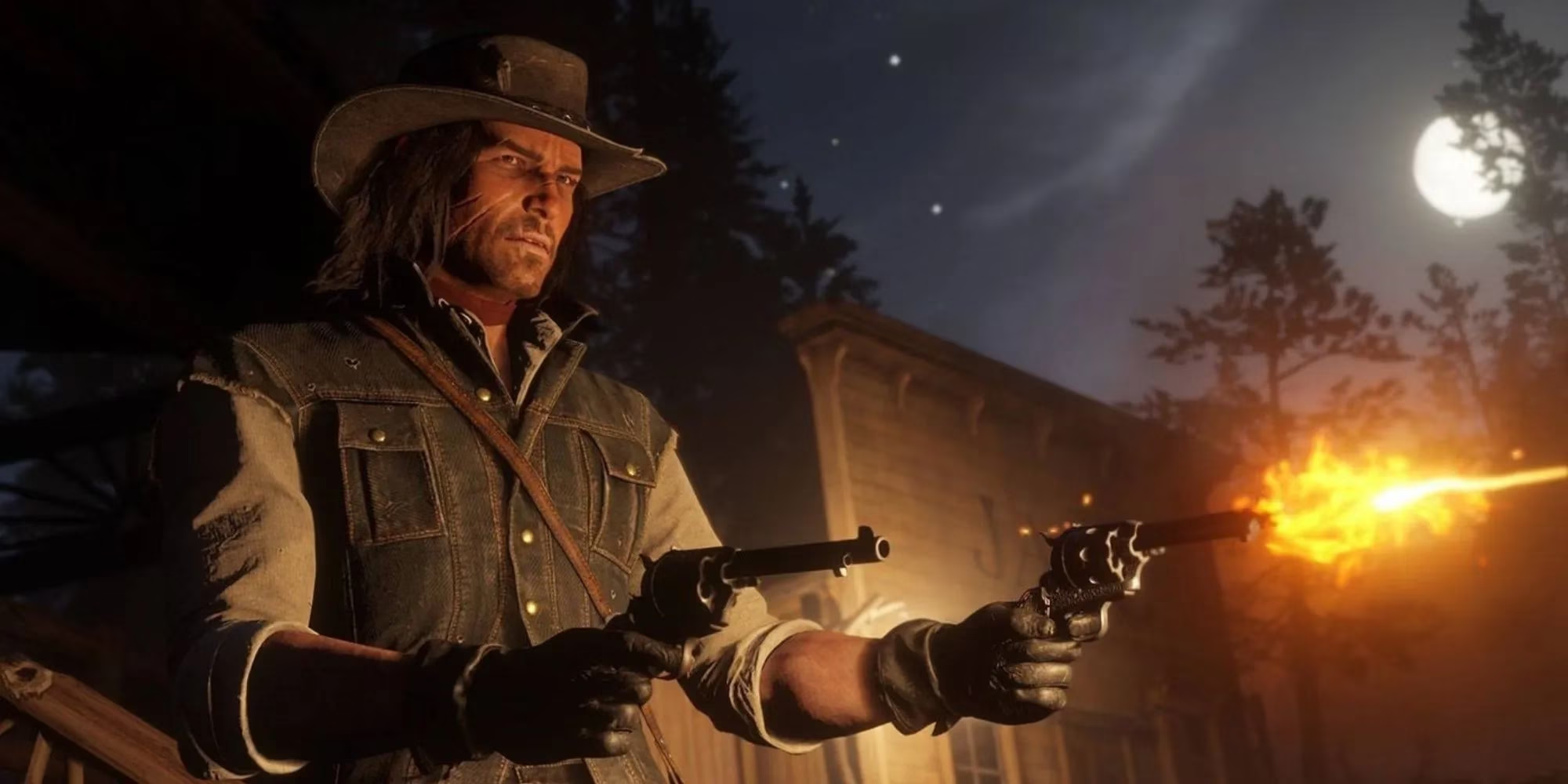
What made the pitch irresistible in 2026 was the maturity of the audience. Players who had wept during Red Dead Redemption 2’s finale were now older, hungrier for narratives that questioned not just right and wrong, but the very fabric of existence. The Dark Tower was famously divisive among King’s constant readers, but its depth was undeniable. Unlike some of his doorstop novels bloated with small-town anecdotes, Mid-World was rich with symbols and sorrow. Roland’s flashbacks to his doomed first love, Susan Delgado, could be rendered as playable segments, contrasting the sterile desert with the lush, corrupt barony of Mejis—a visual and emotional palette cleanser.
Elara knew the risks. The shadow of Red Dead was long, and a bad adaptation had already poisoned the well for mainstream audiences. But she saw the same hunger in the modding community, who had spent years stitching supernatural elements into RDR2’s engine, and in the letters from fans begging for a Charles Smith spin-off that never came. The market was not looking for another outlaw simulator; it wanted a myth. And what was Roland Deschain if not the epitome of the tragic, wandering gunfighter, his quest a parable about obsession and redemption?
The vision crystallized: a Western title that started in the familiar dust but slowly, irrevocably pulled the player toward the stars. It would have the powerful, character-driven storytelling to stand toe-to-toe with Rockstar’s magnum opus, yet wear a skin so distinct—equal parts Sergio Leone and H.P. Lovecraft—that comparisons would feel clumsy. As the 2026 summer game announcements loomed with no Red Dead Redemption 3 in sight, Elara’s small studio prepared to reveal a teaser: a single sandalwood grip emerging from a tattered holster, accompanied by the opening line of the creed. “I do not aim with my hand; he who aims with his hand has forgotten the face of his father. I aim with my eye.” The Old West was about to become stranger, grander, and infinitely more terrifying.
Comments