As Rockstar Games continues its development on Grand Theft Auto 6 in 2026, the future of another beloved franchise, Red Dead Redemption, remains a topic of intense speculation. With Red Dead Online support having concluded and no single-player DLC on the horizon, the gaming community's focus has shifted to the inevitable question: when will Red Dead Redemption 3 be revealed? While the studio could chart numerous paths for the next installment, the franchise's own history strongly suggests that a prequel remains the most logical and promising route forward.
The entire narrative foundation of the Red Dead Redemption series is built upon exploring the past. Rather than progressing chronologically, Rockstar has consistently chosen to delve deeper into the backstory of its world and characters. The 2010 original, which began with John Marston's iconic quest across the American frontier, concluded with players briefly stepping into the boots of his son, Jack. Yet, the sequel did not follow Jack's story. Instead, Red Dead Redemption 2 transported players back in time to the final days of the Van Der Linde gang through the eyes of Arthur Morgan, masterfully setting the stage for the events of the first game. This established a compelling pattern: each game serves as a prelude to the last, enriching the overarching tragedy.
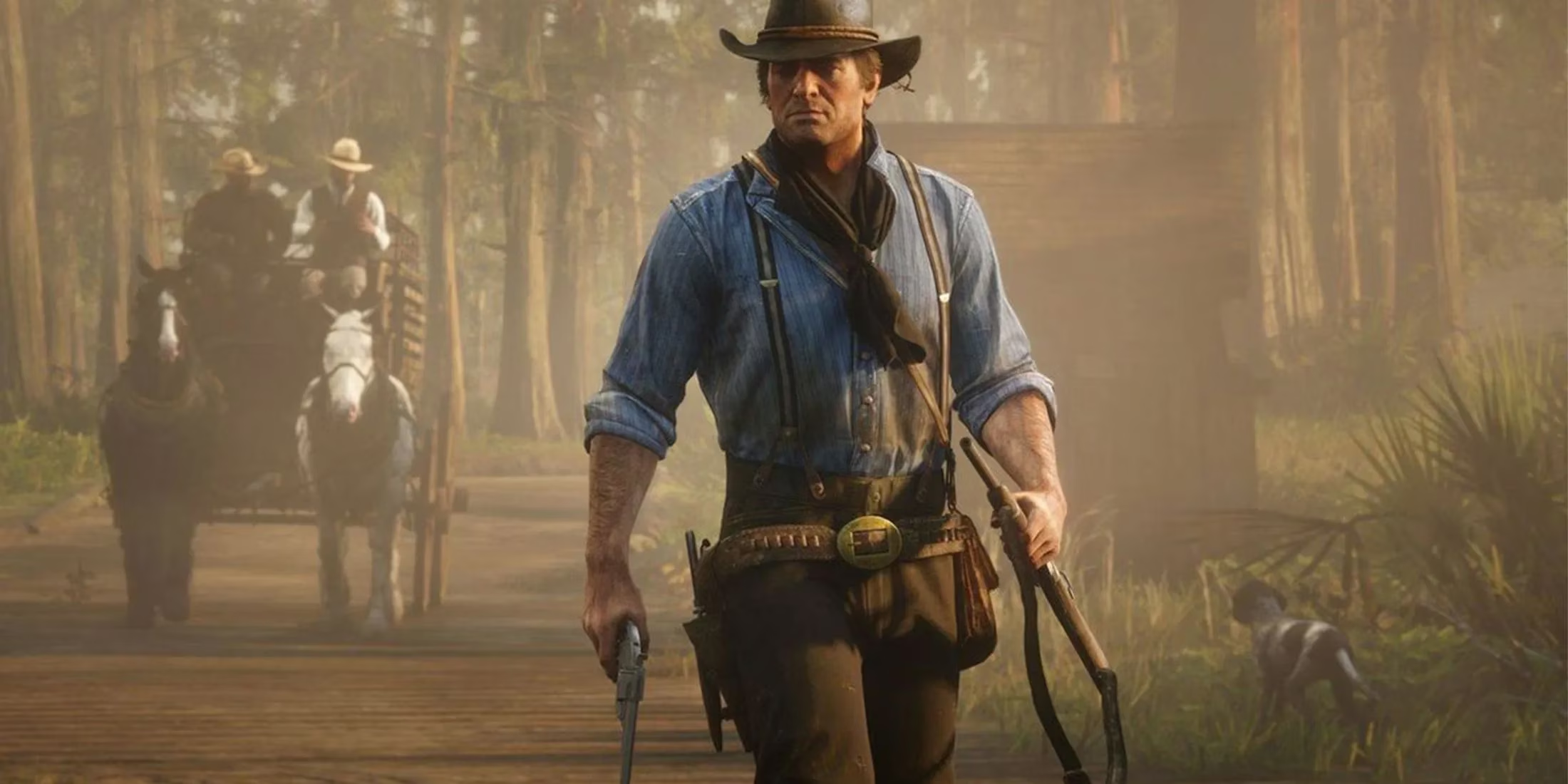
This narrative structure of protagonist succession—where players control one character who meets their end, only to continue the journey as another—has defined the series. Both main titles have employed this powerful device, creating deep emotional connections and a sense of inevitable fate. Given this precedent, there is a strong likelihood Rockstar will continue down this path for the third chapter. The rich tapestry of the Van Der Linde gang's history, only partially explored in Red Dead Redemption 2, offers fertile ground for another prequel. The franchise could significantly benefit from exploring the gang's formative years, long before the events that led to its downfall.
Imagine a game set in the gang's earliest, most idealistic days. Players could assume the role of a wholly new protagonist, perhaps an original gang member who did not survive to see the events of Red Dead Redemption 2. This character could be a close friend or mentor to a young Arthur Morgan and a fledgling Dutch van der Linde. Through this lens, players would witness the founding principles of the gang, the bonds that were initially unbreakable, and the early seeds of the discord that would later tear them apart. The story could culminate in this new protagonist's sacrifice or tragic end, with the final act passing the torch to a young Arthur Morgan, completing a poignant narrative loop.
-
Potential Setting: The American Frontier in its true "wild" heyday, the 1880s or even earlier.
-
Potential Themes: The birth of an ideology, the formation of found family, and the first cracks in a utopian dream.
-
Gameplay Evolution: Earlier technology could mean different weaponry, travel methods, and interactions with a less-tamed world.
While repeating the prequel formula a third time carries risks, the alternative—jumping forward to Jack Marston's life in the post-frontier, industrialized 1910s—presents a different set of challenges. It would fundamentally alter the core "Western" identity of the series. However, Rockstar may also view Red Dead Redemption 3 as an opportunity for a bold, new direction, perhaps focusing on a completely different cast of characters in a new region, only loosely connected to the previous saga. Yet, the unfinished stories within the Van Der Linde gang are simply too compelling to ignore.
Characters like a young Hosea Matthews, the charismatic conman, or the early relationship between Dutch and Susan Grimshaw are brimming with untold narrative potential. Exploring these dynamics would deepen players' understanding of every subsequent event and character flaw shown in Red Dead Redemption 2. Another prequel would not be a step back, but a step deeper, offering a tragic, dramatic irony where players know the hopeful family they are building is destined for a bloody, bitter end. In 2026, as fans await news, the most promising future for Red Dead Redemption still lies in its meticulously crafted past, waiting for its earliest, and perhaps most defining, stories to be told.
Comments