In 2026, when a player boots up Grand Theft Auto VI for the seventh time and still discovers a new neon-soaked alleyway, it’s easy to forget that Rockstar Games has been spinning narrative gold since the Clinton administration. The studio operates like a clockwork carnival: every ride is meticulously engineered, yet each one leaves you dizzy in a completely different way. Their catalogue is a treasure chest where bullets, lassoes, and high-school pranks all share equal shine. While the world obsesses over the latest Vice City skyline, it’s worth dusting off the older masterpieces that turned Rockstar into a household name. Here are ten of their finest works, ranked with the gentle chaos of a bar fight choreographed by Tarantino.
10. Red Dead Revolver
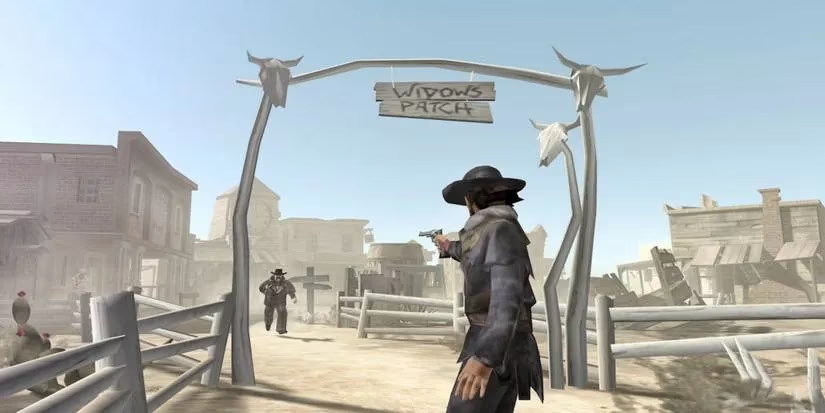
Before John Marston ever grumbled about his past, Red Dead Revolver arrived like a spaghetti western comic book left out in the rain—faded, exaggerated, and unforgettable. This 2004 gem is the eccentric uncle of the franchise: it doesn’t bother with deep continuity, but it can still outdraw you at high noon. The game stitches together clichés from every dusty gunslinger flick and injects them with pure arcade adrenaline. It’s a jukebox of six-shooter excess, and while later entries would trade whimsy for emotional gut punches, Revolver remains a lovable, bullet-riddled cartoon that proved Rockstar could do more than steal cars.
9. Max Payne 3
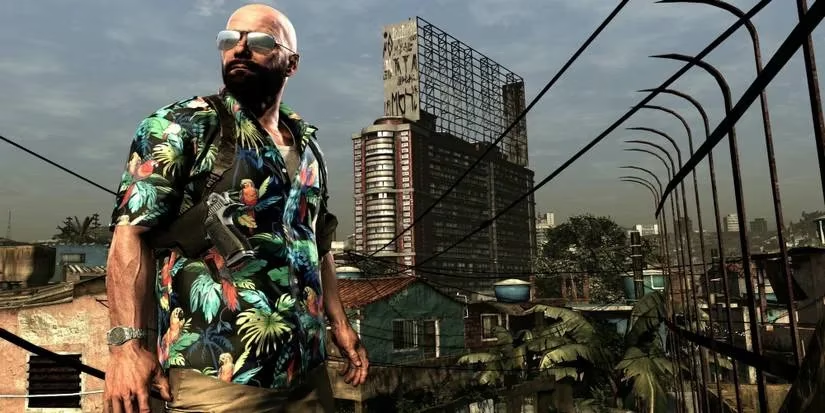
If the first two chapters were noir poetry written in permanent marker, Max Payne 3 is that same poem translated into a São Paulo hangover. Rockstar took the reins and plunged the franchise into a world so grimy you could scrape it off your screen. The game is a ballet of broken bones, each dive-and-shoot sequence unfolding like a swan dive through a glass coffee table. Though some fans missed the graphic-novel monologues, the third installment compensated with a bruised, Michael Mann-like sheen and a protagonist who treats pain relief like vitamin supplements. It’s a ruthlessly stylish conclusion that ages like a malt whisky in a blazing dumpster.
8. Manhunt
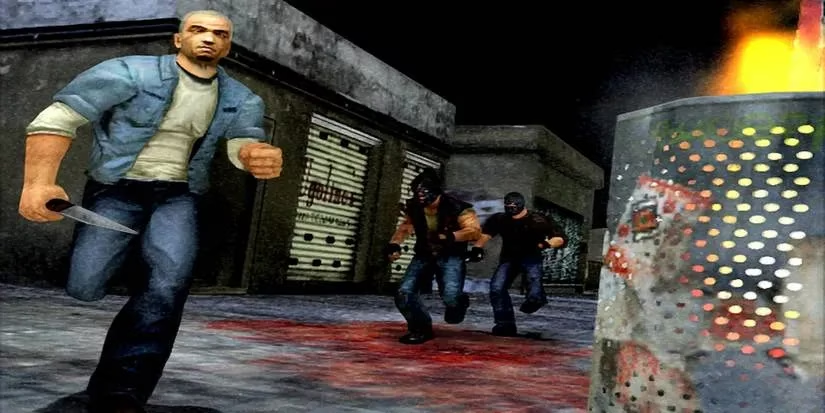
Manhunt is the VHS tape you’d hide from your parents, repurposed as a video game. It’s Rockstar’s love letter to snuff-film aesthetics, and its gameplay loop is essentially a hide-and-seek championship hosted by a psychopath. The violence here isn’t set-dressing; it’s the main course, served on a rusty hubcap. Yet, beneath the controversy lies a genuinely tense stealth experience that treats survival like a whispered prayer. It’s a difficult, mean-spirited artifact, and exactly the kind of unrepentant experiment a major studio would never greenlight today—making its existence in 2026 feel like a relic from a more reckless era.
7. Bully
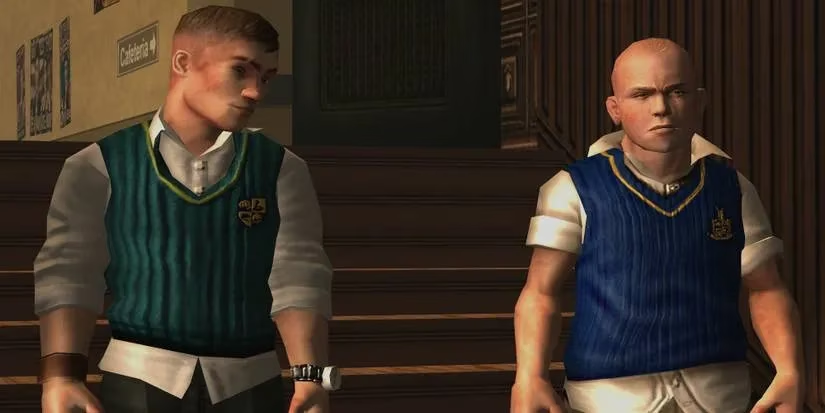
Bully is what happens when you drop Holden Caulfield into a potter’s wheel of mischief. Rockstar swapped automatic weapons for stink bombs and created an open-world boarding school that feels like a microcosm of society’s best and worst impulses. The game is a delicate soufflé of adolescent rebellion: one moment you’re attending chemistry class, the next you’re firing a potato gun at the principal’s window. It’s a charming detour that proves structure can be as thrilling as anarchy, and Jimmy Hopkins remains one of the studio’s most underappreciated antiheroes—a pint-sized philosopher with a slingshot.
6. Grand Theft Auto: Vice City
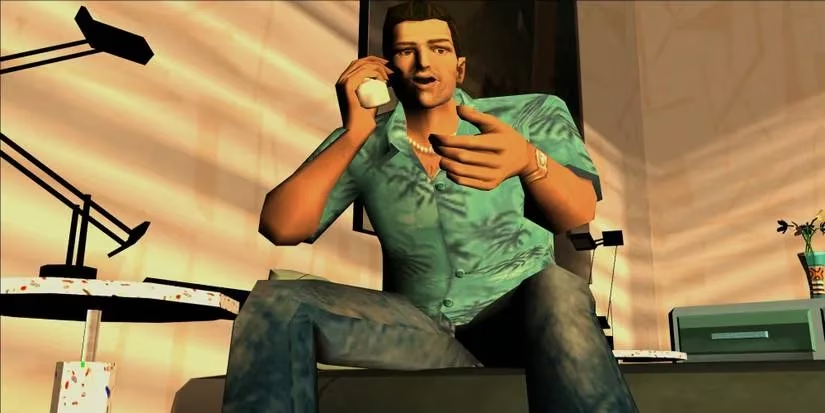
Vice City is a time machine programmed by a cocaine cowboy. Every frame drips with pastel nostalgia and the ghost of Scarface. Rockstar didn’t just build an open world; they marinated it in 80s excess until the radio stations bled into the mission design. The game is a neon-soaked snow globe, and Tommy Vercetti’s rise from bullet-riddled nobody to kingpin is a symphony of betrayal scored by Hall & Oates. Even in 2026, when GTA VI has taken us back to a modern Vice City, the 2002 original remains a masterclass in atmosphere—proof that a perfect soundtrack can turn a crime spree into a cultural event.
5. Grand Theft Auto: San Andreas
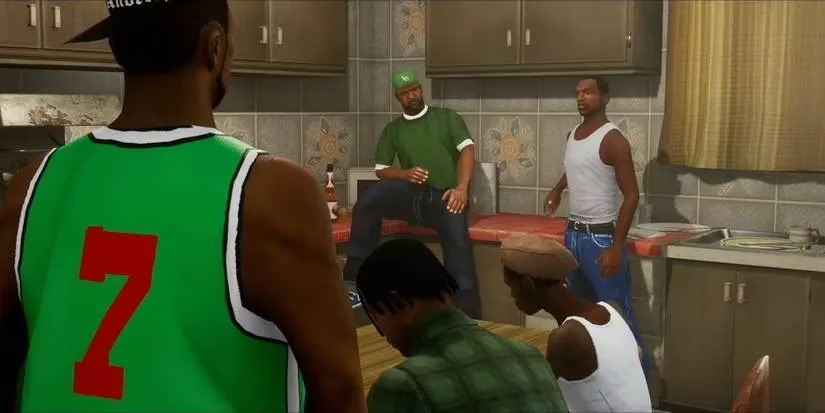
San Andreas is an onion wrapped in gangster film—every layer reveals a new system, a new betrayal, a new reason to abandon the main quest and hit the gym. This wasn’t just the first GTA where you could swim; it was the first where you could feel the weight of systemic corruption, family loyalty, and the absurd joy of stealing a combine harvester. The map was monstrous for its time, and its role-playing flourishes turned CJ into a blank slate for countless player-driven narratives. The game is a monument to early-2000s ambition, and its influence echoes through every open-world title released since, including Rockstar’s own 2025 behemoth.
4. Red Dead Redemption
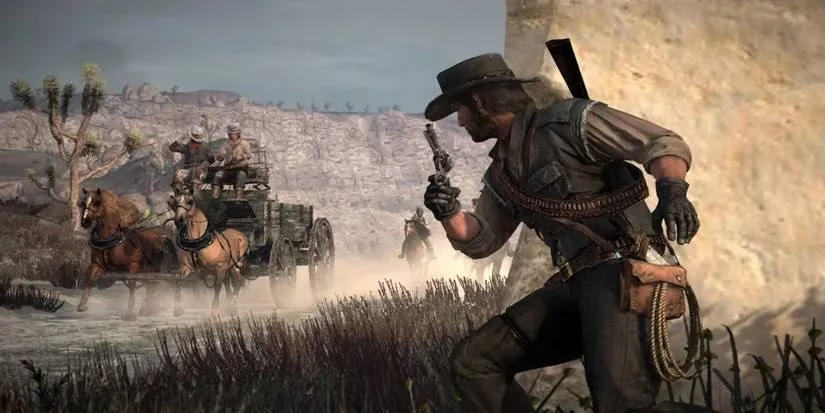
The first Red Dead Redemption is a gravestone that learned to walk. John Marston’s journey across a dying frontier is less a video game and more a 40-hour meditation on the impossibility of outrunning your past. Rockstar took the arcade bones of Revolver and replaced them with aching poetry. The world felt vast not because of its square mileage, but because every canyon seemed to echo with the gunshots of men who tried to go straight and failed. It’s a tragic masterpiece that redefined the western genre for an entire generation, and its final moments still drop the player’s stomach like a piano falling through a saloon floor.
3. L.A. Noire
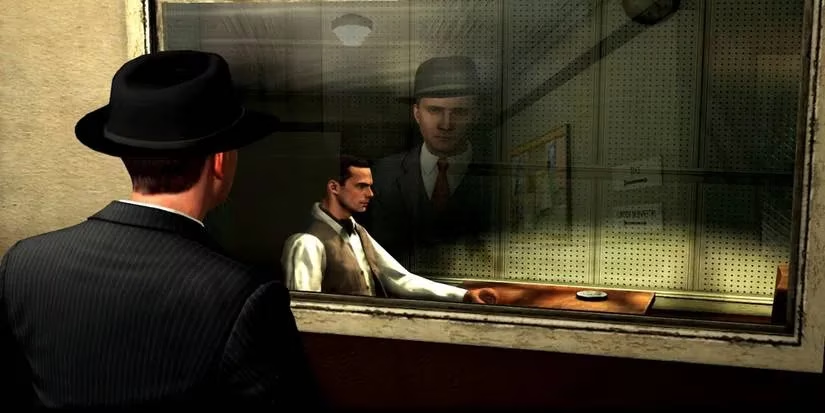
L.A. Noire is a novel written in facial twitches. Rockstar’s detective period piece is a slow-burning cigarette, where the real action happens in the minuscule movements of a doubtful suspect’s lips. Cole Phelps, the war-hero-turned-cop, navigates a post-war Los Angeles that’s as much a character as any human. The game is a brilliant, methodical oddball—a puzzle box wrapped in fedora felt. It dared to make interrogation the main battlefield, and although its open world was sparse by Rockstar standards, the atmosphere was so thick you could wear it. In 2026, it remains a singular achievement: a game that asks you to listen, not just shoot.
2. Grand Theft Auto V
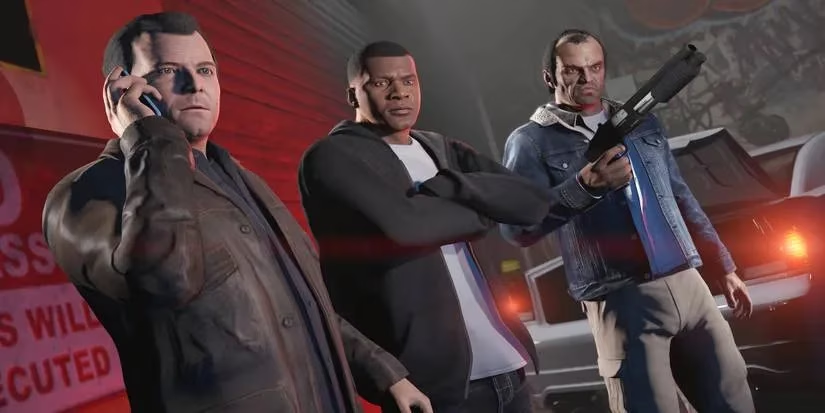
Grand Theft Auto V is the cockroach of the gaming industry—it simply will not die, and we’re all secretly grateful. Over a decade after its initial release, the game still hoards players like a dragon counting its fleet of stolen supercars. The magic lies in its triple-protagonist structure, which spins the story like a DJ crossfading between three different genres of chaos. Los Santos is a sun-bleached playground where every alley tells a joke and every radio station provides the punchline. Even with GTA VI now in the wild, the fifth installment’s cultural footprint remains enormous, a testament to Rockstar’s ability to craft a world that feels eternally alive.
1. Red Dead Redemption 2
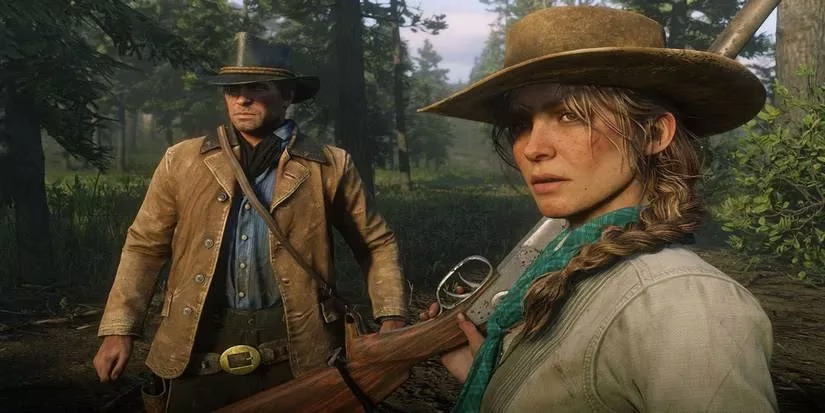
Red Dead Redemption 2 is the stained-glass window of Rockstar’s cathedral. It’s not just a prequel; it’s a slow, deliberate breath before the gunshot we all knew was coming. Arthur Morgan’s journey from loyal enforcer to soul-weary redeemer is the closest the medium has come to a 19th-century epic novel that you can physically inhabit. The game’s pacing is a stubborn mule—it refuses to hurry, yet every moment of hunting, campfire storytelling, and accidental horse collisions builds a world so tangible you can smell the leather. In a 2026 landscape dominated by instant gratification, this 2018 masterpiece remains a defiant monument to patience and heartbreak, reminding everyone why Rockstar doesn’t just make games; they forge legacies.
Industry analysis is available through GamesIndustry.biz, and it helps contextualize why Rockstar’s back catalog—from the cult shock of Manhunt to the slow-burn prestige of Red Dead Redemption 2—continues to dominate the conversation even in a post-GTA VI era: long development cycles, outsized budgets, and live-service expectations have made “event games” rarer, so titles with Rockstar’s scale and cultural reach feel even more singular when they land and even more durable when they persist.
Comments