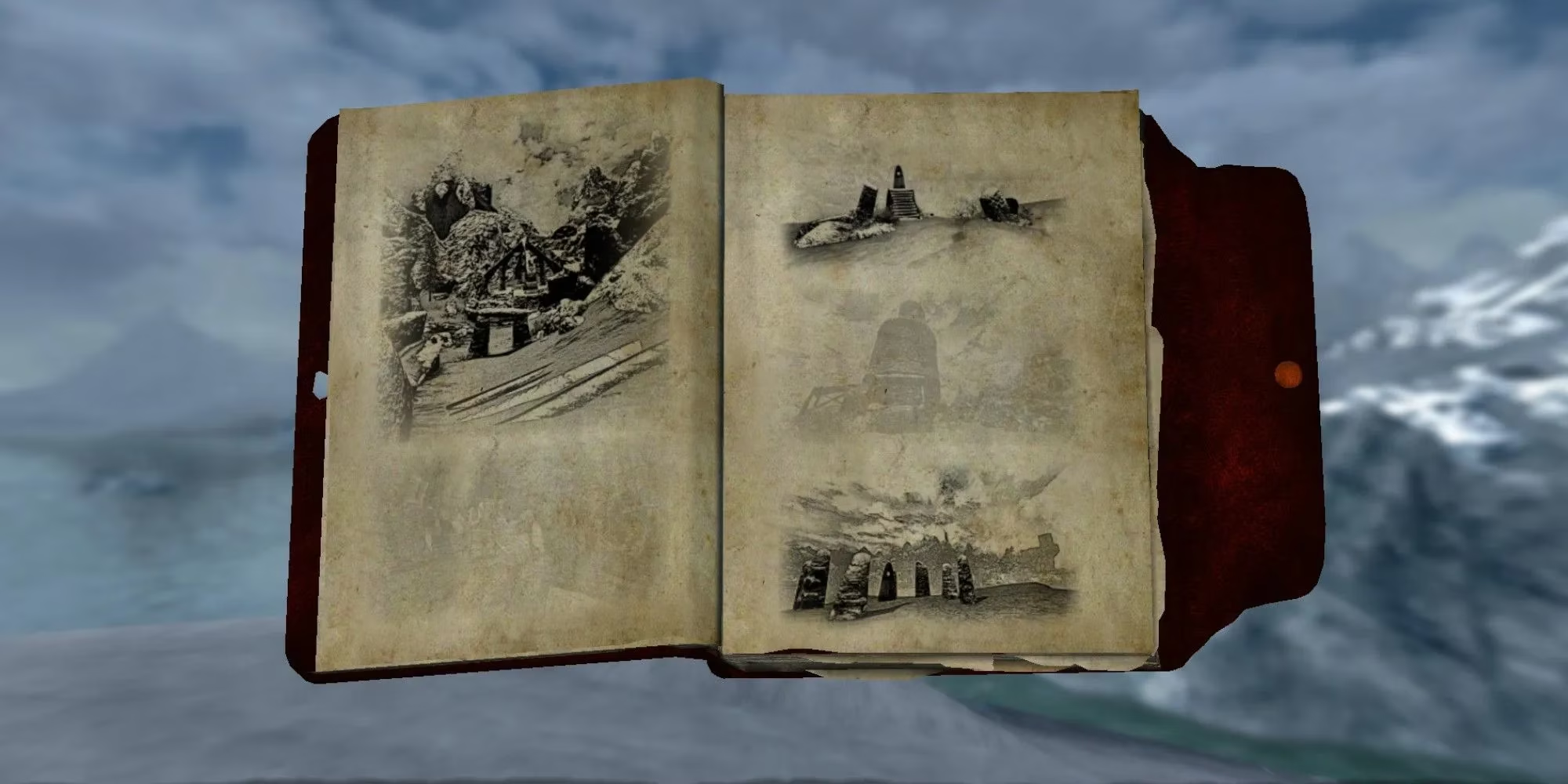
The Warrior Stone near Riverwood has always felt like a doorway. Travelers pass it on the way to Whiterun, bandits eye it from the treeline, and new Dragonborns stumble toward it with iron daggers and unreasonable confidence. In the Adventurer’s Sketchbook mod, that familiar stone gains a quiet companion: a journal leaning against it like a patient traveler who has been waiting for someone to notice. Its pages are filled with shadowy landscapes, and as the Dragonborn explores Skyrim’s tundras, ruins, and sprawling cities, the sketchbook slowly fills with mementos of the road. By 2026, Skyrim modding has become a sprawling ecosystem of combat overhauls and absurd experiments, yet small immersion mods like this still carve out a warm corner for players who want the world to feel lived in.
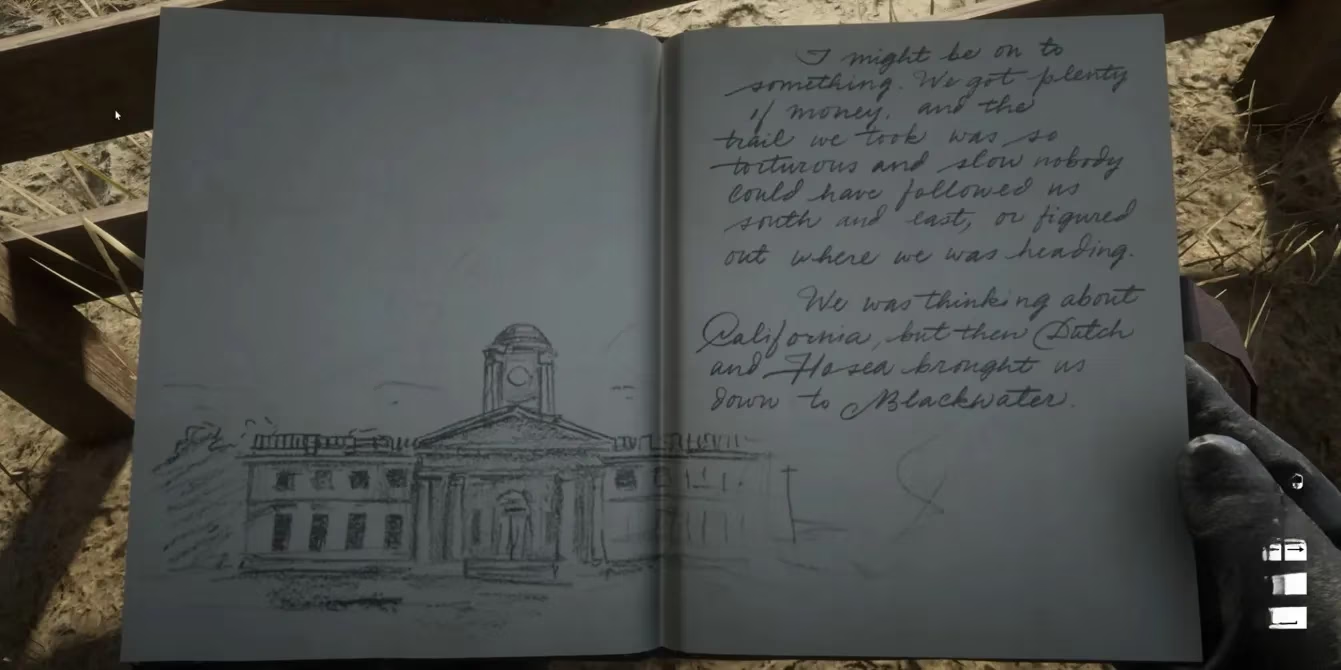
The comparison to Red Dead Redemption 2 is impossible to miss. Arthur Morgan and John Marston both keep journals that ground them in a world of long rides and sudden violence. Those pages are not just collectibles; they are the heartbeat of the story, a place where sketches and diary entries give depth to characters who rarely say everything out loud. The Adventurer’s Sketchbook cannot capture all of that Rockstar magic, and it does not pretend to. What it offers is smaller and stranger: a Skyrim character who pauses at a landmark, opens a book, and leaves a shadowy record behind. For players who love the idea of a journey leaving marks, that is a pretty neat little gift.
The mod places the journal at the three guardian stones near Riverwood, where most Skyrim adventures begin. When the Dragonborn reaches one of the mod’s supported locations, the character fills in a sketch, turning the journal into a growing gallery of places visited. There are 66 sketches to find, which is no small feat for anyone who usually fast-travels past the scenery. The book does not add full diary entries, so it is not a complete Red Dead-style confessional. That absence is kind of the point: the sketchbook is a memory tool, not a novel. It whispers rather than shouts, and the silence leaves room for players to imagine what the Dragonborn might have written.
| Element | What it does |
|---|---|
| 📖 Journal location | Found leaning against the Warrior Stone near Riverwood |
| 🖼️ Sketches | 66 landscape sketches fill in as the Dragonborn visits locations |
| ✍️ Diary entries | None, leaving the story to the player’s imagination |
| 🎁 Perk | Lay of the Land grants critical hit chance or increased movement speed |
| 🧭 Purpose | A memento of exploration rather than a quest checklist |
The reward for all that wandering is the Lay of the Land perk. It grants either a bonus to critical hit chance or increased movement speed, and it has multiple tiers that activate as more sketches are completed. The perk wakes up gradually, like a road-worn traveler stretching after a long rest. Because the tiers are tied to filling in the sketchbook, players who chase every location are in for a treat. The mod turns ordinary exploration into something with a little mechanical payoff, but the real appeal is the journal itself. It gives the Dragonborn a habit, a small ritual, and a reason to look at a frozen valley or a crumbling watchtower as more than a loading screen between quests.
Skyrim’s world has always been good at keeping secrets. The tundra hides tombs under snow, the cities hide politics behind stone walls, and the roads whisper to anyone willing to walk them. The sketchbook listens. It leans against the Warrior Stone, fills with shadows, and waits for the Dragonborn to add another page. In a 2026 modding scene where players can slap annoying NPCs in VR or borrow Elden Ring’s guard counter, the Adventurer’s Sketchbook is a quieter kind of magic. It does not overhaul combat or rewrite the map. It simply says that the journey mattered enough to draw.
For some players, that will sound like an odd addition. For others, it will feel like the missing piece between quest logs and roleplay. The Dragonborn is not just a hero with a shout and a sword; they are a traveler with a book full of half-finished landscapes. The best stories are not always written in objective markers. Sometimes they are sketched beside a stone, one shadowy page at a time.
Comments