It was a warm evening in 1899 at the Clemens Point encampment when a player known by the online handle pmetwi found themselves strolling through the Van der Linde gang’s temporary home. The air carried the usual sounds of idle chatter, clinking bottles, and the distant strumming of Javier’s guitar. Yet, amid the familiar rhythms of camp life, something small and profoundly disturbing was about to unfold—something that would capture the essence of one of gaming’s most reviled characters in a mere six seconds. pmetwi’s camera lingered just long enough to catch Micah Bell, the gang’s most volatile outlaw, approaching the camp’s sleeping dog, Cain, and delivering a swift, callous kick to wake it. The dog yelped and scrambled to its feet as Micah sneered the word “parasite.” The moment ended as abruptly as it began, but its impact lingers long after the screen fades.
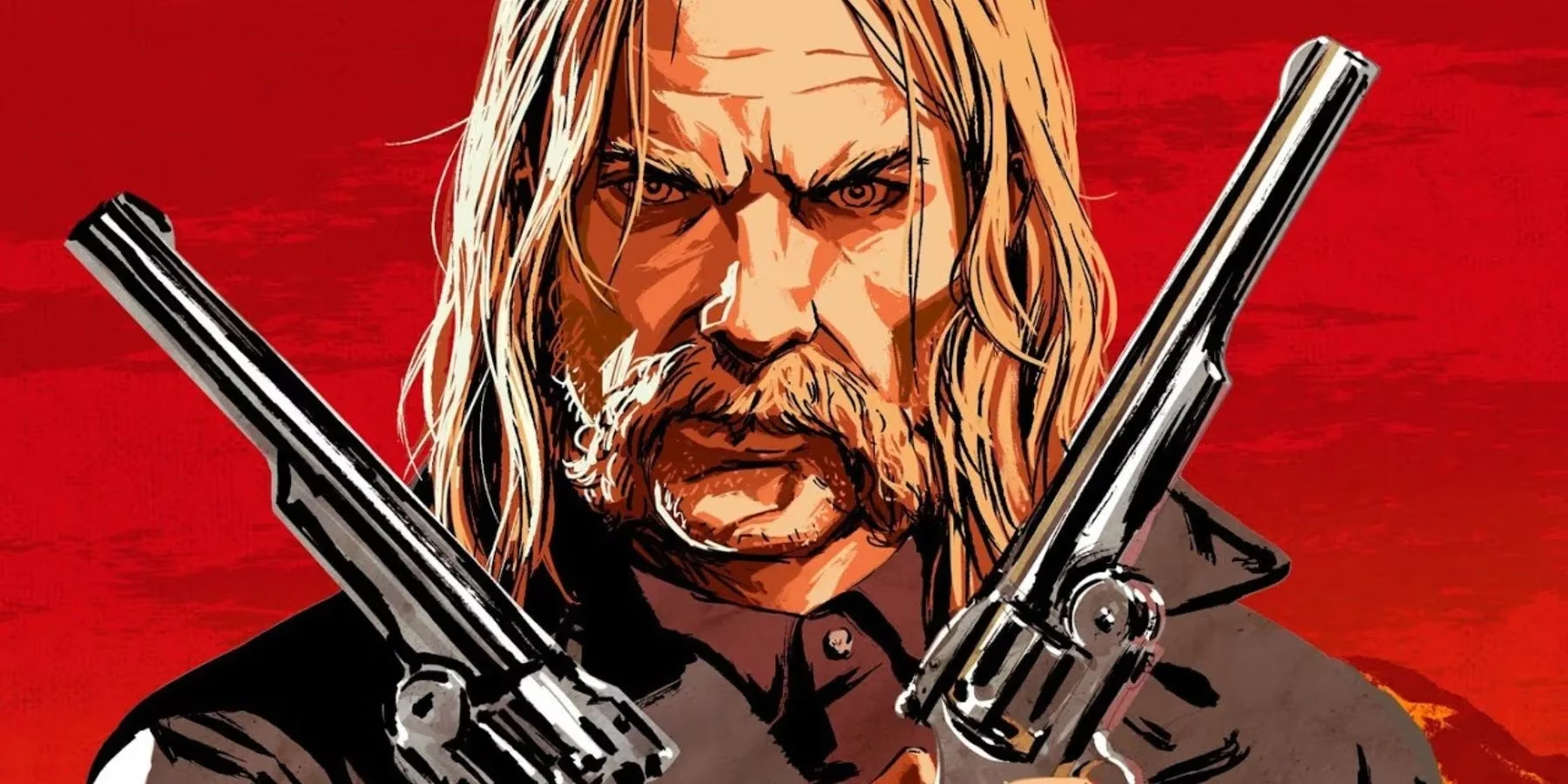
For those who have traversed the vast, sorrowful world of Red Dead Redemption 2, the Van der Linde gang is far more than a collection of non-player characters. They are flawed, deeply human companions with whom players share meals, stories, and tragedies over the game’s sixty-plus-hour journey. Dutch Van der Linde, the charismatic leader; Arthur Morgan, the conflicted enforcer; Hosea, the wizened mentor—each member has a story. And then there is Micah Bell. From the moment he is introduced, there is something off about him. He is reckless, cruel, and openly contemptuous of those he deems weak. By the time the Clemens Point chapter unfolds, his mask has begun to slip, and his actions grow more openly vile. Kicking a dog might seem a small cruelty compared to the murders and betrayals he eventually commits, but it is precisely this kind of mundane cruelty that strips away any remaining pretense of morality.
How did Cain, the dog, even come to be part of the Van der Linde gang? During the Clemens Point chapter, the mangy but friendly canine wandered into camp one afternoon, drawn by the scent of Pearson’s stew. Young Jack Marston, the son of John and Abigail, immediately fell in love with the animal, and Dutch, ever the showman, grandly announced that the dog would be adopted and named Cain. Everyone agreed, even Arthur, who could be seen later gently petting the dog when no one was watching. Almost everyone. Micah offered no objection at the time, but the disdain in his eyes was palpable. He saw Cain not as a living creature but as another mouth to feed, another sign of the gang’s perceived weakness. For Micah, loyalty and sentiment were tools to be discarded when they no longer served his own survival.
The scene pmetwi captured is not a major story beat or a secret mission unlockable after hours of searching. It is a random camp interaction, one of thousands of scripted moments Rockstar Games scattered throughout the game’s open world to breathe life into its cast. And yet, it is precisely these small, missable vignettes that define Red Dead Redemption 2’s greatness. In the clip, Micah walks over to Cain, who is dozing peacefully near a tent. Without warning, he draws back his boot and kicks the dog hard enough to startle it awake. As Cain scurries away, Micah mutters “parasite” and continues on his way as if nothing happened. No one in the camp reacts—perhaps too absorbed in their own troubles, or perhaps so accustomed to Micah’s venom that such behavior no longer surprises them. But pmetwi noticed, and by sharing the six-second clip on a social platform, they reminded a worldwide community of players just how thoroughly loathsome Micah Bell truly is.
Why does such a small act provoke such a visceral reaction? The answer lies in the way Red Dead Redemption 2 constructs its emotional world. The game spends countless hours making the player care about the gang and its fragile hope for a better life. Hosea talks about buying a ranch; Tilly dreams of a quiet, law-abiding existence; and even Arthur begins to question the path they are on. Into this fragile ecosystem, Micah brings only poison. He mocks the women, threatens the peace, and now, with this single kick, shows a cruelty that no amount of charm can rationalize. A man who would kick a sleeping dog without provocation is a man who feels no genuine loyalty to anyone. Is it any wonder, then, that he becomes the prime architect of the gang’s destruction?
Even in 2026, a full eight years after the game first launched on October 26, 2018, players continue to uncover moments like this. The world of Red Dead Redemption 2 is so dense, so meticulously layered, that no single playthrough can reveal all its secrets. Some players have ridden with Arthur Morgan for hundreds of hours and never seen Micah interact with Cain. Others have discovered it by chance, much like pmetwi, and been momentarily frozen by the casual brutality. Such discoveries fuel endless discussions across forums and video platforms, proving that the game’s narrative depth has not diminished with time—it has only been reinforced. What other tiny, telling moments might still be hidden in the long grass of New Hanover or the dusty corners of a camp at Horseshoe Overlook?
The kick also serves a deeper narrative purpose, one that Rockstar likely planted with deliberate subtlety. Throughout the story, Micah repeatedly chastises “dead weight” and “parasites” within the gang, a rhetoric that slowly poisons Dutch’s mind. Cain the dog becomes a symbolic figure of innocence and loyalty, and Micah’s treatment of him mirrors his eventual treatment of the entire gang: he uses what he can and discards the rest with contempt. By the time Arthur faces Micah on that snowy mountainside, the betrayal feels not just personal but inevitable—the culmination of every sidelong glance, every cruel word, every kick delivered when no one was watching. The player is meant to despise Micah, and Rockstar ensures that even the smallest details reinforce that hatred.
When pmetwi posted the clip, the response from the community was immediate and fiery. Comments ranged from dark humor (“Reason number 847 to hate Micah”) to genuine outrage (“I wish there was a prompt to kick him back”). Some players admitted they had never seen the interaction and vowed to load an old save just to witness it for themselves. Others recounted their own experiences with Micah’s nastiness—the way he antagonized Charles, the racist remarks to Lenny, the constant needling of Arthur about his health. The dog-kicking moment became another entry in the long list of grievances players hold against the character, a list that makes the game’s epilogue all the more cathartic. In that epilogue, set years after the gang’s collapse, players take control of John Marston and finally get a chance to hunt down and confront Micah in the mountains. The satisfaction of that confrontation is amplified a hundredfold by memories of scenes like the one pmetwi captured. Every bullet feels righteous, every blow a vindication for Cain, for Arthur, and for every camp member Micah ever wronged.
Perhaps the most poignant question this event raises is not about Micah at all, but about us as players. Why do we care so much about a virtual dog being kicked in a video game? The answer lies in the power of interactive storytelling. Red Dead Redemption 2 doesn’t just show us a world; it invites us to live in it, to form attachments, and to feel protective over the vulnerable. When Micah harms Cain, he isn’t just kicking a collection of pixels. He is attacking a symbol of the hope and humanity that Arthur and the others are desperately trying to preserve. The player who watches that kick may feel their blood boil not because the animation is particularly graphic, but because they have spent dozens of hours learning to care. Rockstar understood that the most effective villainy isn’t always found in grand speeches or epic showdowns; sometimes it’s found in a single, casual act of cruelty on a quiet evening in camp.
As 2026 unfolds and players continue to explore the vast American frontier of Red Dead Redemption 2, moments like Micah’s kick will keep surfacing. They serve as reminders that even the most familiar virtual worlds still have stories to tell, and that the best antagonists are those who can make us feel genuine, unscripted rage. pmetwi’s six-second recording may not have changed the course of the game, but it added another stitch to the rich tapestry of community discovery. And for anyone who ever doubted just how low Micah Bell could sink, the clip provides an answer: low enough to kick a sleeping dog and call it a parasite. Low enough to leave no doubt that he was always a monster in human skin.
Comments