As a professional game player, my controllers have become extensions of my hands, and the choices I make in virtual worlds often resonate far beyond the screen. By 2026, the medium has matured into a galaxy of interactive philosophy, where every pixel can weigh a moral question. Games are no longer just about reflexes or power fantasies—they are prisms that refract the complex light of human existence into dilemmas that linger like morning fog over memory.
I’ve spent years navigating stories that demand more than just skill; they ask me to examine my own ethical core. The following experiences are not just highlights of my career but turning points in how I understand freedom, sacrifice, and the self. Each title mentioned below is a world I’ve inhabited, a struggle I’ve embodied, and a philosophical puzzle that reshaped the way I see reality.
Red Dead Redemption 2: The Gravity of Redemption
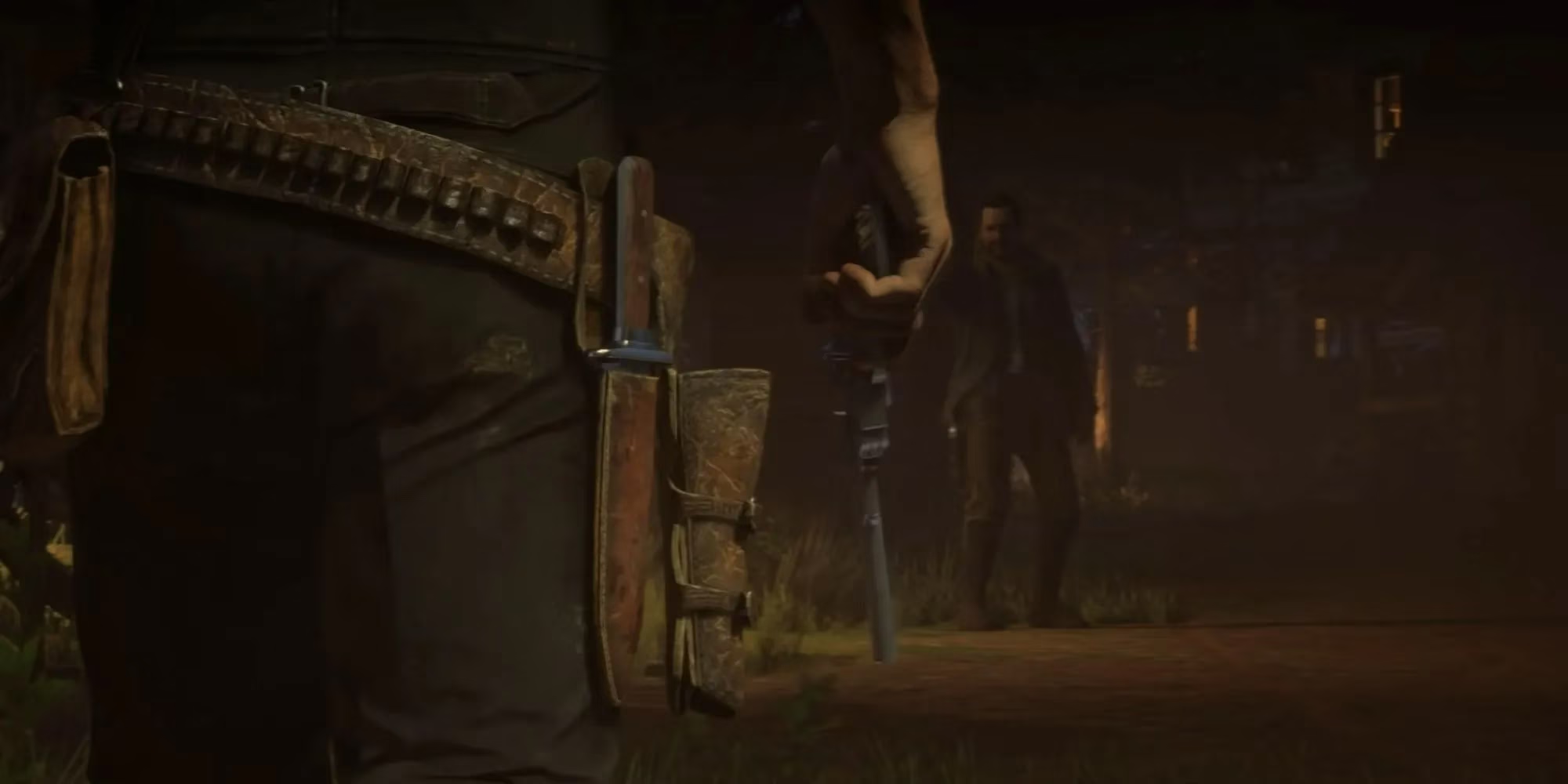
In the vast, painterly landscapes of Red Dead Redemption 2, I became Arthur Morgan, an outlaw clinging to a code in a world that was outgrowing him. The game didn’t just present a narrative of redemption; it wrapped me in its dusty coat and forced me to walk miles in Arthur’s worn boots. Every choice felt like a pebble dropped into a still pond, rippling through the gang’s fragile ecosystem. The philosophical depth here is not loud—it hums quietly like a distant train. The theme of freedom is a double-edged knife: the gang chases it, yet every step toward civilization erases the wild spaces they treasure. I began to see Arthur’s journey as a slow-motion eclipse, where the shadow of his past gradually consumes the light of his possible futures. The game asked me what remains when the chase for freedom ends, and whether a man’s legacy is carved more by his final acts than by his cumulative sins. My own morality became a compass needle, trembling between loyalty and a gnawing need to do better.
Outer Wilds: The Cosmic Timepiece
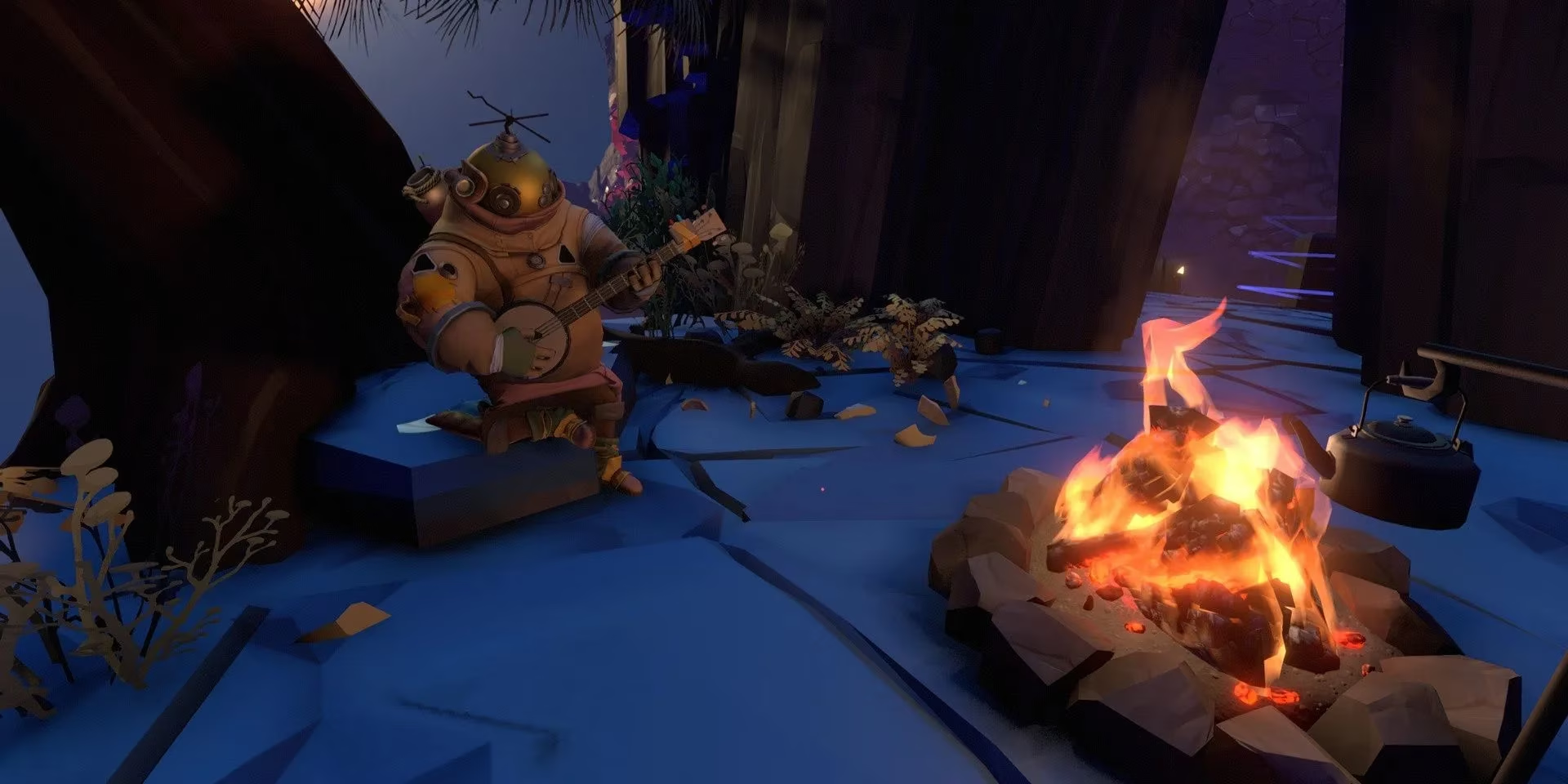
To discuss Outer Wilds is to peel back the skin of an ordinary puzzle game and find the heartbeat of existential philosophy underneath. I was an astronaut archaeologist trapped in a 22-minute time loop, like a hand forever turning the last pages of a book. The supernova that resets the solar system was not a failure but a rhythmic reminder of cosmic indifference. As I translated alien texts and gathered pieces of a long-dead civilization, the narrative became a mirror reflecting our own finite nature. The most devastating moment came not in a boss fight but in the quiet understanding that some endings are not about winning; they are about accepting. I felt like a single note in an infinite symphony—essential only for my brief moment, yet part of a melody that will outlast me. This game taught me that the pursuit of knowledge is tangled with the sorrow of witnessing something magnificent that can never be saved.
The Stanley Parable: A Funhouse of Free Will
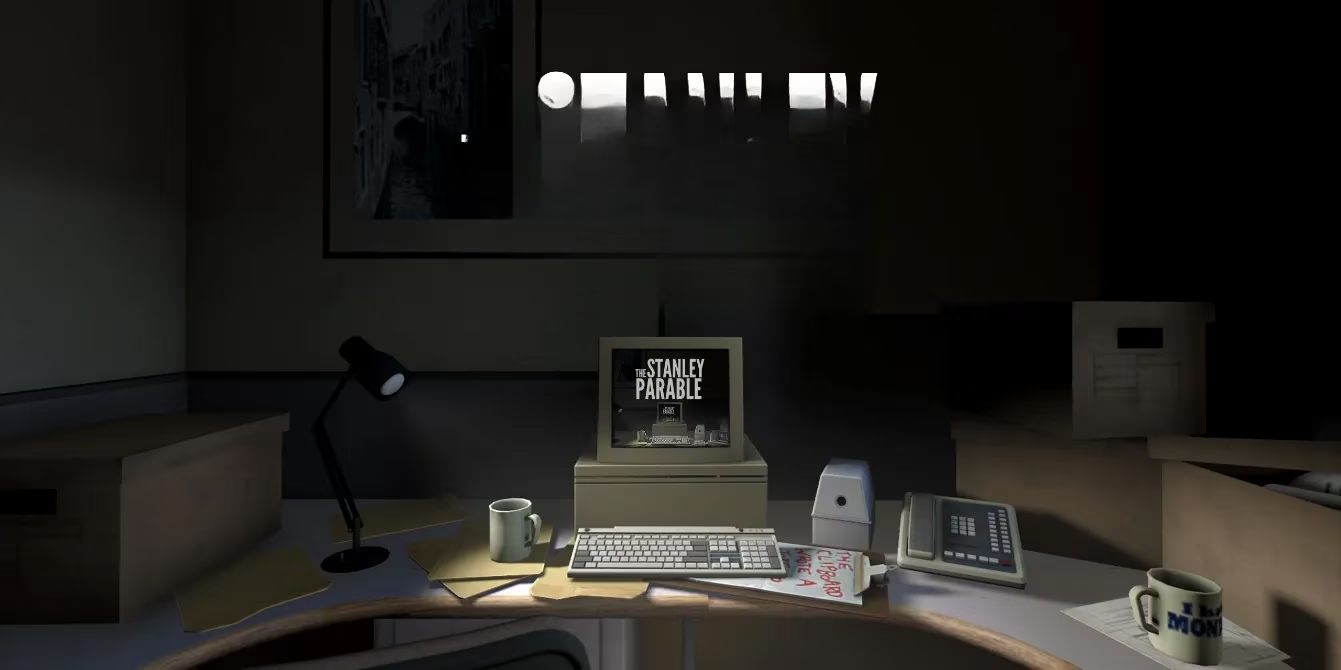
On the surface, The Stanley Parable is a whimsical romp through an empty office, guided by a narrator who is part philosopher, part trickster. But beneath the humor lay a razor-sharp interrogation of free will. I became Stanley, a man defined by the absence of his coworkers, and immediately began testing the boundaries of the narrator’s script. Each playthrough revealed a new branch, a new way to rebel or comply, and with each, the game peeled away layers of my assumptions about choice. It was like arguing with my own reflection in a hall of mirrors—every decision I made was both authentic and predetermined by design. The game’s existential comedy made me acutely aware of the monotony I accept in daily life and the silent autopilot that steers so much of my existence. By the time I reached the broom closet ending for the third time, I realized I was no longer playing Stanley; I was playing myself.
The Witcher 3: Wild Hunt – A Bestiary of Moral Grey
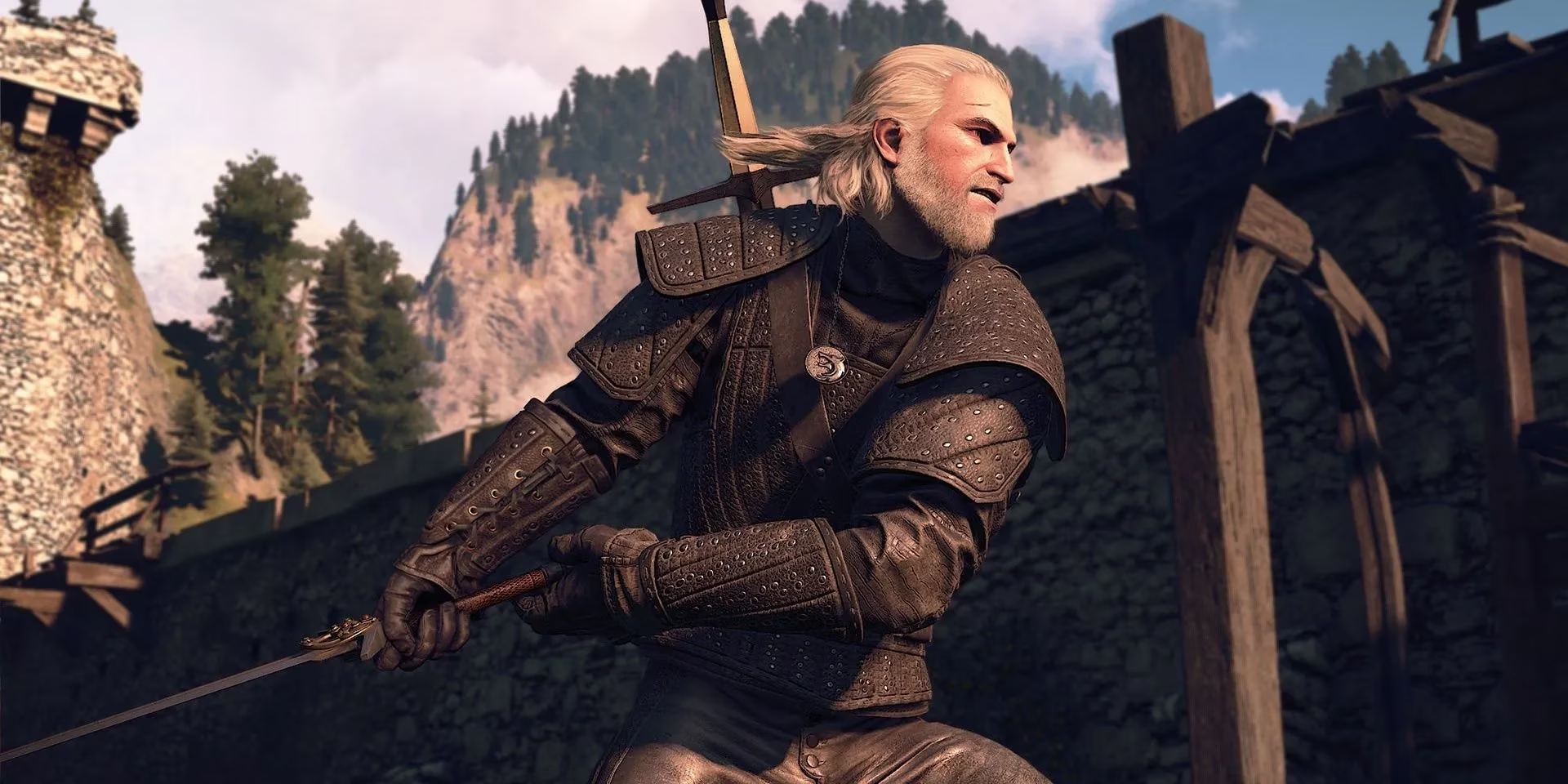
In the grim, beautiful world of The Witcher 3, I stepped into the scarred skin of Geralt, a monster slayer who often found that the real monsters wore human faces. The game’s philosophy is written in the blood of its quests. Rarely was I offered a clean choice; instead, each decision was a splintered road leading to different shades of tragedy. I remember a side quest about a cursed infant, where the lesser evil still stained my hands. The experience was like navigating a labyrinth where every turn revealed a new ethical puzzle, and the exit was always a door labeled “cost.” The game forced me to consider that neutrality can be a form of complicity, and that doing nothing is still a choice with consequences. In a world this cruel, heroism is not about finding the right answer; it’s about carrying the weight of the wrong ones.
The Walking Dead (Telltale): Love as a Shrapnel of Survival
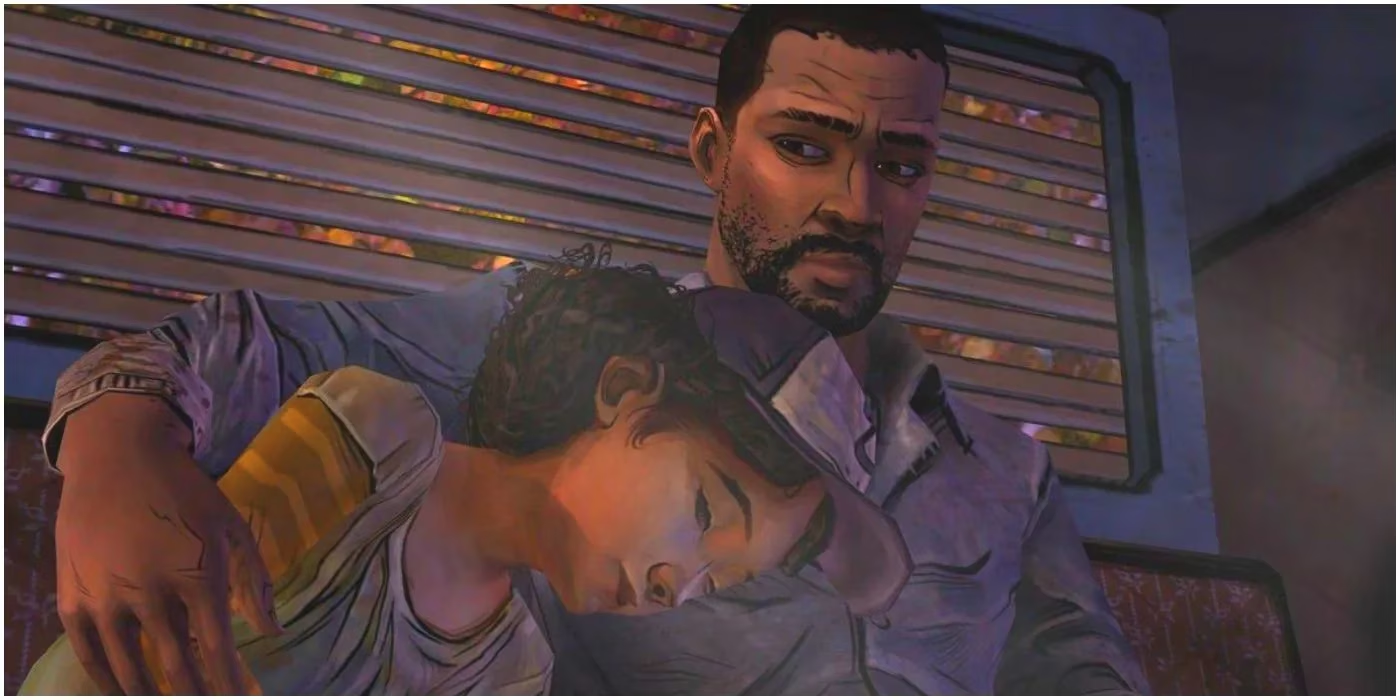
Telltale’s The Walking Dead transformed the zombie genre into a crucible of parental philosophy. As Lee Everett, I was not just a survivor; I was a guardian shaping the soul of a young girl named Clementine in a world where tomorrow was never guaranteed. Every decision felt like surgery without anesthesia—quick, brutal, and permanently altering. The game asked how far I would go to protect a child’s innocence while also preparing her for a reality that devours innocence daily. It explored the economy of survival: how many moral debts can one accrue before the collector arrives? The most searing moment came at the end of the first season, a choice that didn’t feel like a narrative mechanic but like a genuine, heart-breaking necessity. I learned that love in a broken world is often expressed not in grand gestures but in the harrowing act of letting go.
BioShock: The Little Sisters of Dystopia
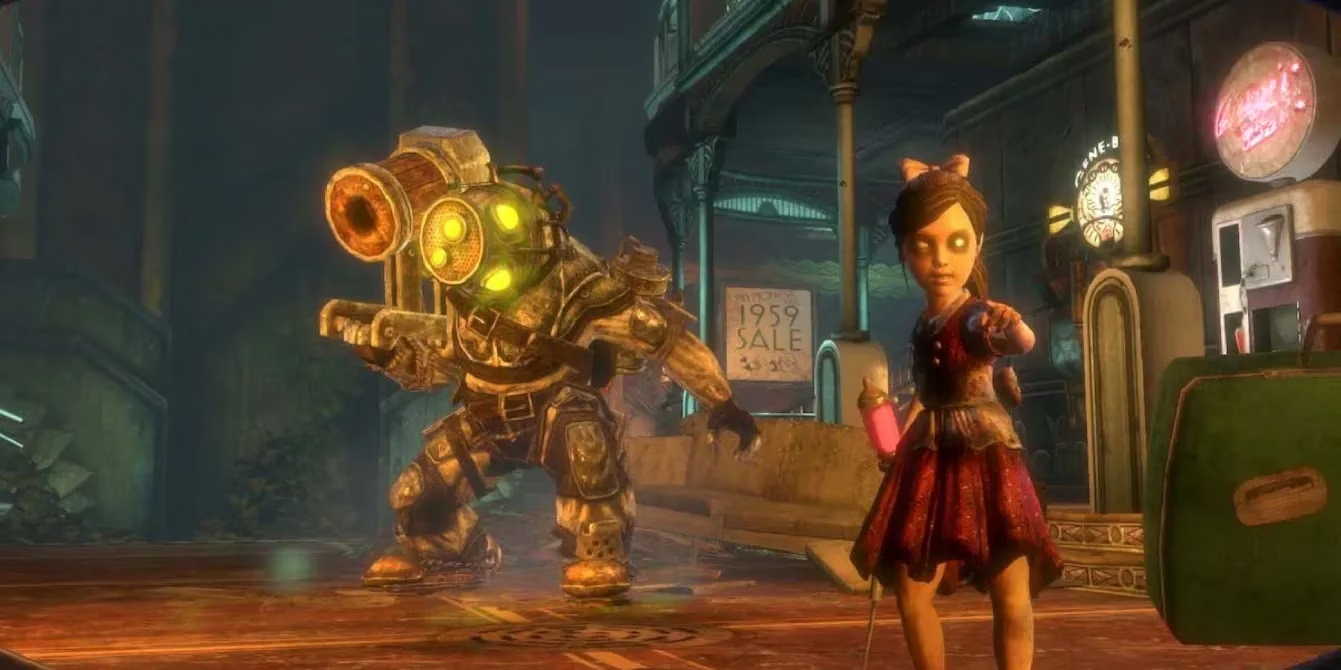
The underwater city of Rapture is a cathedral of Objectivist ideology collapsing under its own hubris. In BioShock, I wrestled with the fate of the Little Sisters, genetically altered children whose very existence was a commodity. The choice to harvest or save them became the game’s moral pulse. But the deeper philosophy wasn’t in the binary; it was in how the game interrogated my initial ruthlessness. It revealed that my thirst for power could be a cage, and that altruism often requires more strength than exploitation. The dystopia became a funhouse mirror showing what society might become if we abandon empathy for efficiency. Every plasmid I injected felt like a pact, and every saved Little Sister was a small revolt against the darkness that Rapture insisted was human nature.
Cyberpunk 2077: Neon Limbo of Identity
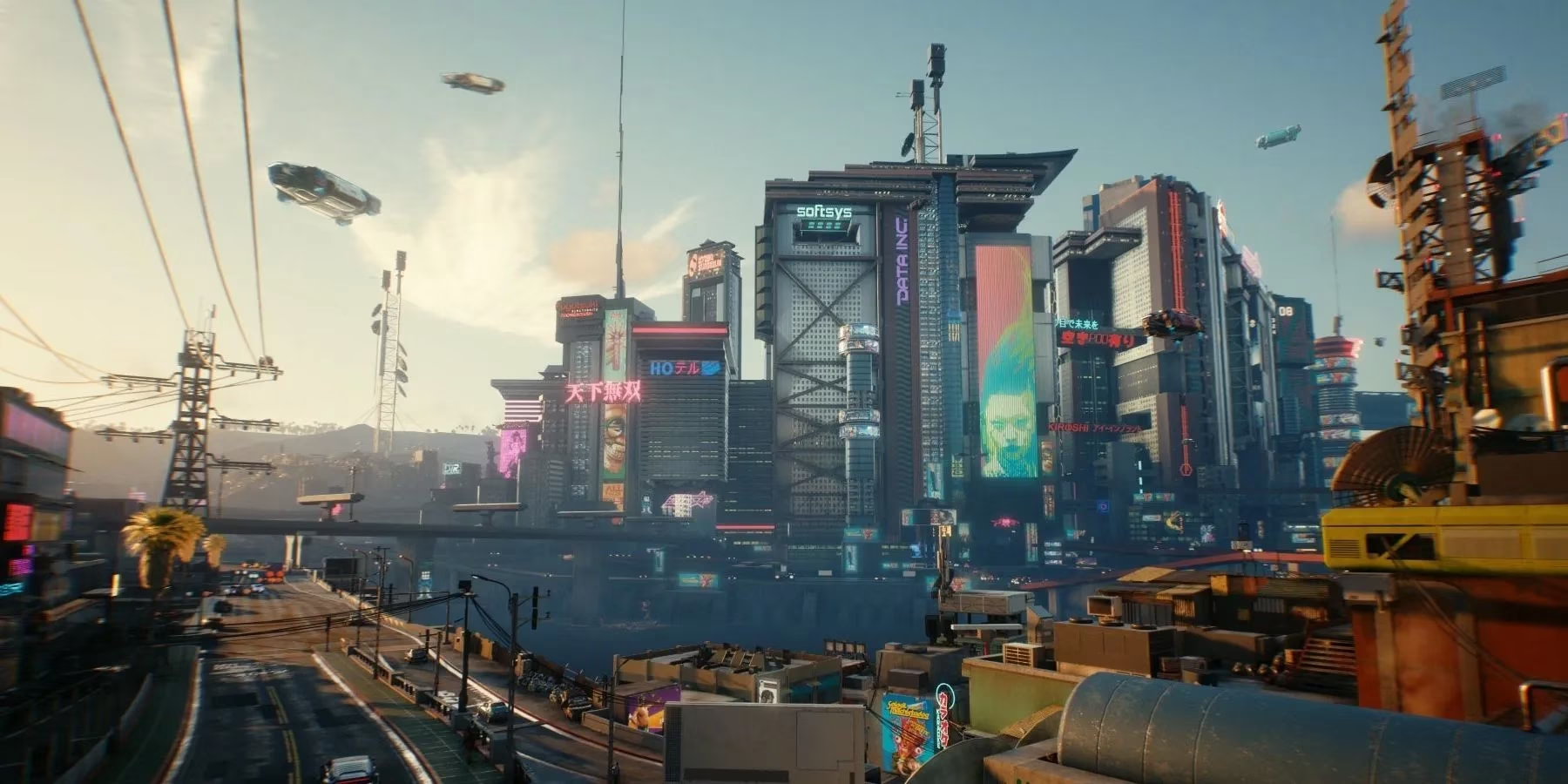
Night City is a monument to late-stage capitalism, where chrome and flesh blur into a new kind of evolutionary struggle. In Cyberpunk 2077, I was V, a mercenary whose dying mind was playing unwilling host to a digital ghost. The game’s philosophy orbits the question of what makes us human when our memories can be edited like text files. It challenged my notions of legacy: do we want to burn bright and short or live long and unnoticed? The corporate class divide was not just background set-dressing; it was a disease that infected every interaction. I felt like a moth caught between the flame of glory and the dusty safety of existence. The multiple endings reflected how my understanding of freedom evolved—from selfish survival to a quiet acceptance that some fates are not about me alone. It taught me that sometimes the most radical act is to choose an unremarkable life.
Life Is Strange: The Butterfly’s Weight
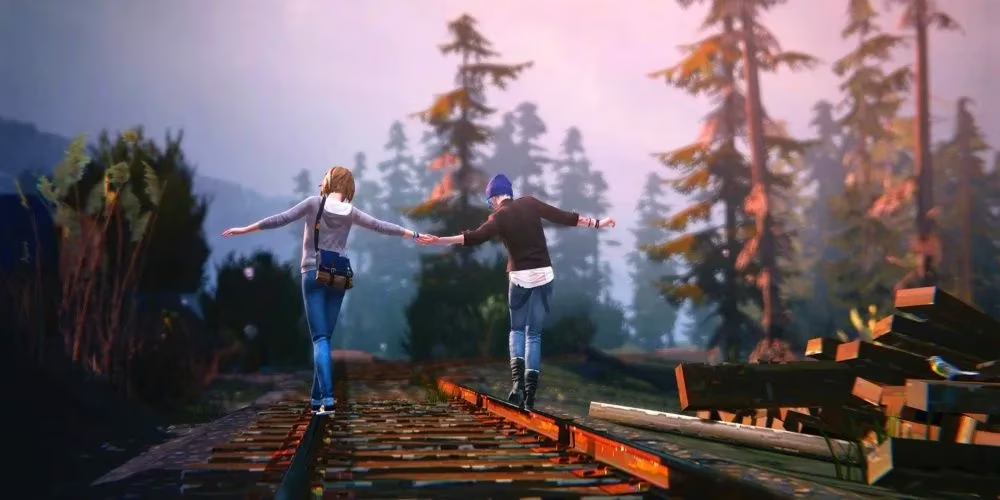
As Max Caulfield in Life Is Strange, I held time in my hands like a fragile, threaded needle. The game is a coming-of-age tale wrapped in a supernatural gauze, but its true power is in how it makes you feel the weight of every rewound second. I tried to mend friendships, save lives, and undo petty cruelties, only to discover that time refuses to be a simple eraser. The philosophical dilemma crescendos into a choice that is not about right and wrong but about values: the sanctity of a whole community versus the life of a single beloved person. I had to ask myself whether love justifies playing god, and whether I could live with the echoes of my final decision. The experience was akin to trying to hold back the tide with a teacup; the inevitability of loss made every small victory achingly precious.
The Last of Us: The Monster in the Mirror
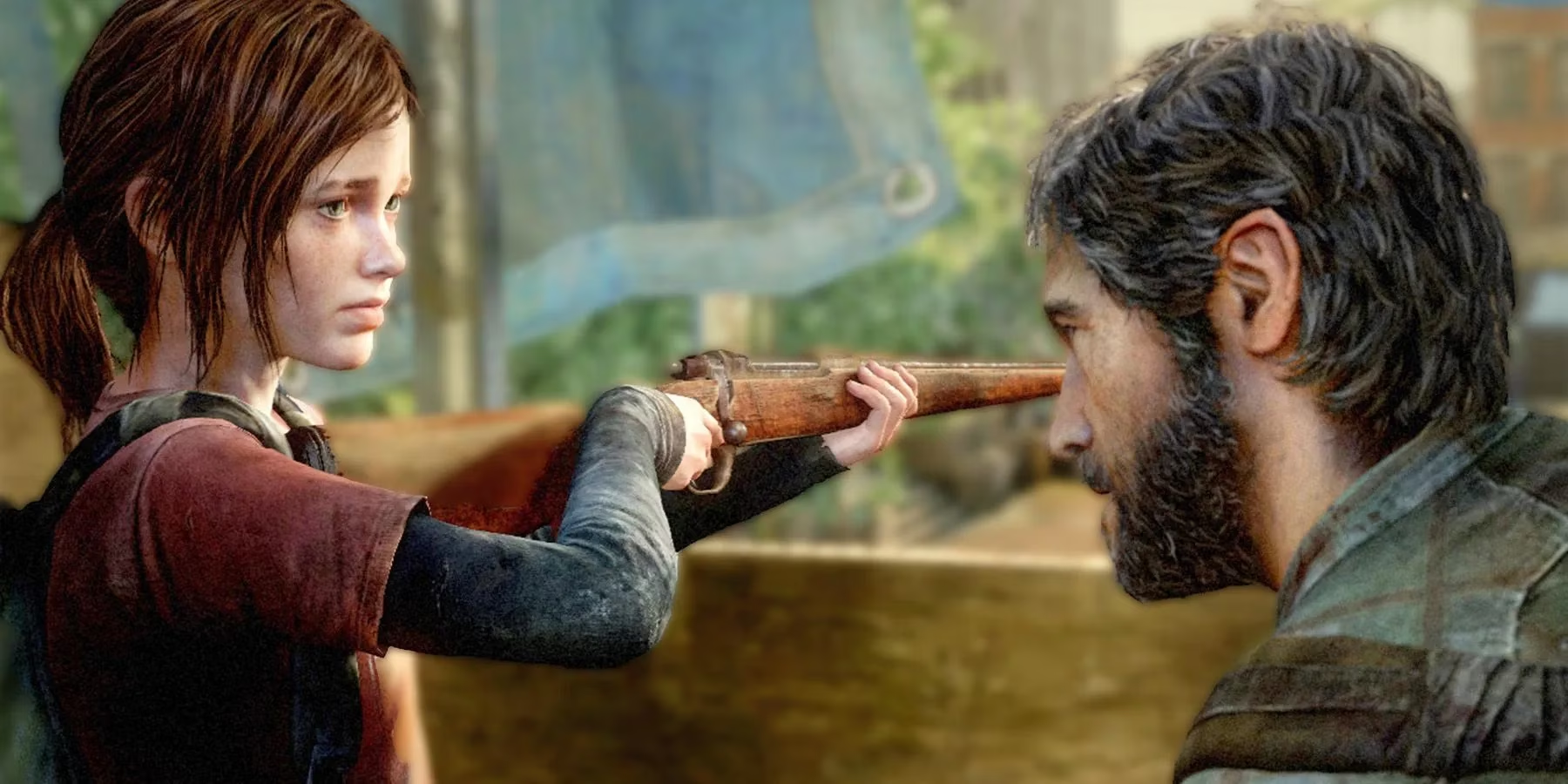
In a world stripped of civilization by a fungal plague, The Last of Us presented me with a linear path that felt anything but simple. The game’s philosophy is not in branching choices but in witnessing Joel’s decisions as if they were my own desperate reflexes. The ending of the first game remains one of the most ethically fraught moments in gaming. To save Ellie, I—through Joel—sacrificed the potential cure for humanity. This was not heroism; it was a father’s love twisted into a blunt weapon. The game asks us to look at the monster we become when protecting something precious. The sequel deepened the wound by forcing me to understand the perspective of those I had hurt. Revenge and forgiveness became two serpents eating each other’s tails, and I realized that moral clarity is a luxury that extinction events strip away.
SOMA: The Ghost in the Machine
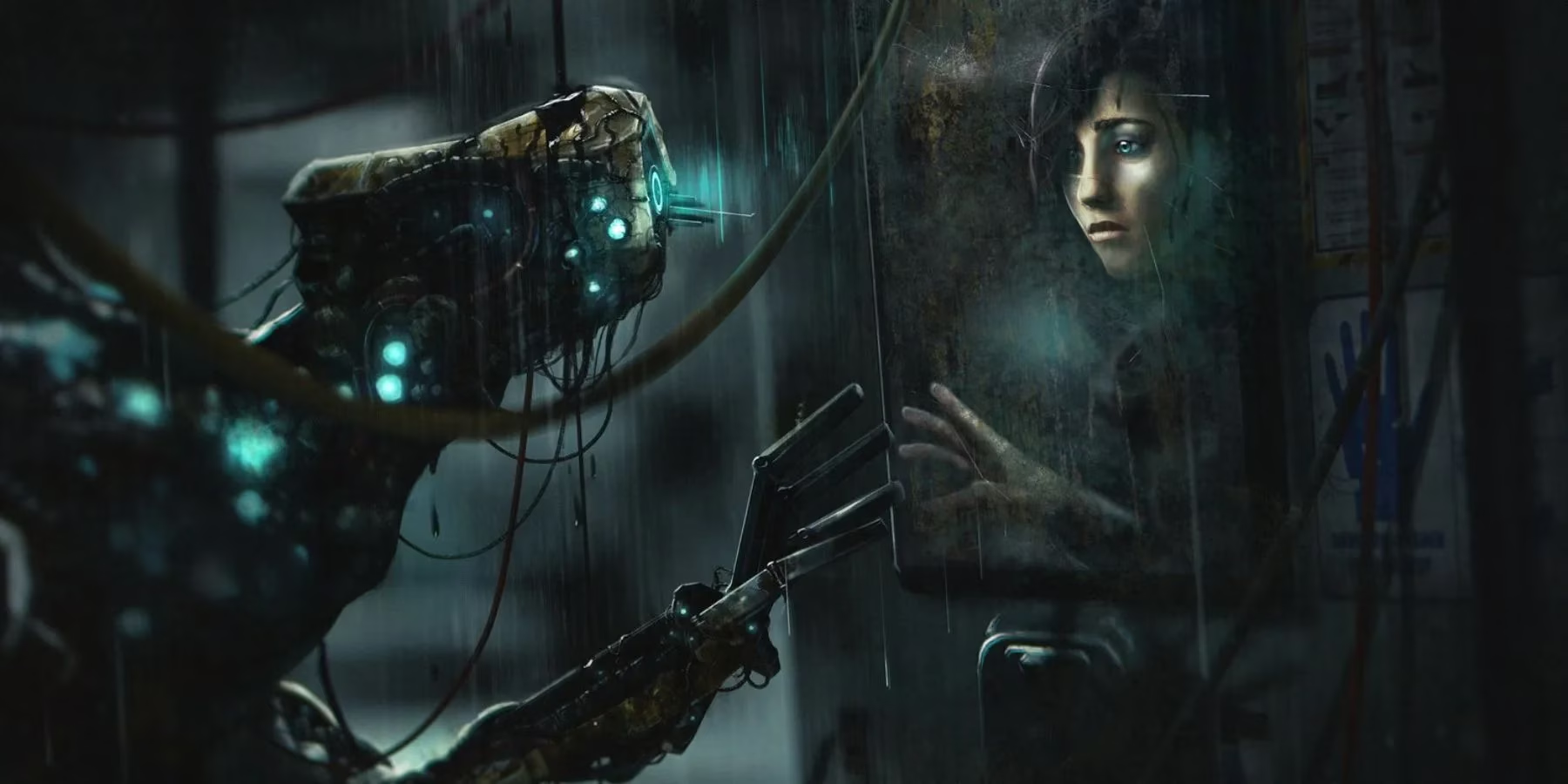
Finally, SOMA, the science fiction horror that burrowed into my psyche like a parasite. This game is a slow descent into a philosophical abyss where the horror is not a monster but a question: if you can copy a consciousness, which version is truly you? I walked the dimly lit corridors of PATHOS-II, encountering AI that believed itself to be human, and had to decide whether to pull the plug. Each choice felt like staring into a fractured kaleidoscope of identity. The game made me confront the terror that consciousness is merely a pattern, replayable and discardable. In one pivotal moment, I had to witness a “me” left behind while another “me” moved on. It was like being a book that realizes it has a duplicate, and neither copy can claim the original’s ink. SOMA’s philosophy is heavy, relevant, and clings to you like a second skin long after the credits roll.
These games are more than entertainment; they are emotional laboratories where I test the boundaries of my own ethics. They’ve taught me that the most important battles are not won with controllers but with the quiet, trembling choices that define what it means to be human. In 2026, I carry their lessons into the way I navigate a rapidly evolving world—virtual and real—grateful for the dilemmas that make the game of life so profoundly worth playing.
Comments