In the sprawling digital playgrounds crafted by Rockstar Games, the chaos of open-world freedom is nothing without a beating heart at its center. It is not just the stolen cars, the heists gone wrong, or the flickering lantern light of a frontier camp that keeps players returning over a decade later. It is the people. Rockstar has spent nearly thirty years sculpting men and women who are as broken as they are charismatic, as satirical as they are disarmingly human. By 2026, with entire generations of gamers growing up alongside these avatars, the studio’s pantheon of protagonists stands as the industry’s most compelling hall of fame—a collection of flawed souls who turned genre conventions into personal revelations.
The journey through this gallery of antiheroes often begins not with a hardened criminal, but with a boy abandoned to the whims of a boarding school. James ‘Jimmy’ Hopkins, from 2006’s Bully, entered our lives as a scrawny, freckled teen with a chip on his shoulder the size of Bullworth Academy itself. He is a bully by nature, but never a simple one. Over the course of a single school year, Jimmy transforms from a mischievous newcomer into a miniature kingpin, systematically dismantling the cliques that rule the campus—the preppies, the greasers, the jocks. He is selfish, frequently insufferable, and yet impossible to dismiss. There is a purity to his ambition; he does not pretend to be a hero. He simply sees a broken system and decides that he should be the one in charge.
 .jpeg)
Jimmy is a product of neglect, a kid whose parents dumped him at the worst school they could find while they went off on another honeymoon. His story is a darkly comic coming-of-age tale where growing up means learning how to manipulate, fight, and occasionally kiss the girl. He is not particularly likeable, but he earns a grudging respect. In a world where Rockstar’s later characters would wrestle with existential demons, Jimmy’s small-scale war for the soul of a ridiculous institution feels almost quaint—a reminder that the ugliest forms of power are often learned on the playground.
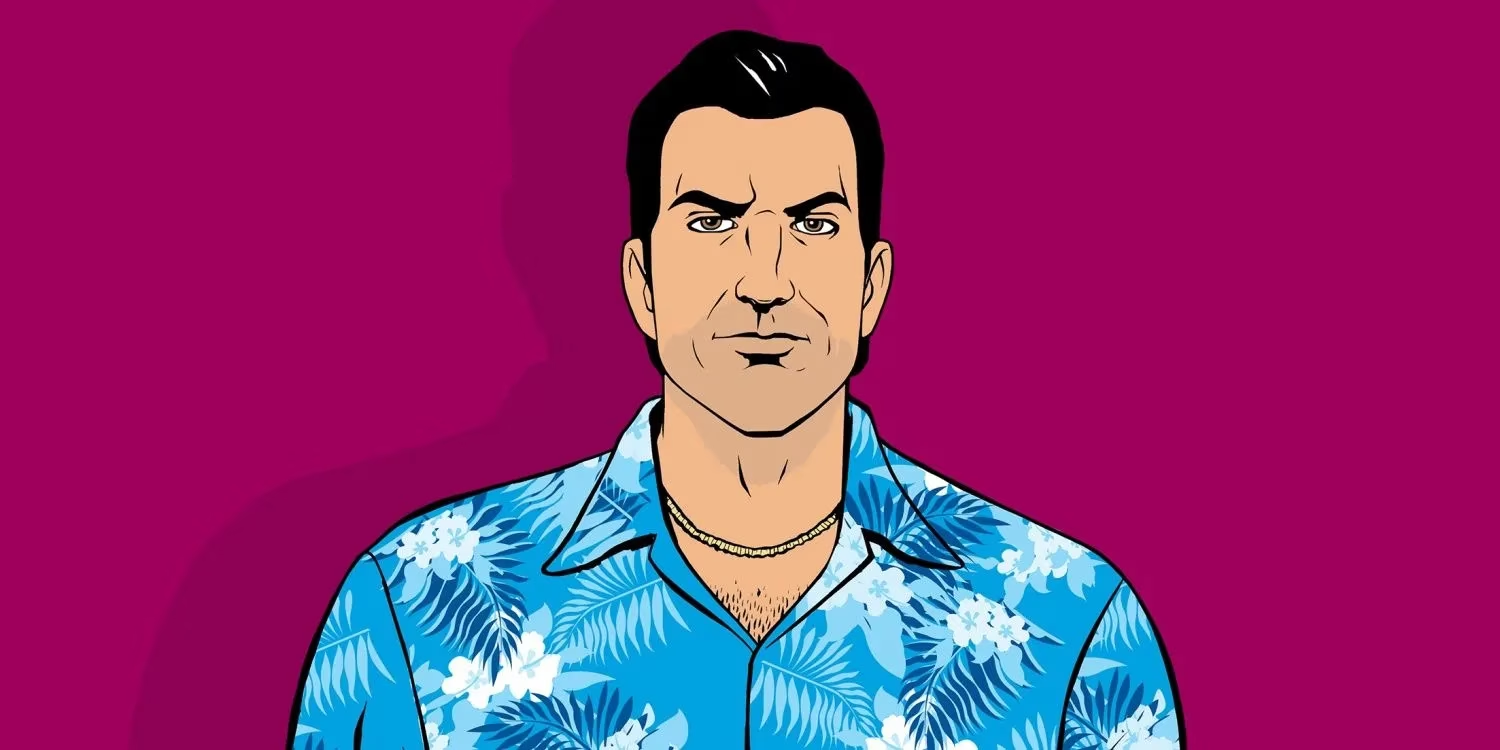
From adolescence, the timeline jumps abruptly to sun-soaked vice and criminal ambition. The neon glow of 1986’s Vice City introduced Tommy Vercetti, and with him, Rockstar’s first voiced protagonist. Voiced with restless energy by the late Ray Liotta, Tommy is a different beast. He steps into the city fresh from a fifteen-year prison stint, expecting nothing but a simple drug deal on behalf of the Forelli family. When that deal erupts into a bloodbath, Tommy does not panic. He asks for his money, his drugs, and an explanation. He is a mobster through and through, a convicted felon who murders, steals, and builds a narcotics empire without a flicker of remorse. What makes him magnetic is not moral complexity, but sheer force of personality. He is charming in a way that only a ruthless pragmatist can be, treating the city’s neon decay like a boardroom. By the time he stands on the roof of his mansion in a powder-blue suit, surveying his kingdom, the player understands that Tommy never wanted redemption. He wanted to win.
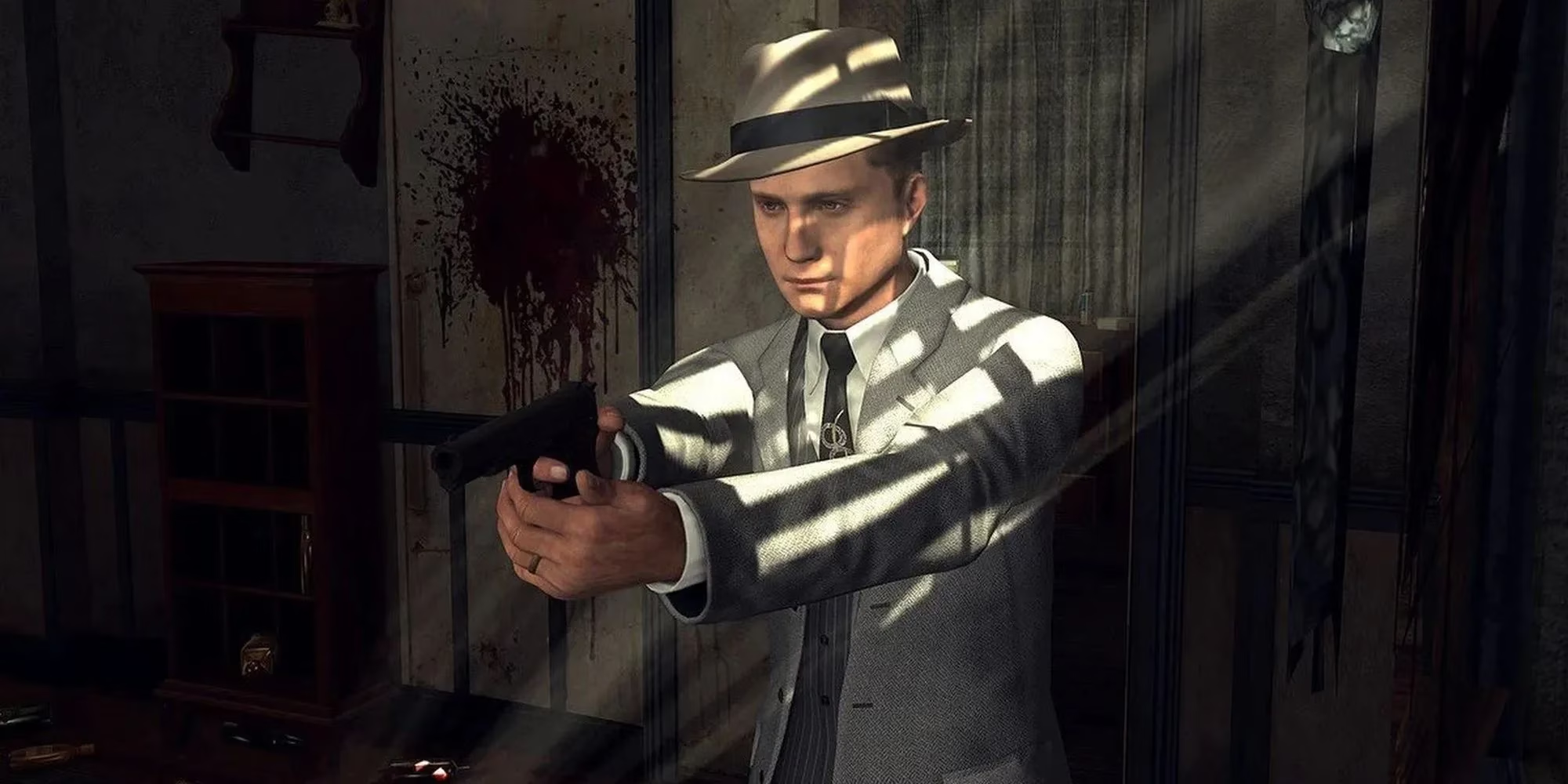
If Tommy is charm masking untethered id, Cole Phelps—the haunted detective of L.A. Noire—represents the polar opposite: a man trying desperately to bury his chaos under a starched collar and a rulebook. Played with brittle intensity by Aaron Staton, Phelps is a decorated Marine who returned from the Pacific theater with a chest full of medals and a mind full of nightmares. He becomes a cop, rising from a beat patrolman to a golden-boy detective in 1940s Los Angeles. What follows is one of Rockstar’s subtlest tragedies. Phelps adheres rigidly to the law, his own moral code an armor he cannot remove. He hates corruption, he lectures his partners, and he genuinely believes in justice. But the war never left him, and his relentless drive sabotages every personal connection he makes.
Phelps is a man of tremendous, brittle complexity. He is among the most detailed characters Rockstar has ever written, a policeman who chases truth while hiding from himself. His affair with a German singer, his agonized memories of commanding men in battle, and his ultimate, shattering fall from grace form a narrative that feels closer to classic film noir than to a typical video game. He was never comfortable in his own skin, and that discomfort infected everyone who played as him. By the time the sewers of L.A. swallow him, a player might not forgive Cole Phelps, but they will understand him.
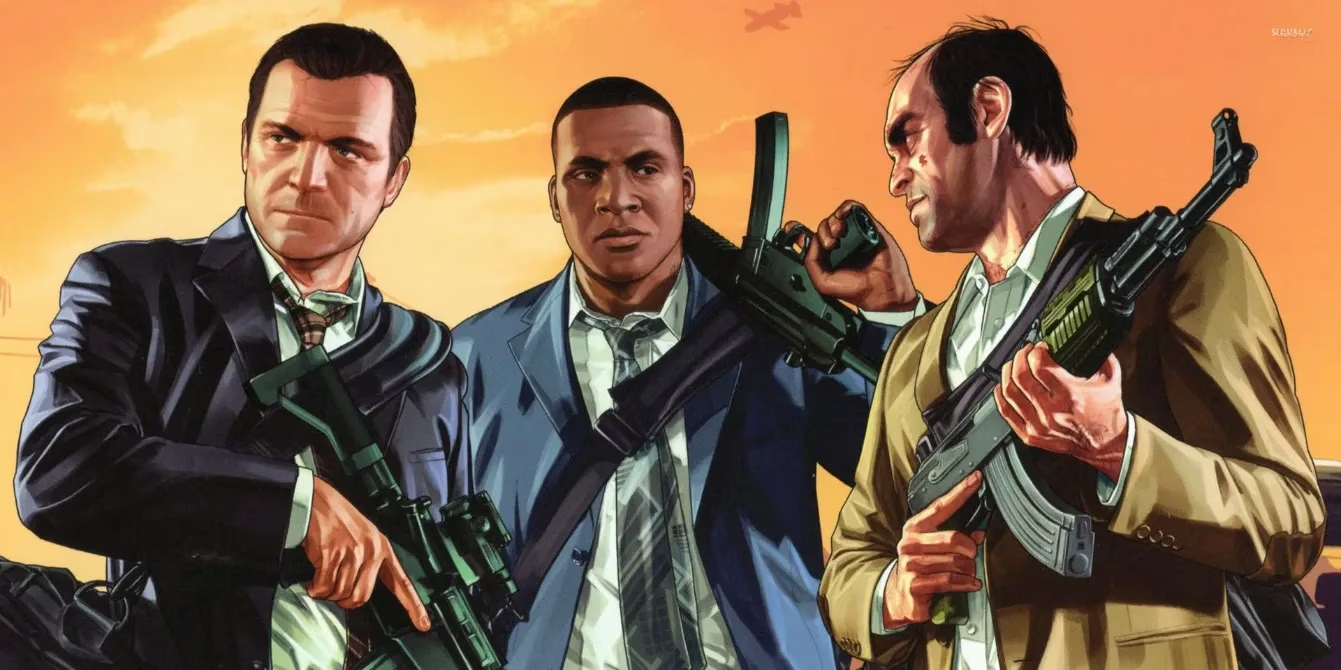
The opposite of discomfort is the chemical-fueled anarchy conjured by the three-headed monster at the core of Grand Theft Auto V. Michael, Franklin, and Trevor are less a single protagonist and more a fractured psychological spectrum. Michael is the aging bank robber retired into a gilded cage of marital dysfunction; Franklin is the ambitious young repo man desperate to escape the gravitational pull of the gang life that raised him; and Trevor is a force of nature, a man so unhinged that even the military considers him beyond rehabilitation.
What made the trio revolutionary was not just their interlocking story, but the way they formalized what players had been doing for years: switching mood. Michael is the methodical shooter, Franklin the zen-like driver, and Trevor the chaotic pilot capable of turning a serene mountain into a fireball. Steven Ogg’s performance as Trevor earned a BAFTA nomination, a testament to how a character who begins as a one-note psychopath evolves into a strangely loyal, wounded creature. Together, they argue that the American Dream is a shared delusion, each chasing a version of success that will destroy him if he ever catches it.
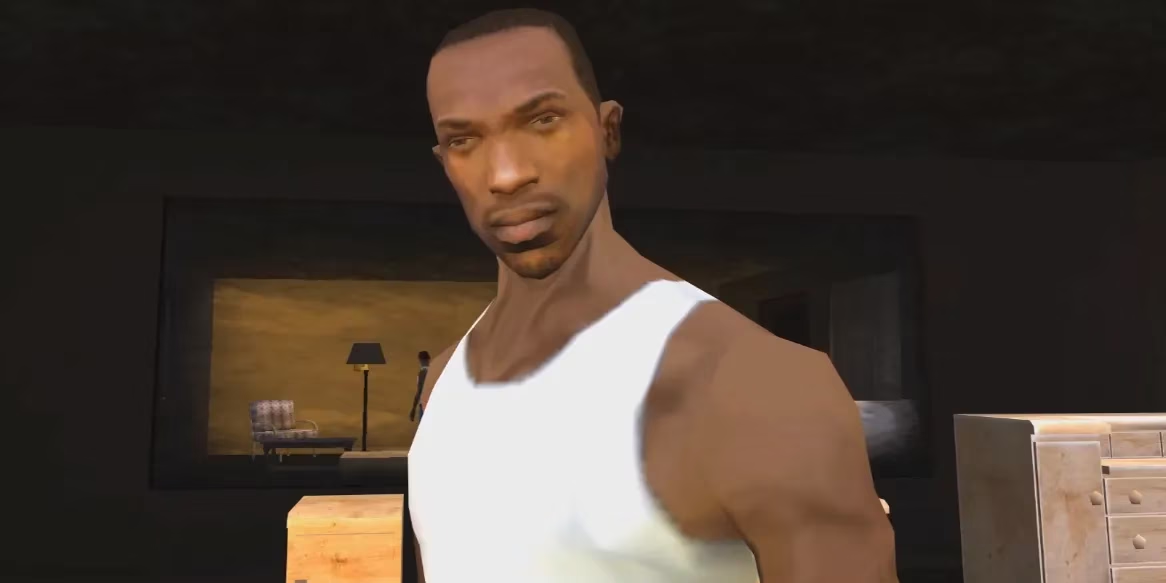
Before the trio, before the empire, there was the Grove. Carl ‘CJ’ Johnson, the protagonist of Grand Theft Auto: San Andreas, remains a touchstone precisely because he refuses to be a mere gangster. He returns to Los Santos from Liberty City for his mother’s funeral, a man who had already escaped the cycle of violence. His homecoming is not triumphant; it is a slow, reluctant slide back into the green-hued world of the Grove Street Families. CJ is perpetually striving, a hustler in the most literal sense. He buys property, he runs a lowrider garage, he steals a jetpack from a secret military base. He complains, constantly, about the absurdity of his circumstances, and that grumbling voice, performed with weary conviction, makes him the most grounded avatar in the entire Grand Theft Auto saga.
CJ’s journey is an epic of self-improvement. He learns to fly, he builds a business empire, and he avenges his family. The enormous, state-spanning map of San Andreas becomes a canvas for his ambition. Because players could dress him, feed him, and bulk him up at the gym, CJ became intensely personal—a reflection of the player’s own priorities. He is both the instrument of mayhem and the family man trying to hold a fractured home together, a duality that makes his eventual survival feel not like a victory, but a hard-earned sigh of relief.
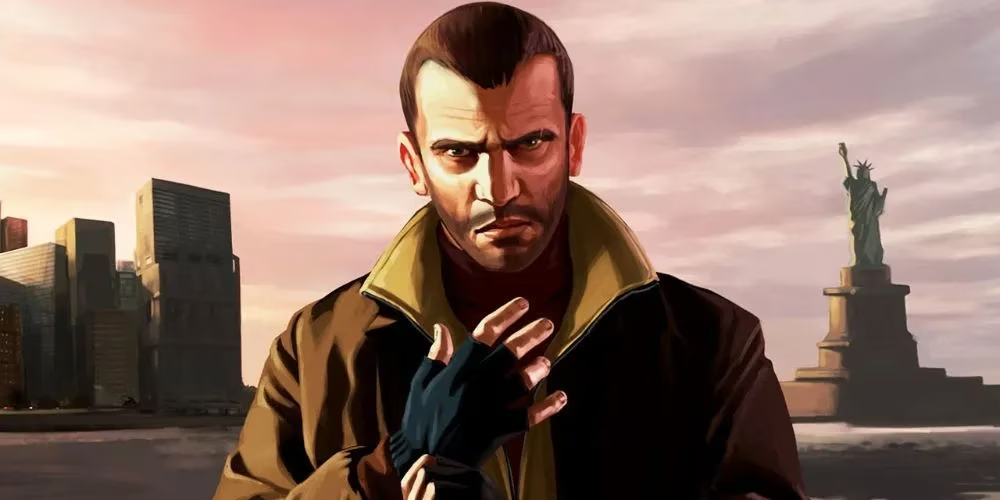
If CJ is the striving everyman, Niko Bellic is the immigrant whose every dream curdled on arrival. Grand Theft Auto IV abandoned the sun-soaked playgrounds of the past for a gritty, gray Liberty City modeled on a cynical New York. Niko steps off a container ship believing that the American dream is real, that hard work and clean living will erase the horrors he witnessed as a soldier in Eastern Europe. What he finds instead is a city where everyone is a liar, a debtor, or a man with a gun. Niko is funny in the darkest way possible, his sarcasm a shield against the brutal irony of his life. He commits crimes not out of ambition, but reluctant necessity, always promising himself—and his cousin Roman—that this will be the last job.
Niko’s character arc is a slow, painful contraction. He came to America to escape the violence of his past, only to discover that betrayals are borderless. His hunt for the man who sold out his military unit becomes a meditation on the futility of revenge. By the end of the game, whether he loses a cousin or a lover, the player feels the ache. Niko Bellic is Rockstar’s most reluctant killer, and thus its most relatable tragedy. He does not want to be a monster, but the city gives him little else to be.
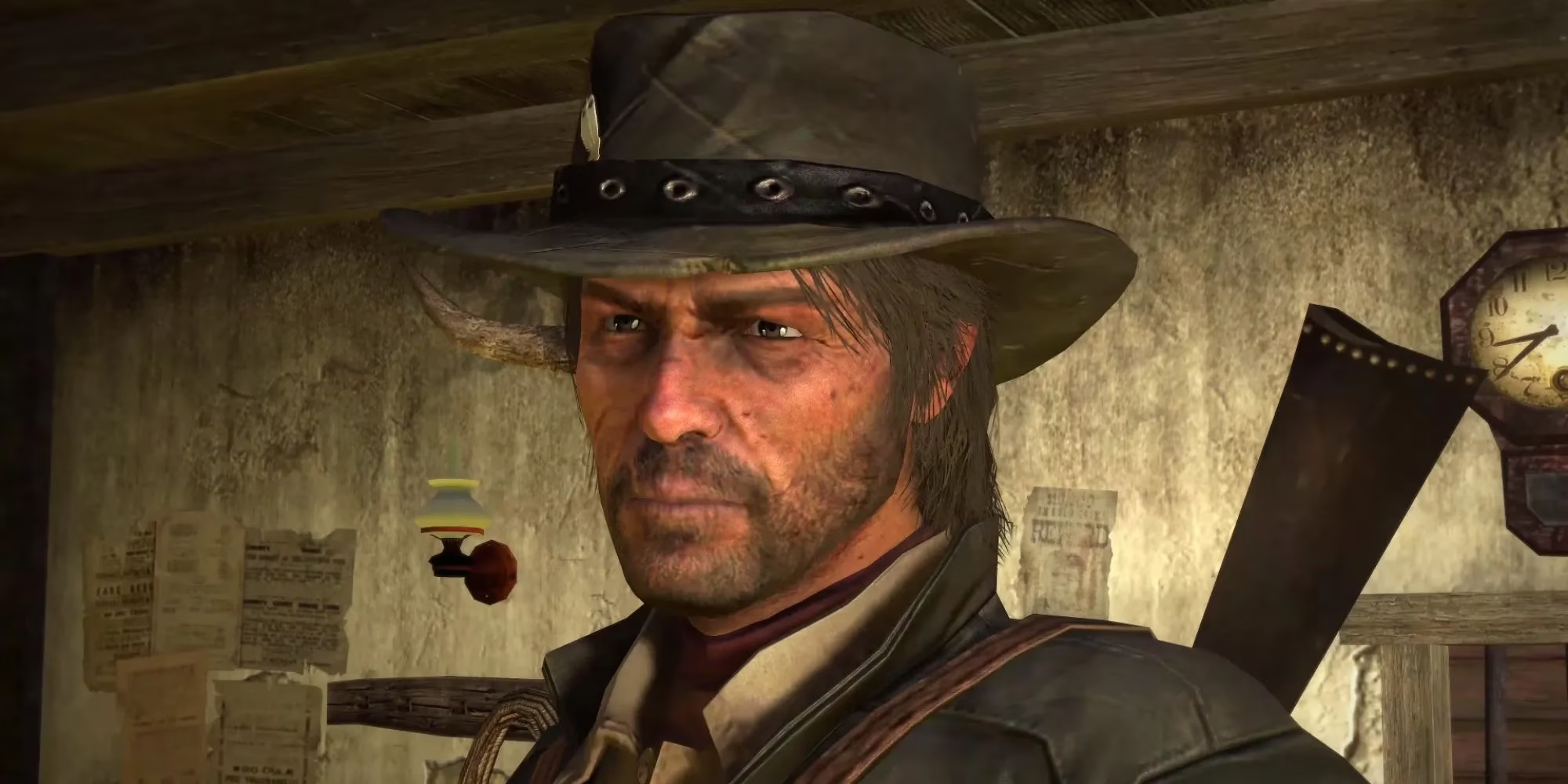
That same tragic weight, sharpened to a razor’s edge, carries over to the frontier. John Marston, the scarred rancher at the center of Red Dead Redemption, enters the story the way he will exit it: with a gun in his hand and a family in his heart. Once a member of Dutch van der Linde’s outlaw band, John was shot and left for dead, only to be reborn as a man trying to leave the life behind. When federal agents kidnap his wife and son, he is forced to hunt down his former brothers across a dying West. He is sarcastic, blunt, and deadly efficient with a repeater. He cannot swim, a joke that masks a deeper truth: John is a creature of the land, rooted in a world that is rapidly modernizing around him.
John is the family man forced to become a monster so his son might never have to. His journey across 2010’s Red Dead Redemption builds toward one of gaming’s most devastating endings: a barn door, a firing squad, and a final, defiant breath. He is the human anchor of the series, a man who bargained with civilization and lost. That he became an icon is no surprise. Rockstar had created a protagonist so fully realized that his death felt less like a scripted event and more like a genuine farewell to a friend.
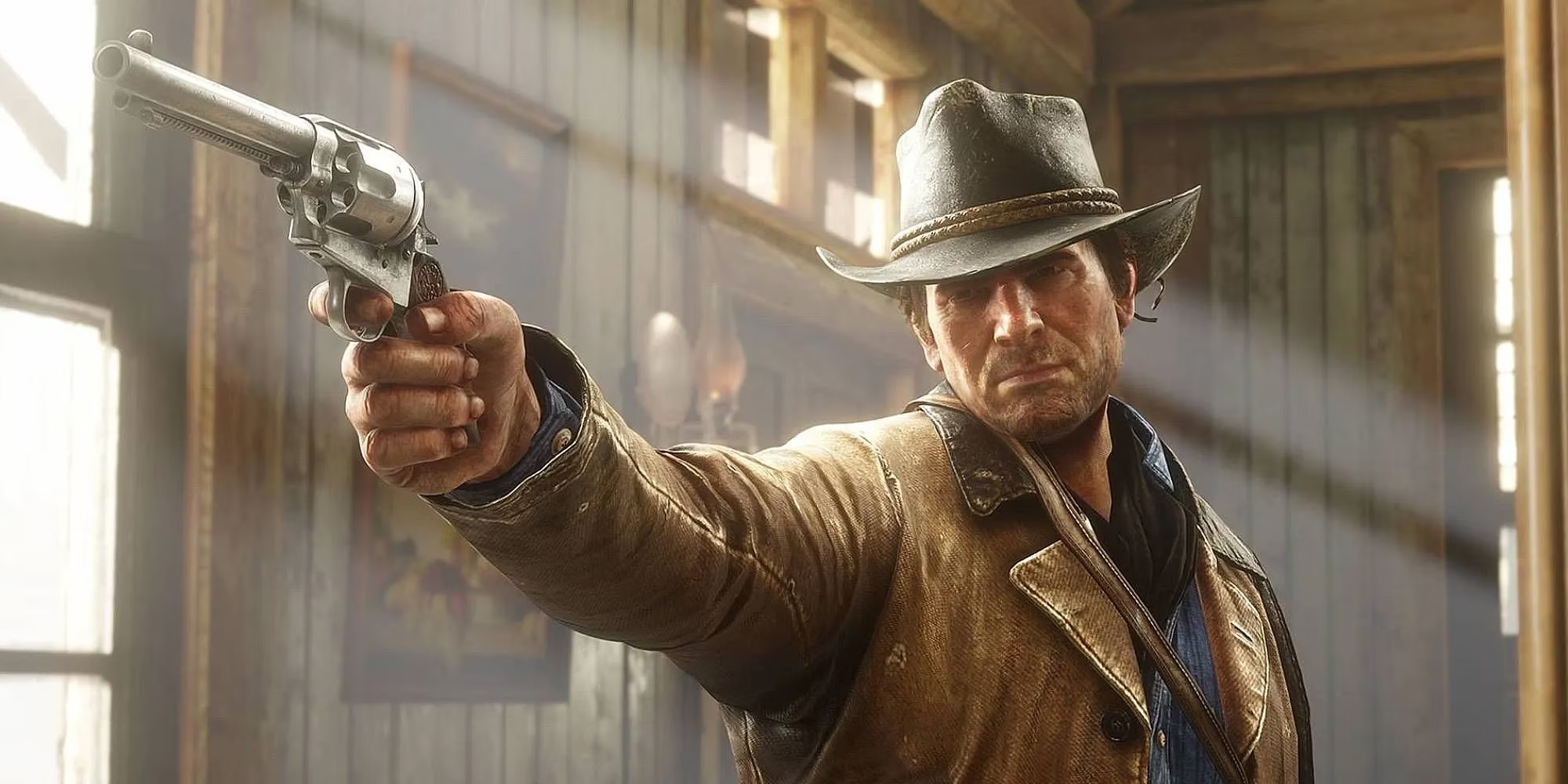
Then came Arthur Morgan, and everything changed. Red Dead Redemption 2, released in the twilight of the 2010s, is structured as a slow-burning tragedy whose outcome is known before the game begins. Arthur is Dutch’s enforcer, a physically imposing lieutenant who beats debtors and robs stagecoaches without a second thought. In the early hours, he seems to be a simpler man than John Marston—colder, more pragmatic. But Arthur hides a secret journal full of drawings and doubt, and when a visit to a debtor’s farm ends with a bloody cough, the clock begins its countdown. Tuberculosis transforms Arthur Morgan from an instrument of violence into a man searching for meaning in the scant months he has left.
Roger Clark’s performance as Arthur won the Game Award for Best Performance and anchored an evolution that feels genuinely literary. Arthur watches Dutch descend into paranoia, and his loyalty curdles into a desperate need to protect the people the gang will leave behind. He helps a widow hunt, he teaches a young boy to fish, he gives a destitute woman and her son the money to start over. Every side mission becomes a brushstroke on a portrait of redemption. Arthur Morgan is not just Rockstar’s best protagonist—he is one of the medium’s supreme achievements, a character whose approaching death makes every sunrise feel like a gift, and every act of cruelty feel like a sin that can never quite be washed away.
From the schoolyard to the mountains of Ambarino, the souls Rockstar has created are never simple power fantasies. They are broken, satirical, strangely hopeful, and above all, relentlessly human. In 2026, as new technologies promise ever more photorealistic worlds, the legacy of these characters is a reminder that pixels mean nothing without a pulse. The best stories are never about the gun—they are always about the hand that holds it.
Comments