In the vast, sprawling theater of open-world gaming, where players often seek meaning in epic quests and breathtaking vistas, there exists a primal, undeniable truth: if the guns don't sing, the whole symphony falls flat. A beautiful world is just a museum; a world where every weapon feels like a living, breathing extension of the player's will is a playground of chaos and catharsis. For the dedicated gunslinger, the difference between a satisfying bang and a disappointing plink is the difference between being a god of war and a child with a noisy toy. The quest for perfect gunplay is a holy grail for developers, a complex alchemy of sound, sight, and feedback that transforms digital polygons into instruments of pure, unadulterated power. As of 2026, while countless titles have attempted to conquer this frontier, only a legendary few have truly mastered the art, turning their virtual arsenals into something as visceral and unforgettable as a thunderclap in a silent canyon.
Rage 2: The Beautiful, Chaotic Symphony
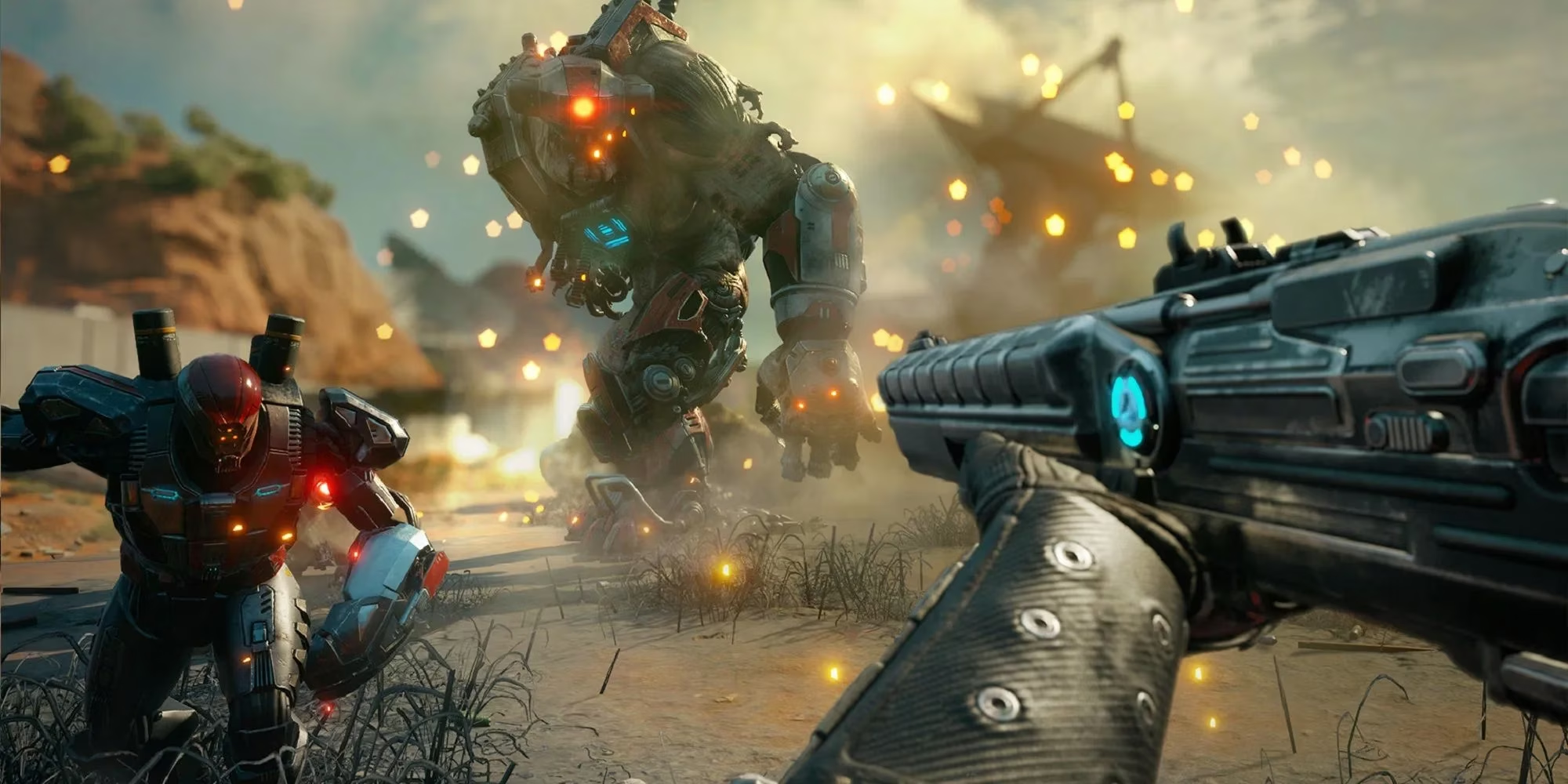
While its open world may have been as repetitive as a broken record, Rage 2's gunplay is a masterpiece of controlled insanity, conducting violence like a heavy metal orchestra. Inheriting the divine chaos from id Software's legacy, its weapons are not just tools but extensions of pure id. The shotguns don't fire shells; they unleash localized earthquakes, and the rocket launchers feel less like weapons and more like handheld volcanic eruptions. The equip and reload animations are so slick they feel like a dance of death, a ballet performed with steel and gunpowder. For those seeking a narrative, look elsewhere. But for anyone craving the sensation of turning every enemy encounter into a fireworks display of gore and glory, Rage 2 remains an untamed, exhilarating ride.
Cyberpunk 2077: From Flop to Phenomenal Firepower
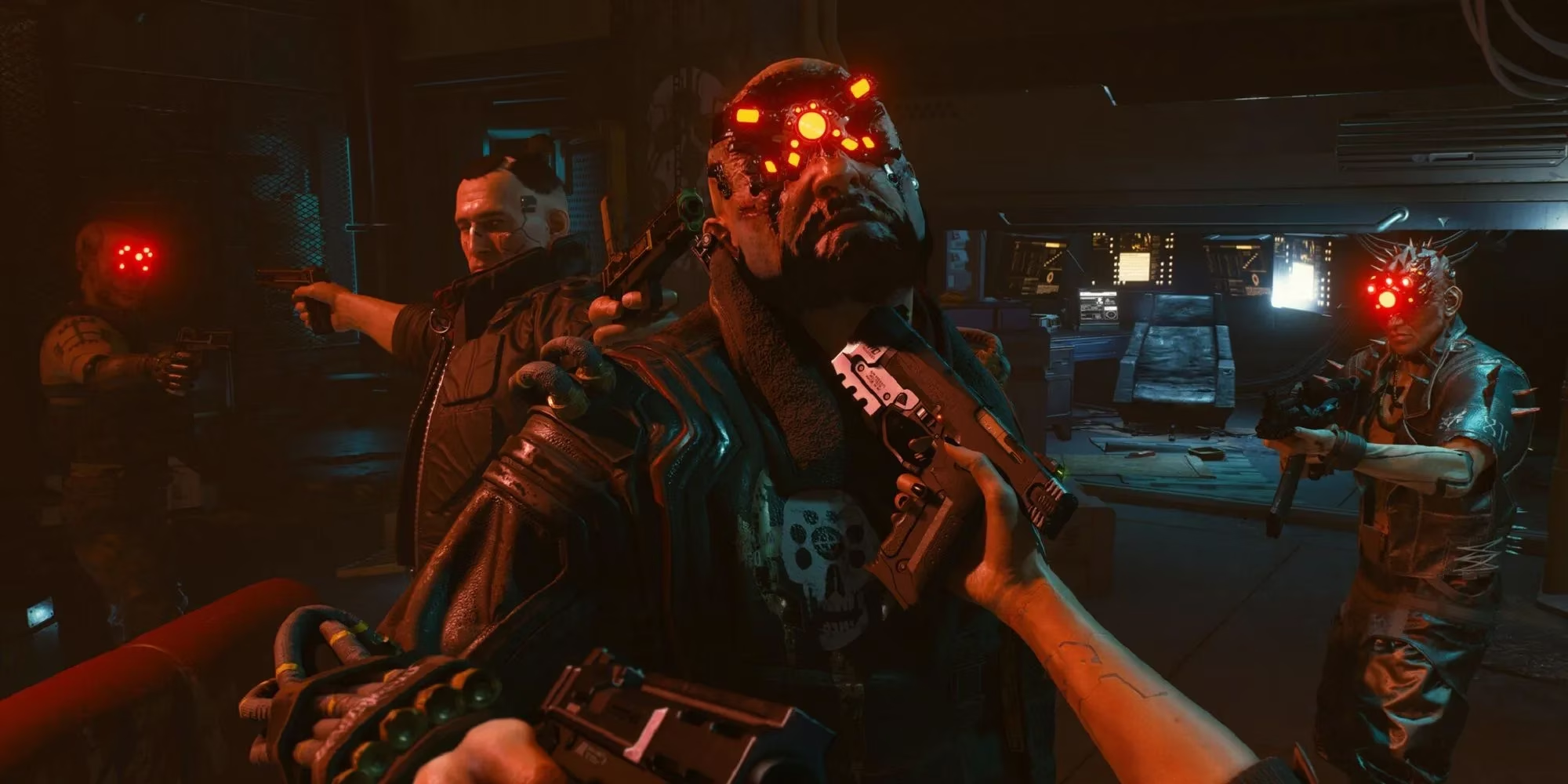
What began as a promise shrouded in bugs has, through years of relentless updates, blossomed into one of the most technically profound and creatively unhinged shooter experiences on the market. Cyberpunk 2077's Night City is not just a backdrop; it's a character that speaks through its weapons. The gunplay here is a genre-bending spectacle. It offers everything from classic ballistic instruments dripping with neon-soaked style to futuristic marvels with smart-targeting systems that feel like wielding a swarm of angry, homing bees. The attention to detail is obsessive; each weapon has a distinct personality, a unique weight, and a soundtrack of its own. Wielding Johnny Silverhand's Malorian Arms 3516 isn't just shooting—it's performing a piece of living history, with a reload animation so cool it should be illegal.
Mafia II: A Blast from the Past That Still Packs a Punch
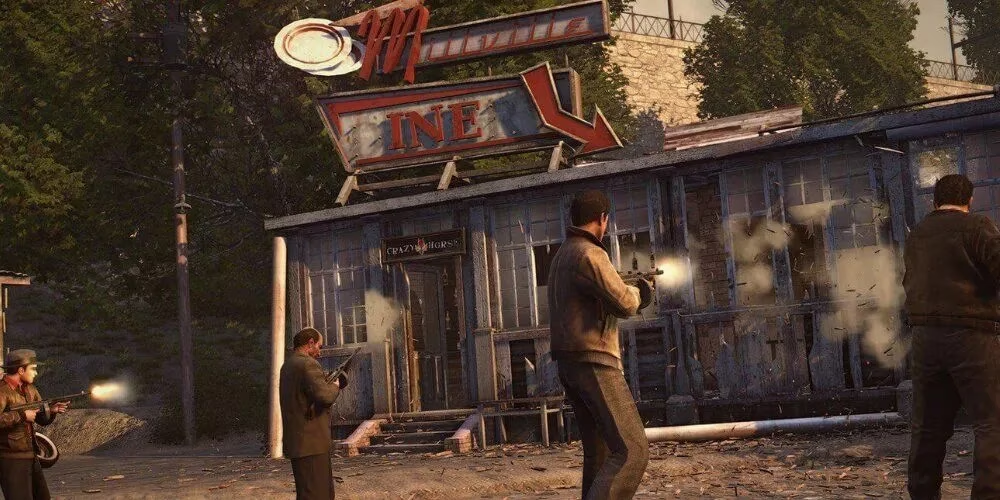
In the rain-slicked, crime-ridden streets of Empire Bay, Mafia II delivers gunplay that feels authentically heavy and consequential, a stark contrast to the weightless pea-shooters of lesser titles. The weapons are characters from a bygone era. The standard pistols have a satisfying heft, but the true stars are the heavy hitters. The magnum feels less like a handgun and more like discharging a miniature cannon, its recoil threatening to dislocate Vito's wrist with every soul-shattering blast. The Thompson 1928 submachine gun is a whirlwind of lead, its roar in a confined space as overwhelming and final as a freight train in a hallway. The enemy AI, with its imperfect accuracy, turns every shootout into a tense, unpredictable ballet of bullets and cover, making each victory feel earned and brutally realistic.
Star Citizen: The Gun Nut's Digital Smithsonian
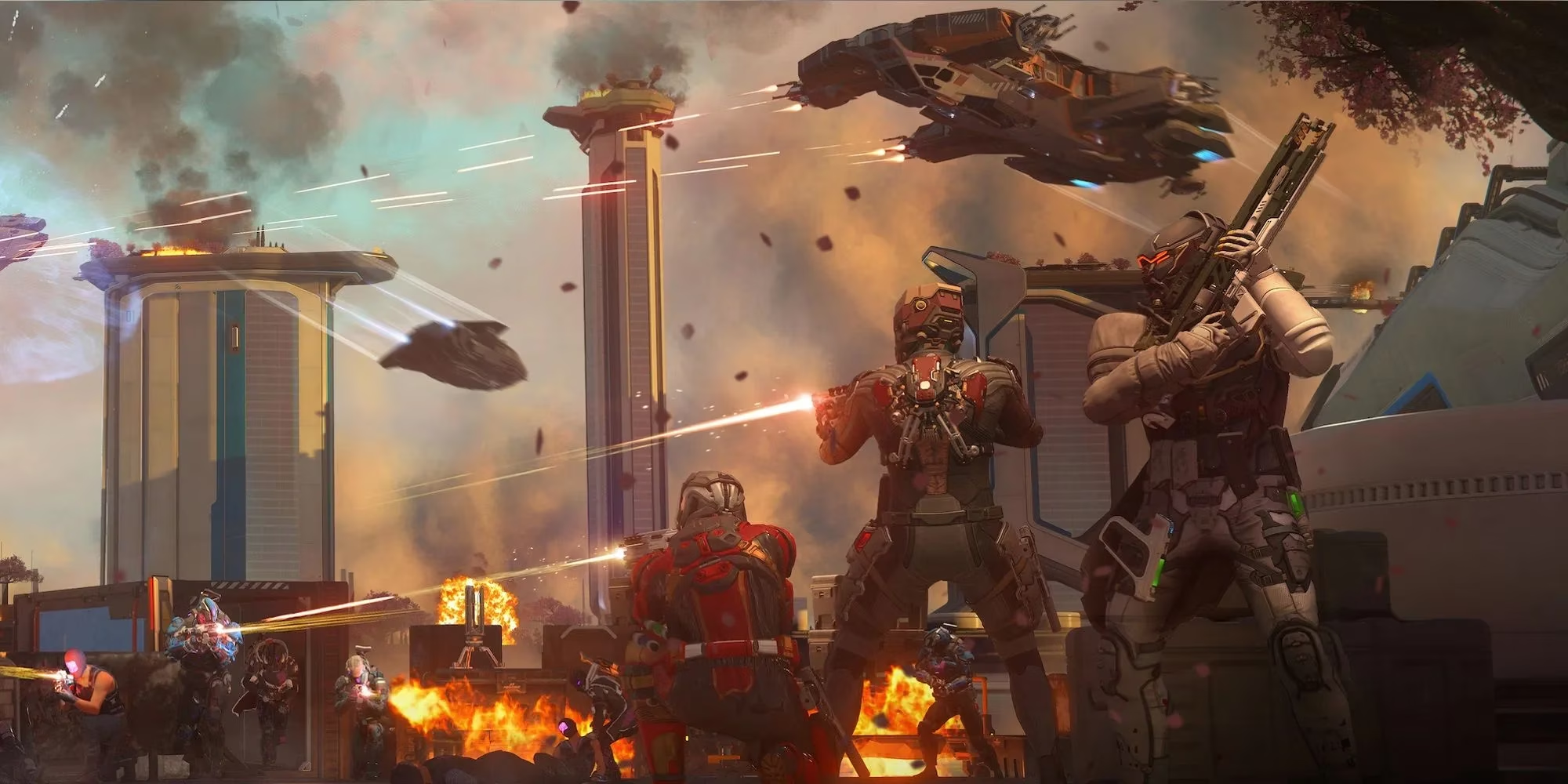
If most games treat guns as video game props, Star Citizen treats them like priceless artifacts in a hyper-realistic space museum. The devotion to weapon design is nothing short of religious. Every firearm is born from a specific manufacturer with a coherent design language, making identification and preference a core part of the gameplay loop. The visual and tactile feedback is unparalleled; holding a rifle in Star Citizen feels less like pointing a cursor and more like interfacing with a complex piece of machinery. The monumental Alpha 3.23 update further refined this, overhauling animations, ADS (Aim Down Sights) behavior, and recoil patterns to create a gunplay experience that is as much about simulation as it is about spectacle. It’s a sandbox where the guns are as detailed and believable as the starships, making every firefight a test of both skill and equipment knowledge.
Metro Exodus: Post-Apocalyptic Craftsman Simulator
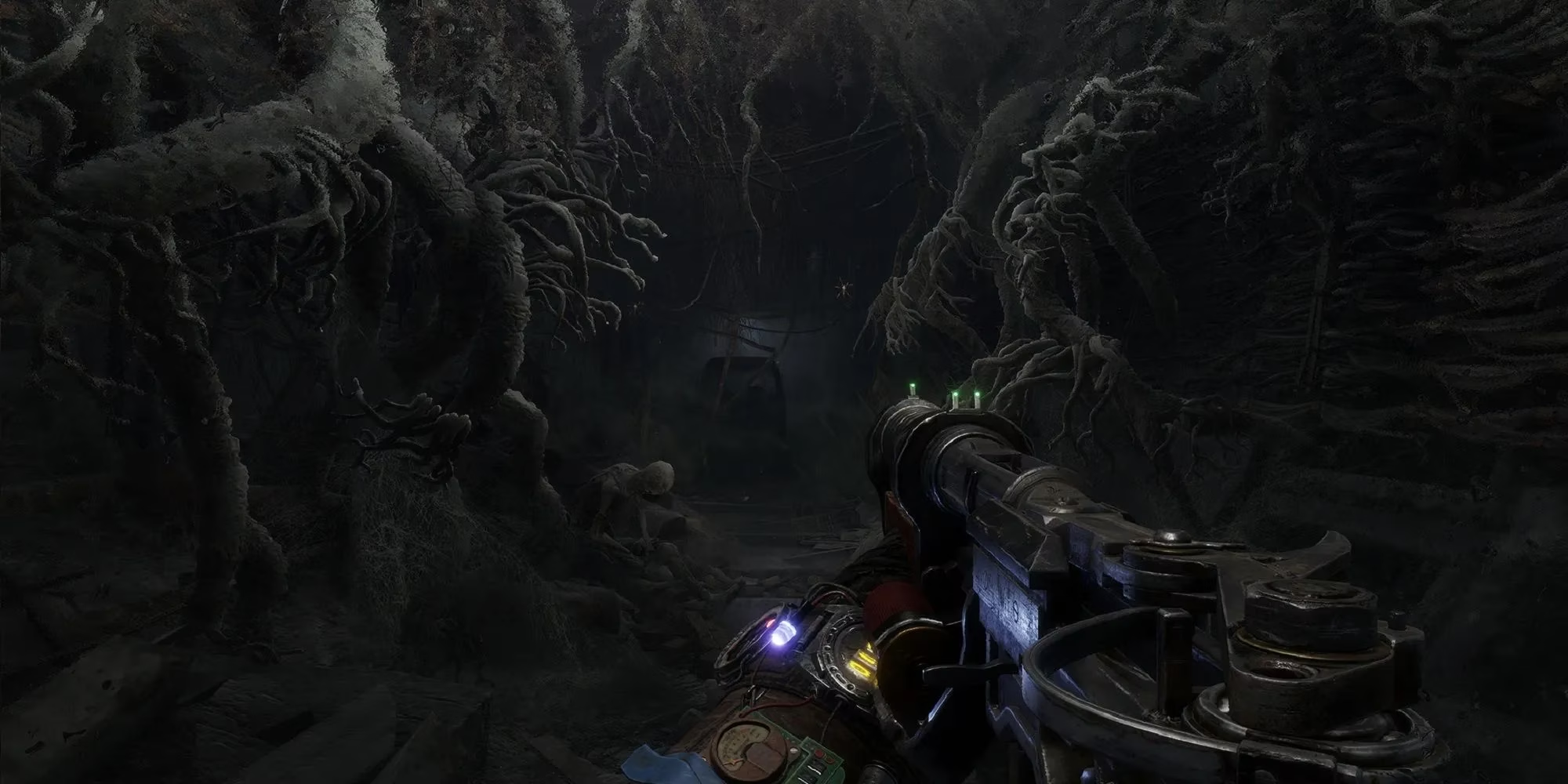
Metro Exodus proves that perfect gunplay isn't about having the most guns, but about making every single one feel desperately precious and uniquely yours. In the vast, haunting open zones of the Russian wilderness, your arsenal is a collection of cobbled-together survivors. The genius lies in the weapon modification system. Taking iconic Kalashnikov patterns and Frankensteining them with scavenged pipes, stocks, and scopes creates tools that are deeply personal. The gunplay feels gritty, weighty, and immensely satisfying because you built these instruments of survival with your own virtual hands. The animation work sells the fantasy completely; seeing Artyom's arms realistically react to every kick and jolt makes the weapons feel as heavy and real as the oppressive atmosphere around you. Firing a shotgun in the silent Taiga forest is an event that echoes through your controller and your soul.
Ghost Recon Wildlands: Tactical Symphony in the Jungle
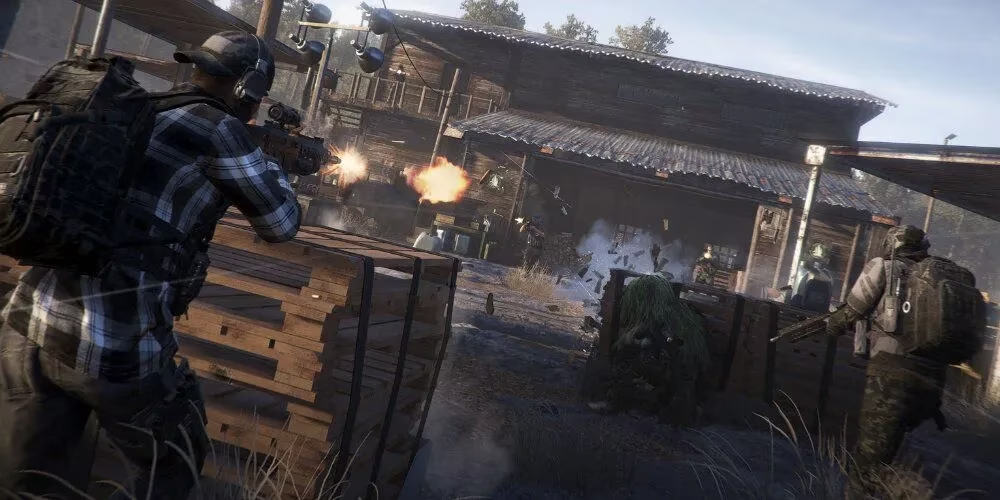
Ubisoft's foray into the Bolivian wilds created a sandbox where gunplay is a language of precision and punishment. Ghost Recon Wildlands excels in making its vast arsenal feel authentic and distinct. Assault rifles are tools of controlled aggression, their high rate of fire balanced by recoil patterns that demand mastery. Light machine guns become high-risk, high-reward beasts, their sustained fire a test of strength and control that turns the crosshair into a wild, bucking bronco. The audio design is a masterclass in immersion; the crack of a nearby bullet, the ping of a ricochet off metal—these sounds aren't just effects, they are vital tactical information that elevates firefights from simple shootouts to intense, pulse-pounding engagements where every shot tells a story.
Metal Gear Solid V: The Phantom Pain - Stealth's Perfect Punishment
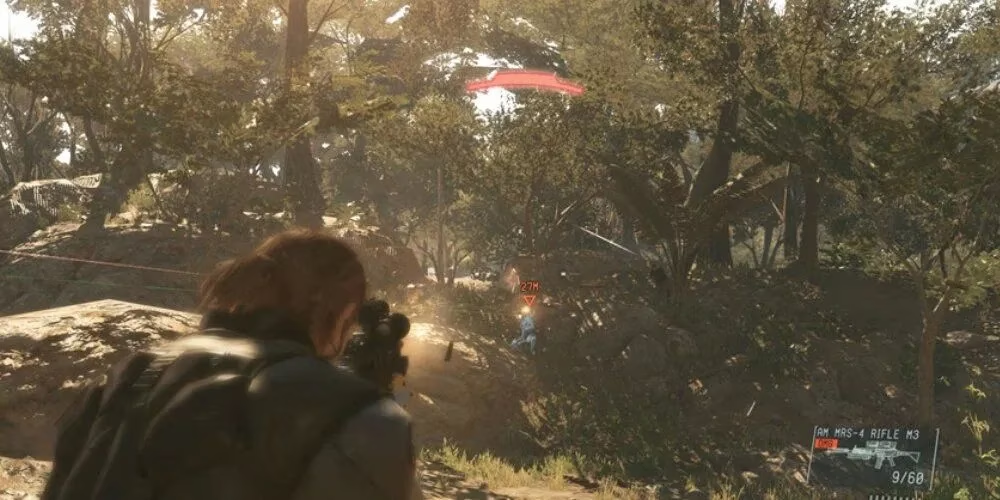
Hideo Kojima's obsession with militaria finds its ultimate expression in Metal Gear Solid V. Here, gunplay is a rare, devastating privilege, not a constant activity. Because Snake spends 90% of his time as a ghost, the 10% where he pulls the trigger is a moment of catastrophic release. The weapons feel unnervingly real, their sound design particularly genius. In the deafening silence of the Afghan deserts or African savannas, a single unsuppressed shot doesn't just ring out—it roars across the landscape like the angry bellow of a titan, shattering the peace and announcing your presence with apocalyptic finality. The recoil is tangible, each shot feeling like it carries the weight of a moral decision. Using a gun in MGSV is never casual; it's a strategic choice with auditory and physical consequences that make it infinitely satisfying.
Borderlands 3: The Gunpowder Carnival
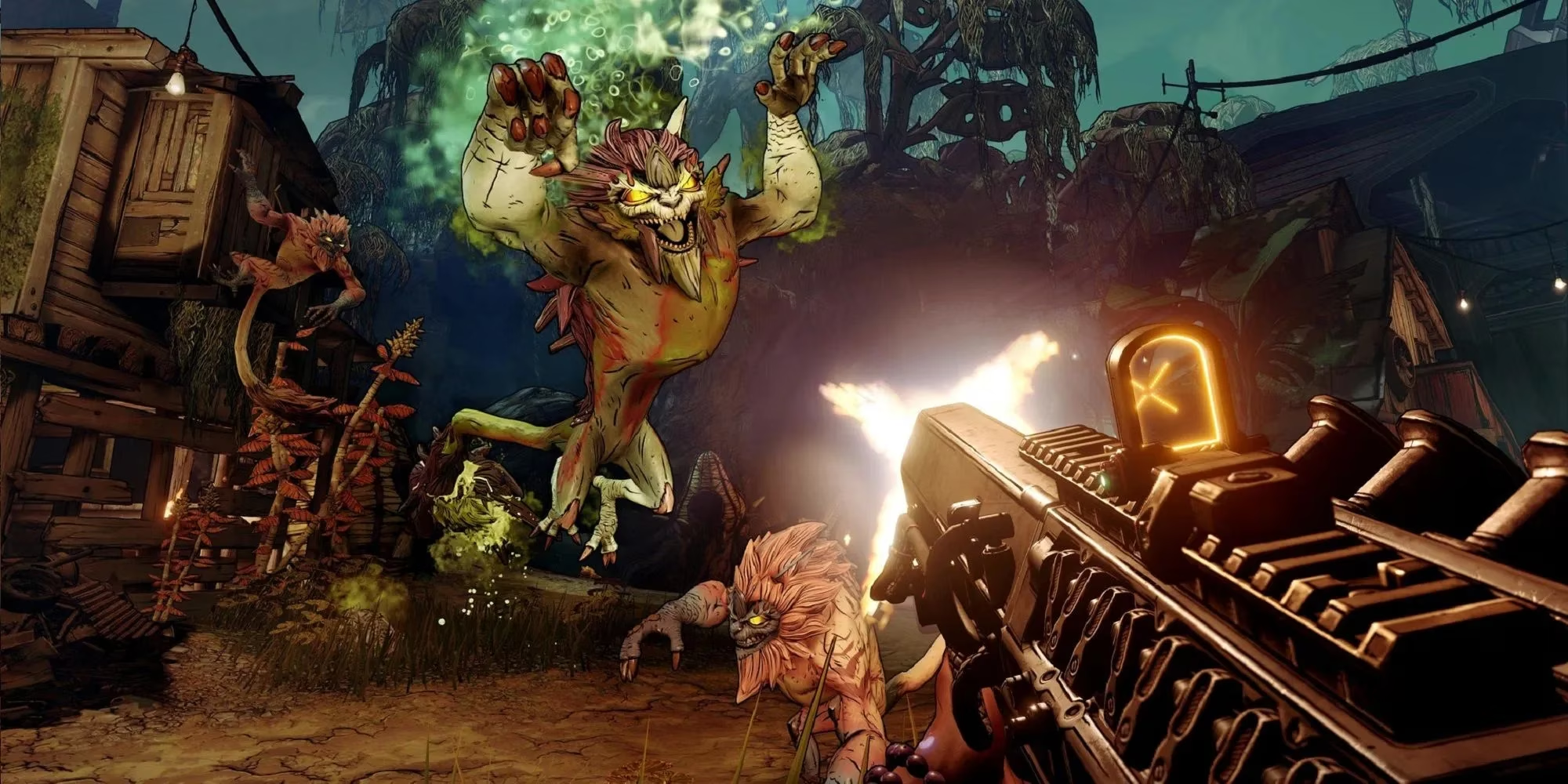
If other games on this list are concertos, Borderlands 3 is a non-stop, psychedelic rock festival of bullets. It embraces video game logic with joyous abandon, offering a gunplay philosophy best described as "more is more." The weapon diversity is staggering and insane, with millions of possible variations courtesy of its manufacturer-based system and deep modification paths. You might find a pistol that fires tracking sawblades, a shotgun that literally talks to you, or an assault rifle that spawns mini-volcanoes on impact. The "feel" improved dramatically in this entry, giving even the most absurd weapon a satisfying kinetic punch. The core loop is a relentless, addictive hunt for the next bigger, weirder, more explosive toy, turning every loot chest into a potential portal to pure, unadulterated joy.
Red Dead Redemption 2: The Weight of the West
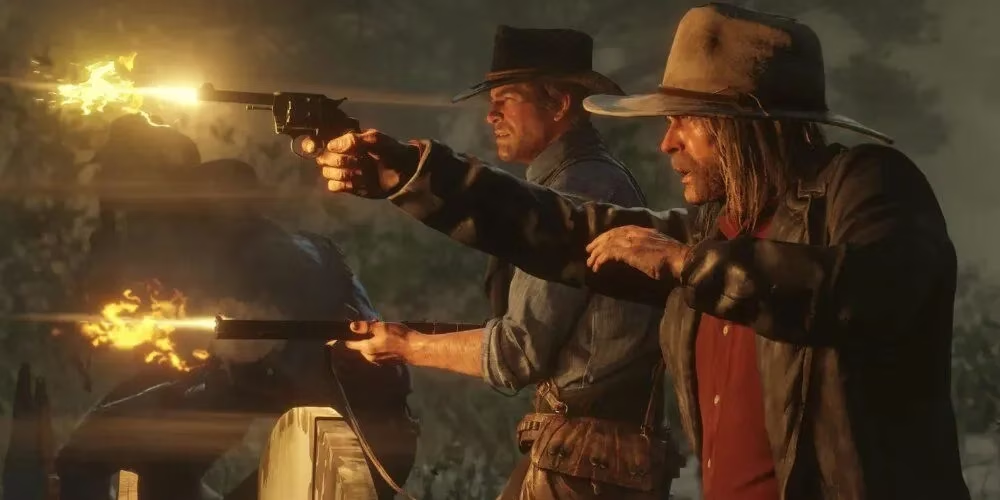
Rockstar's magnum opus approaches gunplay not as an arcade mechanic, but as a period-accurate simulation of violence. In Red Dead Redemption 2, every weapon is a distinct, weighty object with its own soul. The difference between a cattleman revolver's quick, sharp crack and a rolling block rifle's deep, distant thunder is profound. The combat system brilliantly incorporates human fallibility; Arthur, like his enemies, is not a superhuman aimbot. Firing on the move or under stress introduces realistic inaccuracy, making every duel a tense, unpredictable affair where luck and skill tango with deadly consequences. Coupled with an exhaustive customization system that lets you engrave, varnish, and modify your guns until they feel like personal heirlooms, the gunplay in RDR2 achieves a level of tangible, historical authenticity that is yet to be matched.
The Division 2: The Looter-Shooter's Precision Instrument
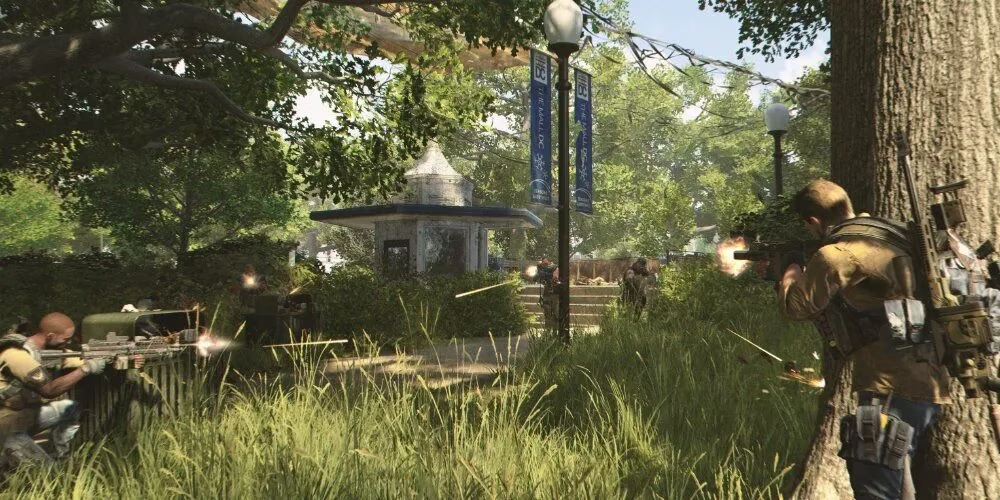
Ubisoft took the solid foundation of the first game and honed it into a razor-sharp instrument of tactical destruction with The Division 2. The key improvement was ditching the infamous "bullet sponge" enemies, allowing the weapons to feel powerful and responsive from the very first level. The arsenal, from snappy pistols to thunderous shotguns, is a collection of precision tools. The gunplay shines in its dance with the clever enemy AI. Foes flank, suppress, and coordinate attacks, forcing players to master accuracy, positioning, and weapon handling. Blind-firing is a sure path to a quick death, rewarding deliberate, aimed shots. Whether you're picking off a Cleaner from a rooftop with a marksman rifle or clearing a room with the visceral, close-quarters brutality of a double-barreled shotgun, the feedback is consistently crunchy, impactful, and deeply rewarding, proving that in the right hands, a looter-shooter can have some of the most refined gunplay around.
| Game | Gunplay Philosophy | Standout Feature |
|---|---|---|
| Rage 2 | Unadulterated Chaos | id Software-style weapon feel & insane heavy weapons |
| Cyberpunk 2077 | Stylish & Futuristic Diversity | Creative smart weapons & obsessive detail |
| Mafia II | Heavy, Historical Realism | Weighty period-accurate weapons & tense AI duels |
| Star Citizen | Hyper-Realistic Simulation | Manufacturer-based design & unparalleled tactile detail |
| Metro Exodus | Gritty, Personal Craftsmanship | Deep weapon modification & survivalist weight |
| Ghost Recon Wildlands | Authentic Tactical Engagement | Realistic ballistics & immersive sound design |
| Metal Gear Solid V | Rare & Devastating Power | Earth-shattering sound design & meaningful recoil |
| Borderlands 3 | Over-the-Top Carnival | Limitless, creative weapon variety & addictive loot hunt |
| Red Dead Redemption 2 | Period-Accurate Simulation | Weapon heft, fallible accuracy & deep customization |
| The Division 2 | Refined Tactical Toolkit | Powerful weapon feedback vs. smart AI |
In conclusion, the pantheon of open-world shooters in 2026 is ruled by those who understand that a gun is more than a pixelated tool; it is the player's voice in a chaotic world. From the silent, surgical precision of a Division agent to the reality-warping carnival of a Borderlands Vault Hunter, these games transform simple trigger pulls into symphonies of feedback. They prove that in a genre obsessed with scale, the most memorable moments are often contained within the few inches between a virtual finger and a digital trigger, where every shot can feel like rewriting the rules of the world itself. 🎯💥🔫
Comments