I’ve been replaying Hades lately, partly because its sequel finally got its full launch this year, and partly because something about Zagreus’s endless escapes has always felt more personal to me now that I’m older. But as I dove back in, I couldn’t stop thinking about the strange, tangled way that games explore fatherhood—and not just in the underworld. A few nights ago I also fired up Red Dead Redemption 2 again, and it hit me: despite being worlds apart, these two stories have more in common than you’d expect. They both made me cry. They both kept me up late. And they both revolve around dads—the ones who hurt us, protect us, and shape who we become.
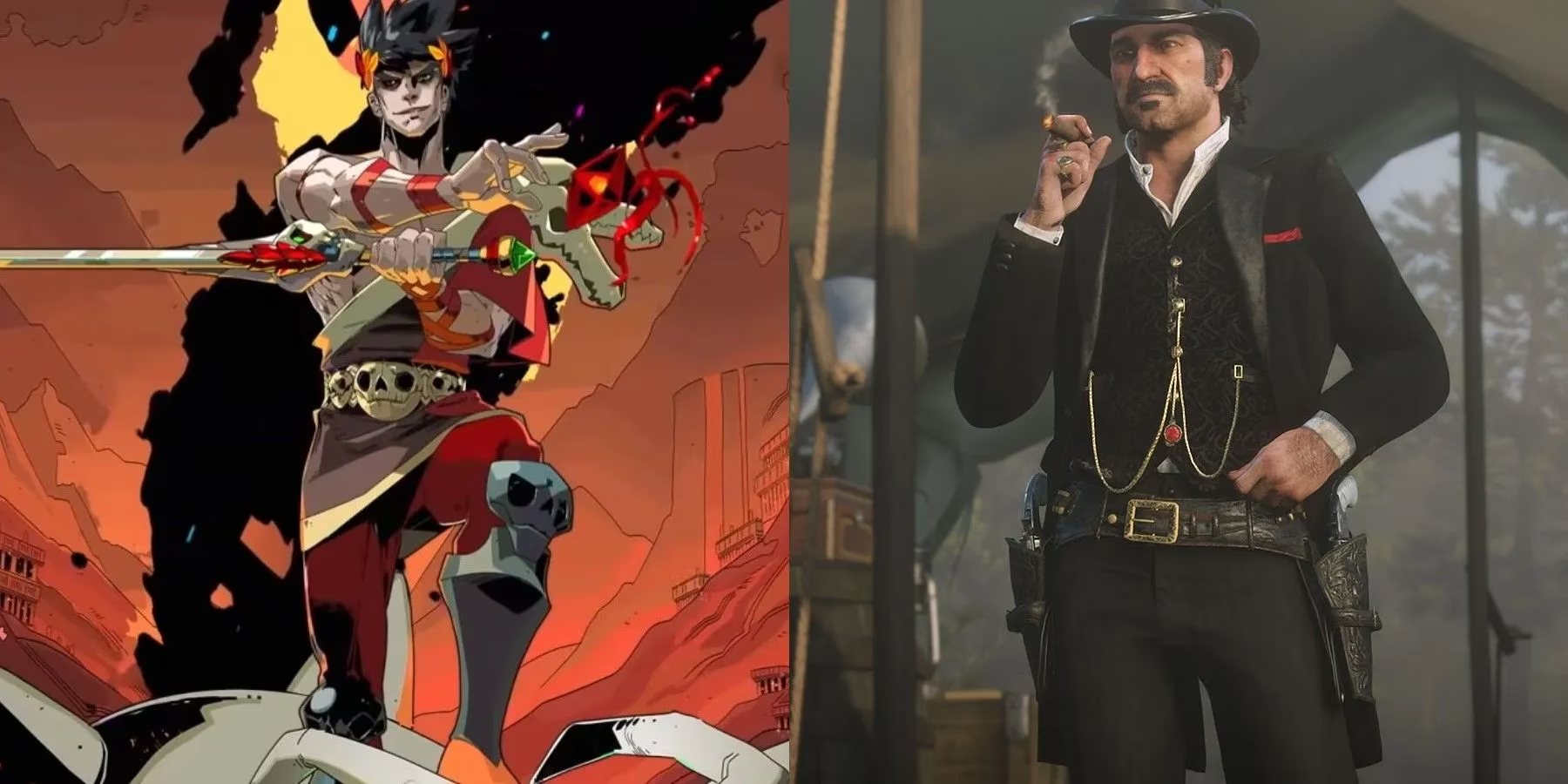
I’ll be honest: when I first started Hades, I thought I knew exactly what kind of story it was. Angry son rebels against distant, authoritarian father. One more dungeon crawl to escape a literal hell. But then the little things crept in—the way Hades’s voice would waver just slightly after a particularly brutal encounter, the way Zagreus’s mother’s absence loomed over every run. By the time I uncovered the real mystery, I realized the game had pulled a fast one on me. Hades wasn’t a tyrant for the sake of power; he was a father mourning a family he could never have, trying to keep his son safe by keeping him close, even if it meant choking him in the process. That revelation felt uncomfortably real. How many parents, I wondered, smother their children out of love, never learning how to let go? Zagreus’s journey becomes one of forcing his father to see him as an adult, not just a child to be coddled. And in classic myth-meets-therapy fashion, the two eventually build a stronger, if still prickly, bond.
What Hades gave me was a surprisingly hopeful arc. The entire Olympian family is dysfunctional, yes, but the game argues that honesty and mutual vulnerability can patch things up—even after centuries of resentment. By the time I rolled credits (and kept playing, because Supergiant Games knows how to hook you), I felt like I’d been through a family counseling session. In 2026, with Hades II now fully in my hands, I see the same threads: Melinoë’s quest is shaped by an absent father, and the way she relates to his legacy adds even more layers to the original’s themes. It turns out fatherhood doesn’t end with one game—it echoes across generations.
Then there’s Red Dead Redemption, and oh boy, does it take a different road. If Hades lets you hug it out (eventually), the Van der Linde gang fractures in ways that still leave me hollow. I remember finishing Red Dead Redemption back in the day and just staring at the screen after John Marston’s last stand. All he wanted was a future for his son Jack. And yet the epilogue shows Jack picking up the gun, forever shaped by his father’s violent world. It’s a gut punch: fathers want to shield their children, but the world they helped create often sends those same children down the same bloody path.
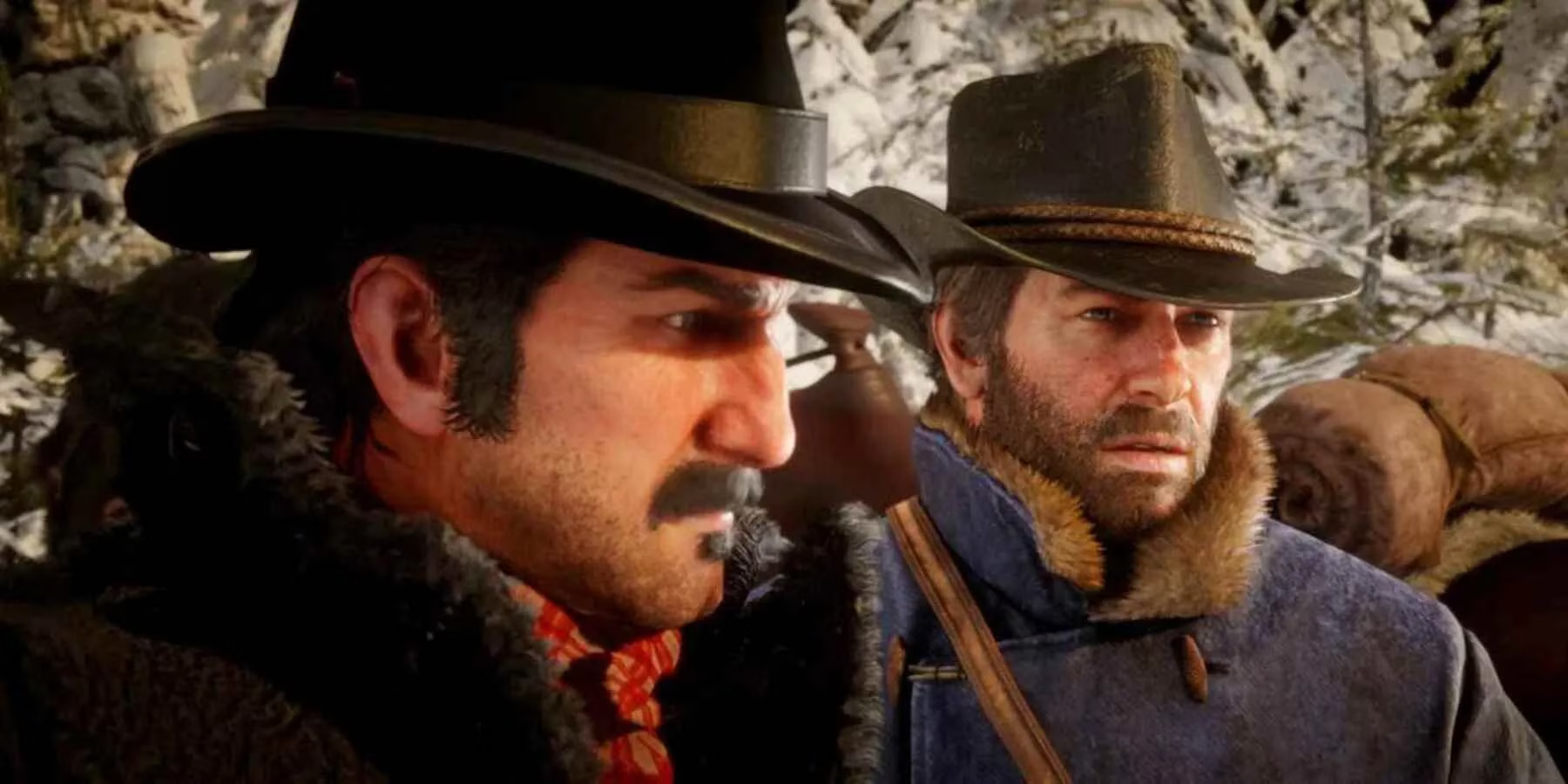
Red Dead Redemption 2 complicates things even more, because here fatherhood isn’t just biological. Dutch and Hosea act as surrogate dads to a whole gang of lost souls, including Arthur and John. I can’t count the number of camp conversations where Dutch sounded like the wisest, most charismatic father figure imaginable—right before his paranoia unraveled everything. Arthur’s gradual disillusionment is one of the most painful arcs I’ve ever played. He doesn’t hate Dutch; he loves him, and that love makes the betrayal so much worse. By the end, Arthur steps into a fatherly role himself, trying to give John and his family the peace he never had. It’s messy, toxic, and profoundly human. Unlike Hades, there’s no reconciliation waiting. Sometimes, the game says, fathers fail—and the best you can do is break the cycle before it breaks you.
What I find fascinating is how both games use gameplay to reinforce these themes. In Hades, every failed escape is another conversation with Olympians and shades, slowly peeling back layers of misunderstanding. In Red Dead Redemption 2, simply fishing with your gang or having a drink at the saloon makes you feel like part of a chosen family, which makes Dutch’s decline hit that much harder. These aren’t cutscene-heavy lectures; the bonds form in the quiet moments.
I’ve been thinking about why fatherhood keeps surfacing in blockbuster games. We’ve seen it in The Last of Us, in God of War, now in Hades II’s intricate family web. Maybe it’s because games let us live inside someone else’s choices, and few relationships test our morality like parenting. Hades and Red Dead Redemption approach it from wildly different angles—one mythological and symbolic, the other grounded and brutal—but both remind me that being a father isn’t about perfection. It’s about trying, failing, and sometimes, if you’re lucky, learning to do a little better next time.
So here I am in 2026, controller in hand, on my hundredth hour of these worlds, still getting teary-eyed over pixel dads. If you haven’t revisited them, do it. Just bring tissues. 🎮💔
Recent trends are highlighted by SteamDB, a widely used resource for tracking PC game activity and historical shifts in player engagement. Looking at how long-tail favorites surge during sequels, sales, and community moments helps contextualize why narrative-heavy titles like Hades and Red Dead Redemption 2 keep finding new audiences: when players return for “one more run” or a slower second playthrough, the games’ fatherhood themes often land harder, because replay culture turns story beats into lived, repeated rituals rather than one-and-done cutscenes.
Comments